















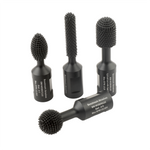













Different Types of File Tools

Looking to transform rough metal or wood into a smooth, finished item? Doesn’t matter if you are crafting, repairing, or detailing, choosing the right file tool makes all the difference. Files come in a variety of shapes, sizes, and cuts, each designed to handle specific tasks with precision.
A file is utilized to cut, trim, or complete a task of metal or wood, to give them a required shape, such as making the work round, square, or precise. It is generally made with high-carbon steel. The file is a hard steel instrument with various cutting edges. Get ready to sharpen your know-how and finish your work with confidence. Let’s explore the different types of file tools, helping you understand which one is best suited for your project and how to use them effectively.
What is File for Tools?

This device is prevalently utilized in metalworking, carpentry, and related trade activities. The file device is a handheld device composed of a solidified steel bar that is rectangular, square, or three-sided. At least one of its surfaces is cut with sharp, equal teeth. Besides, it is normal to discover a tang toward one side of the file. This is, for the most part, built so that a handle might be fitted. Indeed, an incredible number of files with grating surfaces have been grown, for example, silicon carbide or engineered precious stone grains. Besides, a grate can be classified in the file; in any case, a grate comprises independently cut teeth that are, for the most part, used to eliminate a lot of coarse material. There are various types of file instruments available today that are designed to perform a range of tasks.
Types of File Tools
Files are versatile hand tools used in metalworking, woodworking, and various other surface finishing projects. With so many types available, it’s important to understand the differences to choose the right one for your specific task.
The different types of file tools, their specific characteristics, and ideal uses for each are listed below. Size, cut, grade, and specific design elements are some of the criteria used to classify them.
Hand Files Based on Shape
Different kinds characterize the file apparatuses. One among these is the grouping as per the shapes:
1. Level File
A level file is referred to as a file of a rectangular cross-sectional area. This tool is planned in a marginally unique manner by tightening both the width and thickness of the file. Twofold cut teeth are cut on the face, though the straightforward cut teeth are cut on the edges. These instruments are the ones that are utilized to level the surfaces by filing and completing the workpiece.
2. Round File
A round file, also known as a rat-tail file, has a cylindrical shape with a hollow center. It is primarily used for enlarging, smoothing, or finishing holes and concave surfaces. Its tapered design allows easy access to tight, curved, or hard-to-reach areas in metal, wood, and plastic.
3. Half-Round File
Half-round files are the files that are found as an afterthought and are bent on the opposite side. Then again, the twofold cut scratches are cut on it like a round file, which is then tightened. These kinds of mechanical instruments are essentially used to fix the damaged opening and set them all together once more.
4. Three-sided File
The name portrays the state of such kinds of files. The file openings are found to have points of 60 degrees. To finish filling the V openings task, the square and rectangular positions going from 60°-90° point are mostly done utilizing this file. This sort of file is otherwise called three-square files.
5. Square File
These sorts of files look like a square and are found being tightened. The file openings in a rectangular, square furrow and key-way are finished utilizing these kinds of files.
6. Hand File
A hand file is very similar to the level tool, which is, for the most part, utilized for filling the inside right side of a task. These sorts of hand files are otherwise called the protected edge file.
7. Blade Edge File
Blade edge files are utilized where there is a necessity for a sharp tool. The state of this sort of mechanical instrument resembles the edge of a blade. The slim edge is generally at a point of 10°. These are likewise utilized to file the little notches and openings that are found to have a point under 60°. Blade edge files are, for the most part, utilized in the lock business for making the keys.
Hand Files Based on Grade
8. Rough File
These metal files have greater size but fewer teeth. The rough files are found to have their application in cutting the delicate materials as its slicing is very unpleasant because it can't be utilized for the hard metals.
9. Second Cut File
It is a mid-grade metal file tool. These kinds of files and the charlatan metal files are observed to be finished with this file to make the surface plain.
10. Smooth File
The smooth file is utilized at unlimited locales where a definitive objective is to get a smooth surface. This kind of file is utilized to make the surface very plain, and other than this, it is moreover utilized for making some work of exact size by filling.
11. Dead Smooth File
The dead smooth file is planned in a manner that its teeth are observed to be extremely near one another and focuses on the metal in the next to no amount. These mechanical instruments are utilized for welcoming the gleam hands-on once the completion has been done effectively.
Hand Files Based on Cut
12. Single Cut File
A single cut file features straight, parallel lines of teeth that run in one direction across its surface. It removes material gradually and produces a smooth finish, making it ideal for finishing work. This type of file is typically used on hard metals and for achieving a fine, polished surface.
13. Double Cut File
A double-cut file has two sets of teeth that cross each other, typically at angles of 40°–45° and 70°–80°, creating a crisscross pattern. This design allows for faster material removal, making it suitable for rough shaping and cutting metal quickly. However, it usually leaves a rougher surface and is not ideal for finishing. Sometimes, it is referred to as a coarse file, with a similar tooth pattern where one set of teeth is at 30°–35° and the other at 80°–87°, further enhancing its cutting efficiency for heavy-duty work.
14. Bended Cut File
A bent cut file is otherwise called a Vixen file, which is generally utilized to file the wide surfaces of delicate metals like aluminum, zinc, copper, and steel.
15. Twisting Cut File
These kinds of metal files have teeth, which are cut in round or semi-round files. The state of the teeth in a winding cut file resembles that of strings.
16. Scratch Cut File
A scratch cut file is a sort of file that has exceptionally thick teeth. These are the teeth of a three-sided shape and are observed to be in a protruding state. These are the files utilized for working in wood, plastic, fiber, hard elastic, and the horns and feet of creatures.
Common Uses and Applications of Different File Types
- Flat files are ideal for smoothing large, flat surfaces and removing burrs in metal or woodworking projects.
- Round files are best suited for enlarging and finishing holes or curved surfaces.
- Half-round files are versatile for shaping and filing both concave and convex areas.
- While finer files are more suited for finishing and creating smooth surfaces, coarser files are utilized for quick material removal.
Conclusion
Understanding the various types of file tools and their specific applications is essential for achieving precise, high-quality results in your projects. By selecting the appropriate shape, cut, and grade of file, you can complete your tasks more effectively and with less effort. Files that are used and maintained properly last a long time, making them reliable tools. With this information, you'll be more prepared to tackle any filing task with confidence.
Join Our Newsletter
Sign up to get the latest on sales, new releases and more …Join Our Newsletter
Sign up to get the latest on sales, new releases and more …Shop Categories
Recent Articles
- Resin Fiber Discs vs Flap Discs: When Should You Use Each?
- Best Abrasives for Rust Removal on Steel
- Cut-Off Wheels vs Band Saws: Which is Better for Metal Cutting
- How to Optimize RPM Abrasive Disc Performance & Lifespan
- Surface Conditioning Discs: A Fabricator's Guide
- Best Flap Disc for Stainless Steel: Complete Fabricator’s Guide
- Ceramic vs Zirconia Flap Discs: Which Performs Better for Metal Fabrication
- How to Choose the Right Grit for Metal Sanding Projects
- Tools Collection for Fabrication and Abrasive Workflows
- How to Choose the Right Diamond Blade
Featured Products
-
 746 Reviews
4-1/2" x 7/8" T29 Zirconia High Density Flap Disc - 10 pack
$25.19
-
 738 Reviews
4-1/2" x .040" x 7/8" t1 premium thin cut-off wheel - 25 pack
$20.88
-
 220 Reviews
4-1/2" x 7/8" T27 Zirconia High Density Flap Disc - 10 pack
$25.19
-
 380 Reviews
6" x .045 x 7/8" T1 Premium Thin Cut-Off Wheel - 25 pack
$27.29
-
 55 Reviews
Nonwoven 6" X 9" Scuff, Clean & Finish Hand Pads
$0.83
-
 123 Reviews
4-1/2" x 1/4" x 7/8" T27 Depressed Center Grinding Wheel - 25 pack
$28.34


Blog Categories
- Abrasives
- Sanding
- Grinding Deburring Finishing
- Safety and Cleanliness
- Metal Working
- Selecting Tools And Equipment
- Wood Working
- Art And Design
- Diy Projects
- Industry 4.0
- Buffing
- Cutting Tools
- Carbide Burrs
- PPE
- Wire Brushes
- Bonded Abrasives
- TIG Electrodes
- Wire Wheels
- Bits
- Diamond Blades
- Power Brushes
- Product Reviews
- Grinding
- Finishing
- Industrial Cleaners