



























What are Buffing Compounds and Their Uses

Buffing is the final mechanical process of refining a surface to a mirror-like shine. It is used on metal, wood, and composites by employing a rotating cloth wheel impregnated with specialized compounds. In this relationship, the buffing wheel acts as the carrier, while the compound—a mixture of fine abrasives and binders—performs the actual cutting and coloring.
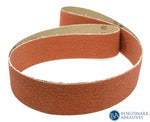
Successful buffing generally requires a two-stage process: the cut buff and the finish buff. It is a common misconception that buffing can remove heavy damage. Even a coarse cut buff is far too fine to remove deep pits or heavy scratches. Proper surface preparation using abrasive belts is essential before any compound touches the workpiece.
The Chemistry of Buffing: Abrasives and Binders
To understand how buffing compounds work, one must look at their chemical composition. A compound consists of two main parts: the abrasive grain and the binder.
The binder is usually a blend of animal fats, waxes, or synthetic resins. Its role is two-fold: it must hold the abrasive to the wheel through centrifugal force, and it must melt at precisely the proper temperature. As the wheel spins against the workpiece, friction generates heat. This heat melts the binder, releasing the abrasive grains to "skate" across the metal surface. If the binder melts too quickly, the wheel becomes greasy and "loads up." If it is too hard, the abrasive will simply fly off the wheel without doing any work.
Speed and Surface Feet Per Minute (SFPM)
Selecting the ideal compound is just half the fight; the speed of the buffing wheel is equally critical. Professional results depend on Surface Feet Per Minute (SFPM), which is a calculation of how much surface area of the wheel passes a single point on the workpiece per minute.
The SFPM calculation formula is:
SFPM = 1/12 x pi x Diameter of wheel x RPM
For heavy cutting operations with Black Emery, an SFPM of 5,000 to 7,000 is ideal. For delicate coloring and final finishing with Jeweler's Rouge, the speed should be reduced to 3,000 to 5,000 SFPM to prevent burning the metal or the compound. Using a large 10-inch wheel on a high-speed motor will result in a much higher SFPM than a 6-inch wheel on the same motor, significantly changing how the compound interacts with the metal.
Types of Buffing Compounds and Their Applications
The following are the different types of buffing compounds and their uses:
Black Emery Compound
This is the coarsest compound available. It is filled with natural emery minerals designed for heavy cutting. It is the primary tool for removing scratches, rust, and old plating from steel and iron. You should always start with Black emery compound for restoration projects to save time during the polishing stages.
Greystar
Greystar is a medium-grade general-purpose compound. It provides a balanced cut while bringing out the natural color of the metal. It is particularly effective on stainless steel when used with a rigid, stitched buffing wheel to remove fire scale.
Brown Tripoli
Tripoli is the most popular general-purpose compound for non-ferrous metals. Brown Tripoli compound is the best choice for brass, copper, and aluminum. It cuts well enough to remove light scratches but leaves a smooth, semi-bright finish. It is also safe for use on wood to create a high-luster finish.
White Rouge
Also known as Blizzard compound, White Rouge is a finishing compound for harder metals like chrome and nickel. It has a very light cutting action and is designed to provide a final "mirror" shine.
Red Rouge and Jeweler's Rouge
For precious metals, this is the norm. Red Rouge is designed specifically for gold and silver. Its cutting power is nearly nonexistent; instead, it "burnishes" the metal to reveal its true color. Water-soluble versions are available to allow for easy cleanup of intricate jewelry pieces.
Green Rouge
Specifically designed for stainless steel and platinum, Green Rouge provides a higher luster than White Rouge. It is often referred to as the stainless steel compound because it can handle the high temperatures required to polish hard alloys without breaking down.
Specialty Compounds: Zam and Blue Magic
Zam is a unique formulation designed for the jewelry industry. It is gentle enough to polish silver and gold without damaging soft stones like turquoise or opal. Blue Magic is a highly specialized compound engineered exclusively for the unique molecular structure of platinum.
The Importance of Buffing Wheel Construction
The performance of a compound is directly tied to the wheel (buff) it is applied to.
- Stitched Buffs: Very rigid; used with cutting compounds like Black Emery for heavy removal.
- Loose Buffs: Highly flexible; used with rouges for final coloring and reaching into contours.
- Airway Buffs: Designed with pleats to allow air to cool the workpiece; essential for high-speed industrial polishing to prevent overheating.
Conclusion
A perfect finish is the result of an engineered system: the machine's speed (SFPM), the construction of the buffing wheel, and the specific abrasive chemistry of the compound. Manufacturers and hobbyists who understand these variables can optimize their productivity and achieve a brand-new quality finish on any material.
Join Our Newsletter
Sign up to get the latest on sales, new releases and more …Join Our Newsletter
Sign up to get the latest on sales, new releases and more …Shop Categories
Recent Articles
- Linear vs Circular Scratch Patterns: How to Control Your Finish Like a Pro
- Guide To Cross Pad Abrasive Sheets
- Understanding the Difference: T27 vs T29 Flap Discs
- Unveiling The Secrets Of Grinding Wheels: Types And Applications
- The Art Of Deburring: Techniques and Tools For Smooth Edges
- Exploring The Art Of Precision Grinding In Metalworking
- What Is The Strongest Abrasive Material?
- Bonded Abrasives Vs Coated Abrasives
- What is Electrochemical Deburring
- Are Ceramic Abrasive Products Superior?
Featured Products
-
 746 Reviews
4-1/2" x 7/8" T29 Zirconia High Density Flap Disc - 10 pack
$25.19
-
 738 Reviews
4-1/2" x .040 x 7/8" T1 Premium Thin Cut-off Wheel - 25 pack
$20.88
-
 220 Reviews
4-1/2" x 7/8" T27 Zirconia High Density Flap Disc - 10 pack
$25.19
-
 380 Reviews
6" x .045 x 7/8" T1 Premium Thin Cut-Off Wheel - 25 pack
$27.29
-
 123 Reviews
4-1/2" x 1/4" x 7/8" T27 Depressed Center Grinding Wheel - 25 pack
$28.34
-
 55 Reviews
Nonwoven 6" x 9" Scuff, Clean & Finish Hand Pads
$0.83


Blog Categories
- Abrasives
- Sanding
- Grinding Deburring Finishing
- Safety and Cleanliness
- Metal Working
- Selecting Tools And Equipment
- Wood Working
- Art And Design
- Diy Projects
- Industry 4.0
- Buffing
- Cutting Tools
- Carbide Burrs
- PPE
- Wire Brushes
- Bonded Abrasives
- TIG Electrodes
- Wire Wheels
- Bits
- Diamond Blades
- Power Brushes
- Product Reviews
- Grinding
- Finishing
- Industrial Cleaners