




























How to Cut Metal Fast: 9 Efficient Ways for DIYers and Professionals

Cutting metal, whether for a quick repair, a complex fabrication, or a demanding construction project, demands the right tools and techniques. From thin sheet metal to robust steel beams, choosing the most efficient method can significantly save time and effort. Before diving into any metal-cutting task, remember that safety is essential: metal cutting produces sharp burrs, hot sparks, and abrasive dust. Always wear appropriate personal protective equipment (PPE), including durable gloves, safety glasses, and overalls.
While the periodic table boasts over 100 metal components, DIYers and fabricators typically work with a few common varieties and their alloys, such as steel, iron, aluminum, and copper. Each type may benefit from a specific cutting approach.
Here are nine efficient ways to cut metal:
9 Ways to Cut Metal Efficiently
1. Utilizing Tin Snips
Best for: Fast cuts on very thin sheet metal (up to 18-gauge)
Tin Snips metal cutting tools are a direct, apparatus-based choice for cutting Metal. They are additionally among the most available and reasonable tin clips.
This tool works like scissors, yet its sharp jaws permit you to crease and puncture sheet metal in a single smooth movement. Tin clips offer a great deal of flexibility while additionally remaining completely precise and sensible during a cut. Concerning their adaptability, more than simply a solitary pair of tin cuts is needed.
2. Utilizing a Hacksaw
Best for: Controlled cuts on various metal profiles, especially for DIYers on a budget.
If you're a DIY who would not like to invest in new equipment right now, you could get a tool you already have in your DIY arsenal. In particular, a hacksaw is frequently ready to perform essential metal-cutting tools without a problematic situation.
Hacksaws are likewise incredible for beginner metal cutters because they don't require an exceptional method to use. However, you will need to put in some additional effort to make a hacksaw work.
Hacksaws have a compatible sharp-edge setup. Therefore, you must switch on a razor-sharp metal-slicing edge before endeavoring to cut into any bolt or sheet metal. Otherwise, you'll destroy and wear out your wood-cutting sharp edges.
3. Utilizing a Utility Knife
Best for: Quickly scoring and snapping light-gauge sheet metal.
As you may expect, creation and development experts have an assortment of strategies for cutting metal stock after all other options have been exhausted. One of their faster strategies includes whipping out a utility blade and scoring the outer layer of light-measure metal stock.
This technique is most commonly utilized in projects that join metal siding. Project workers regularly use this method to rapidly make tweaked cuts in dainty aluminum siding boards without expecting to fire up any force apparatuses. A few project workers additionally guarantee to have the option to use this strategy to manage metal studs. However, this execution is undeniably more uncommon.
4. Utilizing a Bench Shear
Best for: Precise, clean cuts on flat metal stock up to specific thicknesses.
Cutting metal using a bench shear is really versatile. However, there are restricted limits regarding cutting and forming the larger metal stock. For that reason, you should take a seat.
This fixed, seat-mounted instrument is intended to permit you to cut into metal stock with no trace of influence. To do this, seat shears use a long, confronting handle that the client pulls downward on to move the unit's edge. When this is done, the unit's cutting edge lets down towards the base, along these lines, pushing the power applied to the switch into the edge. This permits the sharp edge to cut through up to 10 sheets of metal flawlessly without inconvenience.
5. Utilizing a Circular Saw
Best for: Rapid straight cuts in ferrous metals, rebar, and light steel.
A circular saw is mainly known for cutting wood, but with the right blade, it can also be a high-speed tool for cutting metal. When equipped with a specialized ferrous-metal-cutting blade (either an economical steel-tooth blade or a longer-lasting carbide-tipped blade), it can slice through materials like rebar or mild steel up to about 3/8-inch thickness with remarkable speed.
Caution is essential: these operations generate copious amounts of hot metal chips and sparks. Always wear complete safety gear, ensure no onlookers are nearby, and cover anything susceptible to damage from hot debris.
6. Utilizing a Miter Saw for Aluminum
Best for: Precise, clean angled, and straight cuts on aluminum profiles, tubes, and bars.
Making precise cuts on aluminum poles, cylinders, and points is simple with a miter saw and an edge intended to cut Non-Ferrous Metal (really look at the name). If the engine lodging on your saw is open and could gather metal chips, tape a piece of material over the openings to ensure the engine windings and orientation while you cut the aluminum.
(Make sure to eliminate it when the saw returns to ordinary help, or the engine will overheat.) Trapping the aluminum with a wood benefactor, as displayed, lessens the risk of flying metal shards and makes it simpler to hold the Metal set up for cutting. This tip is particularly significant when you're cutting delicate-walled pieces. Without the support board, the sharp edge will frequently get on the Metal, twist it, and make it unusable.
7. Utilizing Abrasive Discs (Angle Grinder/Chop Saw)
Best for: Aggressive, fast cuts on various steel and stainless steel, especially for rough shaping or sectioning.
For small tasks like cutting stainless steel backsplash tiles, a drill fitted with an abrasive metal-cutting disc can suffice. However, for more substantial jobs involving various types of steel, including challenging hardened varieties, mounting an abrasive cut-off disc on a dedicated angle grinder or an abrasive chop saw is highly efficient. These tools offer aggressive, fast removal of material by grinding through the metal, making quick work of tough alloys.
8. Utilizing an Angle Grinder
Best for: Rapid, versatile cutting, grinding, and shaping of various metals, especially in situ.
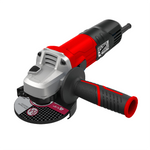
For sheer speed and versatility in cutting metal, an angle grinder fitted with an abrasive cut-off disc is often the go-to tool for DIYers and professionals alike. Available in various sizes, angle grinders excel at quickly slicing through rebar, metal tubing, bolts, sheet metal, and even thin structural steel. Their high RPMs and the abrasive action of the disc make quick work of tough materials, offering portability for cuts in awkward positions. They generate a lot of heat, sparks, and metal debris, so extreme caution and thorough personal protective equipment (PPE) are essential. Always ensure the correct disc type (e.g., aluminum oxide for steel) and size is securely mounted, and never remove the guard.
9. Utilizing a Reciprocating Saw
Best for: Fast demolition cuts, cutting embedded metal, or working in confined spaces.
Often underestimated for metalwork, a reciprocating saw (also known as a 'Sawzall') fitted with a bi-metal or carbide-tipped metal-cutting blade can be surprisingly fast and effective, particularly for demolition work or cutting metal in awkward positions where precision is less critical. While not as precise as a circular saw for long, straight cuts, its aggressive back-and-forth motion can quickly sever pipes, conduit, rebar, bolts, and even nails embedded in wood. For thinner metals and finer cuts, opt for blades with a higher teeth-per-inch (TPI) count. Conversely, a lower TPI is best for thicker materials.
Valuable Tips For Cutting Metal Safely
Cutting or grinding metal generates tiny metal chips or shards, along with significant heat and sparks. These can be sharp and dangerous. Observe these crucial guidelines to prevent burns, wounds, eye injuries, and other harms when cutting metal:
-
Read Instructions: Always read and strictly follow the safety instructions printed on metal-cutting discs and blades.
-
Wear Comprehensive PPE: Put on a full face shield in addition to safety glasses, and always wear hearing protection.
-
Cover Exposed Skin: Wear durable gloves, a long-sleeved shirt, and trousers to cover all exposed skin. Flame-resistant clothing is recommended for grinding and abrasive cutting.
-
Allow Cooling: Let freshly cut metal cool before handling it, as it can retain significant heat.
-
Use Gloves for Handling: Always wear gloves when working with metal that may have sharp edges or burrs.
-
Secure Your Workpiece: Before cutting metal, grip it firmly using clamps or a vise to prevent movement and kickback.
-
Maintain Clear Zone: Keep everyone away from your cutting area unless they are also wearing appropriate eye and hearing protection.
Conclusion
Anyone working in metalworking can significantly benefit from knowing how to cut metal precisely and safely. Knowing the proper procedures and safety measures is crucial, regardless of whether you use power tools like angle grinders and plasma cutters or more traditional hand tools like hacksaws and shears.
Gaining proficiency with these tools and techniques will enable you to cut metal with accuracy and cleanliness, transforming your metalworking efforts into productive and fulfilling pursuits. Wearing the proper protective equipment is crucial for any metal-cutting task, and safety should always come first.
Join Our Newsletter
Sign up to get the latest on sales, new releases and more …Join Our Newsletter
Sign up to get the latest on sales, new releases and more …Shop Categories
Recent Articles
- Proven Ways to Reduce Surface Roughness in Metal Milling
- What is Metal Shearing: Process, Applications, and Finishing
- 10 Essential Metal Fabrication Processes Explained
- Essential Metal Fabrication Tools: The Only Checklist You’ll Ever Need (Jason Hurst Approved)
- How To Deburr Metal
- A Step-By-Step Guide To Remove Spot Welds With Air File Sander
- How to Remove Mill Scale: Step-by-Step Guide
- The Role Of Abrasives In Modern Construction: Beyond The Surface
- Exploring The Art Of Metal Sculpting With Abrasives
- Abrasives in Renewable Energy: Applications In Solar And Wind Industries
Featured Products
-
 746 Reviews
4-1/2" x 7/8" T29 Zirconia High Density Flap Disc - 10 pack
$25.19
-
 738 Reviews
4-1/2" x .040 x 7/8" T1 Premium Thin Cut-off Wheel - 25 pack
$20.88
-
 220 Reviews
4-1/2" x 7/8" T27 Zirconia High Density Flap Disc - 10 pack
$25.19
-
 380 Reviews
6" x .045 x 7/8" T1 Premium Thin Cut-Off Wheel - 25 pack
$27.29
-
 123 Reviews
4-1/2" x 1/4" x 7/8" T27 Depressed Center Grinding Wheel - 25 pack
$28.34
-
 55 Reviews
Nonwoven 6" x 9" Scuff, Clean & Finish Hand Pads
$0.83


Blog Categories
- Abrasives
- Sanding
- Grinding Deburring Finishing
- Safety and Cleanliness
- Metal Working
- Selecting Tools And Equipment
- Wood Working
- Art And Design
- Diy Projects
- Industry 4.0
- Buffing
- Cutting Tools
- Carbide Burrs
- PPE
- Wire Brushes
- Bonded Abrasives
- TIG Electrodes
- Wire Wheels
- Bits
- Diamond Blades
- Power Brushes
- Product Reviews
- Grinding
- Finishing
- Industrial Cleaners