




























Everything You Need to Know About Chop Saws

Chop saws are the most essential cutting tools in any welding or fabrication shop. They allow operators to make fast, repetitive, and accurate cuts through structural steel, threaded rods, and angle brackets. However, achieving a professional result depends on more than just pulling a trigger—it requires understanding the physics of the cut, and selecting the appropriate technology for the job is essential.
Abrasive Wheels vs. TCT Cold Saws
When choosing a chop saw, the first decision is the technology: abrasive or TCT (tungsten carbide tipped).
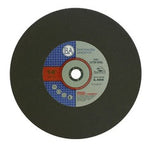
Abrasive Chop Saws: These utilize a bonded abrasive wheel that "grinds" through the metal via friction. They are highly versatile and can cut hardened steels, but they produce significant sparks, smoke, and a heat-affected zone (HAZ). This intense heat can change the molecular structure of the metal at the cut site, which may require secondary grinding before welding.
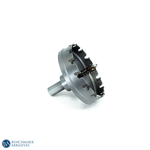
TCT Cold Saws (Dry Cut): These use a toothed, carbide-tipped blade that "chips" the metal away. Because the teeth take a physical "bite" out of the material, the heat is transferred into the chip rather than the workpiece. The result is a "cold" cut that is burr-free and ready for welding immediately. While the initial investment is higher, the lack of secondary cleanup often provides a better ROI for high-production shops.
Understanding Peripheral Speed and RPM
Safety and efficiency in chop saw operation are dictated by surface feet per minute (SFPM). A resin bond holds together bonded abrasive wheels; if they are spun faster than their rated speed, centrifugal force can cause the wheel to explode.
Always verify the maximum operating speed printed on the wheel’s blotter. If your chop saw motor runs at 3,800 RPM, the wheel must be rated for at least 3,800 RPM.
Expert Tip: As an abrasive wheel wears down and its diameter decreases, its peripheral speed decreases. As the wheel reaches the end of its useful life, it becomes less effective in "self-sharpening," which may result in glazing and slower cuts.
Common Factors for Effective Cutting
1. Material Placement and the "Arbor Center."
To maximize cutting efficiency, the center of the material should be placed directly beneath the center of the saw's arbor. If the material is placed too far forward or back, the wheel enters the metal at an inefficient angle, causing the motor to bog down and prematurely wear the abrasive.
2. The Role of Blotters
When mounting a replacement wheel, always ensure that paper mounting blotters are present between the metal flanges and the wheel surface. These blotters serve as gaskets, evenly distributing clamping pressure and preventing the flanges from causing stress cracks in the resin bond.
3. Selecting the Proper Abrasive Grain
Matching the grain to the metal is essential for a clean cut:
- Aluminum Oxide: The standard for low-carbon steel and iron.
- Zirconia Alumina: Ideal for high-pressure grinding on stainless steel.
- Silicon Carbide: Necessary for non-ferrous metals such as copper, as well as for glass and masonry.
Dos & Don’ts of Chop Saw Operation
Chop saws are powerful tools that require respect. To safeguard the equipment and the operator, abide by these rules.
Dos:
- Inspect the Wheel: Before mounting, check for visible cracks or chips. Perform a "ring test" to ensure the internal bond is solid.
- Secure the Workpiece: Always use the built-in vise to secure the material. If cutting a bundle of rods, ensure they are tied or clamped together so they cannot spin.
- Use the Guard: Always ensure the wheel guard is functioning smoothly and retracts as the saw is lowered.
Don’ts:
- Side Pressure: Never use the side of a chop saw wheel to "clean up" a burr. These wheels are designed for peripheral cutting only; side-loading can cause them to shatter.
- Excessive Force: Do not put undue downward pressure on the handle. If the motor begins to slow down significantly, you are pushing too hard. Allow the wheel's speed to perform the task.
- Remove Blotters: Never mount a wheel without the proper paper blotters, as this increases the risk of wheel failure during high-speed operation.
Summary Table: Abrasive vs. TCT
| Feature | Abrasive Chop Saw | TCT Cold Saw |
| Primary Method | Friction/Grinding | Physical Chipping |
| Heat Produced | High (creates HAZ) | Low temperature (cold to the touch) |
| Sparks | Heavy Spark Stream | Minimal to None |
| Finish Quality | Requires Deburring | Paint-Ready / Smooth |
| Best For | Hardened Steel, Rebar | Structural Steel, Pipe, and Thin-Wall Components |
Join Our Newsletter
Sign up to get the latest on sales, new releases and more …Join Our Newsletter
Sign up to get the latest on sales, new releases and more …Shop Categories
Recent Articles
- Felt Polishing Discs, Flap Discs & Flap Wheels
- How to Polish a Weld to a Mirror Finish
- How to Polish Cast Aluminum
- Luke Hummer - Erie County Community College
- Industrial Quick Change Discs for Fast-Lock Grinding and Finishing
- Felt Polishing Wheels, Bobs & Discs: Guide to Detail Work
- Matthew Cartwright
- Jacob Martinez (Foxholes to Fabworks)
- The Gathering
- David Fisher (Fisher Forge)
Featured Products
-
 746 Reviews
4-1/2" x 7/8" T29 Zirconia High Density Flap Disc - 10 pack
$25.19
-
 738 Reviews
4-1/2" x .040" x 7/8" t1 premium thin cut-off wheel - 25 pack
$20.88
-
 220 Reviews
4-1/2" x 7/8" T27 Zirconia High Density Flap Disc - 10 pack
$25.19
-
 380 Reviews
6" x .045 x 7/8" T1 Premium Thin Cut-Off Wheel - 25 pack
$27.29
-
 55 Reviews
Nonwoven 6" X 9" Scuff, Clean & Finish Hand Pads
$0.83
-
 123 Reviews
4-1/2" x 1/4" x 7/8" T27 Depressed Center Grinding Wheel - 25 pack
$28.34


Blog Categories
- Abrasives
- Sanding
- Grinding Deburring Finishing
- Safety and Cleanliness
- Metal Working
- Selecting Tools And Equipment
- Wood Working
- Art And Design
- Diy Projects
- Industry 4.0
- Buffing
- Cutting Tools
- Carbide Burrs
- PPE
- Wire Brushes
- Bonded Abrasives
- TIG Electrodes
- Wire Wheels
- Bits
- Diamond Blades
- Power Brushes
- Product Reviews
- Grinding
- Finishing
- Industrial Cleaners