





























Difference Between Marble Cutter and Circular Saw

Choosing the correct power saw is crucial for safety, efficiency, and achieving precise cuts, especially when dealing with diverse materials. While a marble cutter and a circular saw might appear similar, they are engineered for fundamentally different tasks and materials. Understanding their distinctions is key to preventing damage to your material or your tool and ensuring your safety.
What is a Marble Cutter?
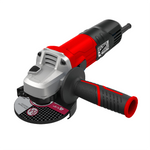
A marble cutter, often referred to as a stone-cutting machine, is a specialized power tool designed primarily for cutting hard, dense materials. While its name suggests marble, it's adept at cutting a variety of stone types, concrete, tiles, and even some ceramics. Its design emphasizes robust construction to handle abrasive materials and high RPMs. It is a portable tool, highly versatile for making straight cuts, chamfers, and grooves in hard surfaces, often without the need for a dedicated workbench.
What is a Circular Saw?
A circular saw is a versatile handheld power tool primarily used for cutting softer materials, most commonly wood. Designed for two-handed operation, it offers enhanced cutting accuracy and personal safety. Key features include:
-
Blade Guard: Electric circular saws are equipped with a spring-loaded protective guard that automatically covers the blade when the saw is not in use or resting. This allows you to safely set the saw aside immediately after a cut, as the guard ensures the rotating blade will not contact surfaces or cause harm.
-
Dust Management: Most circular saws feature a dust port that can be connected to a vacuum cleaner to minimize airborne sawdust, improving visibility and maintaining a cleaner work environment.
Key Differences: Marble Cutter vs. Circular Saw
While both tools use a rotating circular blade to cut, their fundamental design, performance, and ideal applications vary significantly.
| Features | Marble Cutter (Stone Cutter) | Circular Saw (Wood Saw) |
| Primary Material | Hard materials (stone, marble, concrete, tiles) | Softer materials (wood, plywood, plastics) |
| Cutting Action | Abrasive grinding (diamond segments) | Toothed cutting (shears/slices) |
| Blade Type | Diamond saw blades | High-carbon steel/carbide-tipped blades |
| RPM vs. Torque | High RPM (10,000+), lower torque | Lower RPM (3,500-5,500), higher torque |
| Cooling/Dust | Often wet cutting (water), fine silica dust when dry | Primarily dry cutting; wood chips/sawdust |
| Blade Depth/Angle | Limited adjustments, shallow cuts | Adjustable depth/bevel for versatile cuts |
| Arbor/Mount | Smaller, specialized | Larger, standard |
| Physical Design | Lighter, smaller base; precise cuts on hard, flat surfaces | Heavier, larger base; stability for rip/cross-cuts in lumber |
Why Choosing the Right Tool Matters
Using the correct tool for the job is not just about efficiency; it's paramount for safety and tool longevity.
-
Safety: Attempting to cut hard materials like stone with a wood-cutting circular saw can cause the blade to shatter, kick back violently, or bind, leading to severe injury. Conversely, using a marble cutter on wood can result in excessive splintering, burning, or a dangerous kickback due to the blade's abrasive nature and high speed.
-
Cut Quality: Each tool is optimized for a specific material, leading to cleaner, more precise cuts when used correctly. A marble cutter provides crisp edges on stone, while a circular saw delivers smooth, efficient cuts in wood.
-
Tool Lifespan: Using the wrong blade or tool on an unintended material will rapidly dull or damage the blade and put undue stress on the motor, significantly shortening the tool's lifespan.
Conclusion
While both the marble cutter and the circular saw are powerful handheld cutting tools, their fundamental differences in cutting mechanism, blade type, RPM, and material compatibility make them distinct. The marble cutter excels at the high-speed abrasive grinding of hard, dense materials with specialized diamond blades, often using water for cooling. The circular saw, with its lower RPM and higher torque, is engineered for the toothed cutting of softer materials like wood. By understanding these key distinctions, you can confidently select the appropriate saw for your project, ensuring safety, efficiency, and professional results.
Join Our Newsletter
Sign up to get the latest on sales, new releases and more …Join Our Newsletter
Sign up to get the latest on sales, new releases and more …Shop Categories
Recent Articles
- Felt Polishing Discs, Flap Discs & Flap Wheels
- How to Polish a Weld to a Mirror Finish
- How to Polish Cast Aluminum
- Luke Hummer - Erie County Community College
- Industrial Quick Change Discs for Fast-Lock Grinding and Finishing
- Felt Polishing Wheels, Bobs & Discs: Guide to Detail Work
- Matthew Cartwright
- Jacob Martinez (Foxholes to Fabworks)
- The Gathering
- David Fisher (Fisher Forge)
Featured Products
-
 746 Reviews
4-1/2" x 7/8" T29 Zirconia High Density Flap Disc - 10 pack
$25.19
-
 738 Reviews
4-1/2" x .040" x 7/8" t1 premium thin cut-off wheel - 25 pack
$20.88
-
 220 Reviews
4-1/2" x 7/8" T27 Zirconia High Density Flap Disc - 10 pack
$25.19
-
 380 Reviews
6" x .045 x 7/8" T1 Premium Thin Cut-Off Wheel - 25 pack
$27.29
-
 55 Reviews
Nonwoven 6" X 9" Scuff, Clean & Finish Hand Pads
$0.83
-
 123 Reviews
4-1/2" x 1/4" x 7/8" T27 Depressed Center Grinding Wheel - 25 pack
$28.34


Blog Categories
- Abrasives
- Sanding
- Grinding Deburring Finishing
- Safety and Cleanliness
- Metal Working
- Selecting Tools And Equipment
- Wood Working
- Art And Design
- Diy Projects
- Industry 4.0
- Buffing
- Cutting Tools
- Carbide Burrs
- PPE
- Wire Brushes
- Bonded Abrasives
- TIG Electrodes
- Wire Wheels
- Bits
- Diamond Blades
- Power Brushes
- Product Reviews
- Grinding
- Finishing
- Industrial Cleaners