















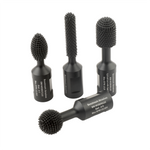


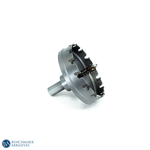










What are Diamond Grinding Cup Wheels?

Diamond grinding cup wheels are specialized abrasive tools engineered to tackle the toughest construction materials. Composed of metal-bonded diamond segments welded onto a sturdy, cup-shaped steel body, these robust wheels are indispensable for efficiently grinding concrete, stone, masonry, and more.
These powerful tools are designed for a variety of tasks, depending on their configuration:
- Heavy-duty applications: Cup wheels with multiple large diamond segments are ideal for aggressive grinding of rough concrete surfaces, removing thick coatings, or leveling granite and marble.
- Lighter-duty applications: Cup wheels with smaller and fewer segments are designed for finer finishes or for efficiently removing surface coatings like paints, glues, mastics, and epoxy.
Each diamond cup wheel is specifically designed for grinding different building materials, making the selection process critical for optimal results.
Key Factors for Choosing the Right Diamond Cup Wheel
Choosing the proper diamond grinding cup wheel is essential for success, preventing frustration and wasted resources. While the array of options can be daunting, understanding a few key factors will guide your decision:
These are a number of the factors you want to put into consideration when selecting diamond cup wheels, such as:
1. Segment Configuration & Application
The size and arrangement of the diamond segments dictate the wheel's aggressiveness and intended use. Heavy-duty jobs like grinding rough concrete or stone require wheels with larger, often more numerous, diamond segments for rapid material removal. Conversely, lighter tasks such as removing thin layers of glue, paint, or epoxy, or achieving a smoother finish, are better suited for wheels with smaller or fewer segments. Always match the cup wheel category to the character of the task ahead.
2. Understand Bond hardness
The metallic bond secures the diamonds, and its hardness must match the material being ground.
- Soft Bond Wheels: These wheels feature a bond that wears away more quickly, consistently exposing new, sharp diamond crystals. This allows the diamonds to cut effectively without glazing over. When working with tougher materials such as cured, hard concrete, granite, or very dense stone, you'll find soft bond wheels are your best bet. They're designed to grind these harder surfaces effectively.
- Hard Bond Wheels: In contrast, these wheels have a more durable bond that wears away more slowly, holding the diamonds in place longer. They are best suited for softer, more abrasive materials like green concrete, asphalt, or softer stone, where the material itself helps wear down the bond at a controlled rate. Choosing the wrong bond can lead to either premature wear (soft bond on soft material) or glazing (hard bond on hard material).
3. Abrasive Grit Size
The grit size of a diamond wheel tells you how fine or coarse the abrasive diamond grains are. This is determined by counting the number of openings per linear inch in the screen used to size the abrasive material.
- Coarse Grits (e.g., 10, 16, 24): These larger grains indicate that the tool will remove larger amounts of material rapidly. They are ideal for aggressive stock removal, leveling, and initial grinding.
- Fine Grits (e.g., 70, 100, 180, and up): These smaller grains are used for fine finishes, achieving smoother surfaces, or working on valuable and brittle materials that require high precision. Higher grit numbers denote finer finishes.
4. Abrasive Components
Beyond diamonds, the overall composition of the abrasive grains and the bond, along with the spacing between the segments (forming the structure), are essential. A perfect abrasive should maintain itself through automatic sharpening, where abrasive fracture establishes new cutting points when dulling sets in. Abrasives are available in various forms, each with unique strengths, hardness, resistance to impact, and fracture toughness, including alumina, zirconia alumina, and carbide.
5. Different Diamond Cup Wheel Shapes
While many diamond cup wheels share a general "cup" appearance, they come in a wide selection of shapes designed for specific applications. Some have a hollow center for spindle flange assemblies on machines. Other variations include cylinders and dish wheels, or mounted wheels in cone or plug shapes, suitable for off-hand grinding jobs that require high precision or access to difficult areas.
6. Choose the proper bond
You need the right bond for your wheel to run efficiently. Bonds are materials that bind abrasive grains to stop them from falling apart and run effectively. Like abrasive grains, bonds weaken with frequent use. The first bonds that are in use in diamond cup wheels are vitrified and organic. Each has its unique strengths and weaknesses. As an example, vitrified bonds are both challenging and brittle. Also, they provide resistance to acid, oil, water, and temperature.
Organic bonds exist in several forms, like resinoid and rubber. They are ideal for fabricating diamonds and sharpening saws.
7. Customization
For specialized applications or to achieve the most exact value for your money, choosing a customized diamond grinding cup wheel is the right choice. This allows you to specify the precise bond, grit, segment configuration, and even shape consistent with your unique project needs, eliminating guesswork and ensuring optimal performance.
Safe and Effective Ways to Use
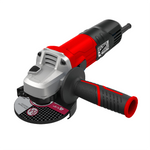
Once you've chosen the right diamond cup wheel, proper usage is critical for both safety and achieving optimal results. These wheels are typically used with an angle grinder, so ensure your grinder has the correct RPM rating for your specific wheel.
- Prioritize Safety Gear: Always wear the proper safety gear. This includes a respirator or dust mask to protect against fine silica dust, safety glasses or a face shield for eye protection, and hearing protection.
- Maintain Control: Always hold your angle grinder firmly with both hands. When grinding, apply consistent, even pressure, keeping the wheel flat against the surface. Avoid tilting the wheel, which can cause gouging or premature wear on one side of the segments.
- Work in Sections: For large areas, work in manageable sections, allowing the tool and material to cool periodically. Avoid continuous, prolonged grinding that can overheat the wheel or the surface.
- Manage Dust: Dry grinding generates a significant amount of abrasive dust. For effective dust collection, use an angle grinder with a dust shroud and connect it to a HEPA-filtered vacuum system. For some applications, wet grinding (with appropriate equipment) can also significantly reduce dust.
Conclusion
In summary, diamond grinding cup wheels are crucial tools for heavy-duty surface preparation and finishing in construction and masonry. By carefully considering factors like segment type, bond hardness (matching soft bonds to hard materials and hard bonds to soft materials), grit size, and wheel shape, and always prioritizing safe operating procedures, you can select the perfect cup wheel to achieve efficient, professional results on even the most challenging grinding tasks.
Join Our Newsletter
Sign up to get the latest on sales, new releases and more …Join Our Newsletter
Sign up to get the latest on sales, new releases and more …Shop Categories
Recent Articles
- Felt Polishing Discs, Flap Discs & Flap Wheels
- How to Polish a Weld to a Mirror Finish
- How to Polish Cast Aluminum
- Luke Hummer - Erie County Community College
- Industrial Quick Change Discs for Fast-Lock Grinding and Finishing
- Felt Polishing Wheels, Bobs & Discs: Guide to Detail Work
- Matthew Cartwright
- Jacob Martinez (Foxholes to Fabworks)
- The Gathering
- David Fisher (Fisher Forge)
Featured Products
-
 746 Reviews
4-1/2" x 7/8" T29 Zirconia High Density Flap Disc - 10 pack
$25.19
-
 738 Reviews
4-1/2" x .040" x 7/8" t1 premium thin cut-off wheel - 25 pack
$20.88
-
 220 Reviews
4-1/2" x 7/8" T27 Zirconia High Density Flap Disc - 10 pack
$25.19
-
 380 Reviews
6" x .045 x 7/8" T1 Premium Thin Cut-Off Wheel - 25 pack
$27.29
-
 55 Reviews
Nonwoven 6" X 9" Scuff, Clean & Finish Hand Pads
$0.83
-
 123 Reviews
4-1/2" x 1/4" x 7/8" T27 Depressed Center Grinding Wheel - 25 pack
$28.34


Blog Categories
- Abrasives
- Sanding
- Grinding Deburring Finishing
- Safety and Cleanliness
- Metal Working
- Selecting Tools And Equipment
- Wood Working
- Art And Design
- Diy Projects
- Industry 4.0
- Buffing
- Cutting Tools
- Carbide Burrs
- PPE
- Wire Brushes
- Bonded Abrasives
- TIG Electrodes
- Wire Wheels
- Bits
- Diamond Blades
- Power Brushes
- Product Reviews
- Grinding
- Finishing
- Industrial Cleaners