




























Zirconia Vs. Ceramic: Choose Best Sanding Belt for Metal

Choosing the right sanding belt is not an easy task for beginners. A wrong belt can cause damage to your workpiece and the belt sander. So, what are the best sanding belts for metal?
The best sanding belt for metal is designed with ceramic, zirconia, aluminum oxide, and silicon carbide abrasive grains. Zirconia and Ceramic abrasive grains are considered as most effective sanding grains for metals. They both last longer than aluminum oxide and silicon carbide.
In this blog, we will explore zirconia and ceramic sanding belts as well as their advantages and disadvantages. We will also compare zirconia and ceramic sanding belts in detail so you can determine which belt is best for metal.
Zirconia Sanding Belt
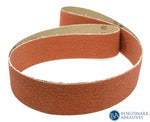
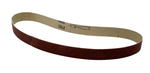
Zirconia sanding belts are abrasive belts used for finishing and material removal. They contain zirconia alumina grains, which are hard and self-sharpening, so they work well on hard materials such as metal and hardwood.
Applications:
Zirconia sanding belts are primarily used for grinding, shaping, deburring, and finishing on metals (steel, stainless steel, aluminium), wood, and some plastics. Other applications include:
- Stock removal
- Metal fabrication
- Wood sanding
- Sharpening knives
Advantages:
- Durability: More durable than aluminum oxide belts and require less replacement.
- Aggressive Cutting: High and effective material removal rates.
- Heat Resistance: Ideal for high-pressure and high-speed use without unnecessary wear.
Disadvantages:
- Cost: Generally more expensive than aluminum oxide sanding belts.
- Finish: May not give as good a finish as other abrasives with higher grit.
- Pressure Required: More pressure is required to sand optimally, which may not be suitable for sensitive work.
Ceramic Sanding Belt
Ceramic sanding belts have ceramic alumina grains that are synthetically manufactured and have excellent hardness and sharpness, and are therefore suitable for hard material removal jobs.
Applications:
Ceramic sanding belts are mainly used for aggressive stock removal, grinding, deburring, and finishing on hard metals like stainless steel, high-carbon steel, titanium, and some alloys. They are also effective on hardwoods. Other applications include:
- Heavy stock removal
- Stainless steel finishing
- Sharpening tools and blades
Advantages:
- Durability: Ceramic grains are extremely durable and self-sharpening, as well as long-lasting abrasives.
- High Removal Rate: They provide extremely high material removal rates.
- Cooler Operation: Most ceramic belts have a grinding aid that transfers heat away, prevents damage to the workpiece, and helps increase the belt's lifespan.
Disadvantages:
- Expense: Ceramic grains are the most expensive of the sanding belts due to their advanced manufacturing process.
- Coarse Grit: Often available in coarse grits, they may require additional sanding with higher abrasives for a fine finish.
- Pressure Sensitive: They may require consistent and moderate to hard pressure to sharpen the grains and sharpen themselves properly; lack of pressure can result in glazing.
Comparison Chart (Zirconia Vs Ceramic Sanding Belts)

| ZIRCONIA SANDING BELT | CERAMIC SANDING BELT |
| GRAIN STRUCTURE | |
| Zirconia Alumina abrasive grain is a coated & resin-bonded grain | Ceramic grain structures are similar to zirconia alumina. They are tough, resin-coated grain |
| HEAT & PRESSURE RESISTANT | |
| Zirconia belts are highly heat and pressure-resistant | Ceramic belts have less pressure and heat resistance |
| Zirconia needs more pressure for sanding metal. They are perfect for hard surfaces (not good for metal polishing) | Ceramic needs less pressure for metal sanding. They are good for hard surfaces and also for metal polishing |
| GRINDING COMPATIBILITY | |
| Zirconia belts perform excellent sanding with high-speed grinding machines | Ceramic grains are comparatively less suitable for high-speed grinding |
| The quality & efficiency of the metal workpieces are less affected by zirconia belts | The quality and efficiency of the metal workpiece are highly affected by ceramic belts |
| LIFESPAN & CUT-RATES | |
| Zirconia has a shorter lifespan & lower cut rates | Ceramic belts have a longer lifespan & faster cut rate |
| COST | |
| Zirconia belts are budget-friendly or less expensive sanding belts | Ceramic sanding belts are much expensive |
| GRINDING APPLICATIONS | |
|
Zirconia sanding belt provides high-quality grinding on the following metals:
|
Ceramic belts can perform several metalworking applications, such as:
|
Zirconia Vs Ceramic Sanding Belt: What to choose?
Zirconia and Ceramic sanding belts are more effective than aluminum oxide or silicon carbide sanding belts because they can scrape metal faster. Both belts can be resharpened as they wear and are mostly used for different metalworking jobs.
Heat production is a significant problem when grinding metal with a sanding belt. A variety of ceramic and zirconia materials with fillers and topcoats are used to reduce heat formation. Both belts are ideal for metal grinding. The selection of an appropriate sanding belt depends on the workpiece material and scribing applications.
Ceramic is typically the ideal choice for metalworking if you need a grit finer than 120. Ceramic belts are more durable than zirconia belts, but they are somehow more expensive.
We hope, now you can make a good choice between ceramic and zirconia sanding belts.
Join Our Newsletter
Sign up to get the latest on sales, new releases and more …Join Our Newsletter
Sign up to get the latest on sales, new releases and more …Shop Categories
Recent Articles
- Resin Fiber Discs: Proper Storage and Handling Techniques
- Sanding Belt Safety Tips: Best Practices for Safe Operation
- 1X30 Sanding Belts for Metalworking & Knife Making
- Why Sanding Belts Stop Cutting Efficiently
- Best Sanding Discs for Automotive Paint Preparation
- How to Change Sandpaper on a Drum Sander
- Sanding Drums for Metal, Finishing, and Deburring
- Sanding Disc Accessories: Backing Pads & Disc Tools
- Random Orbital Sander
- Ways to Remove Rust from Metal
Featured Products
-
 746 Reviews
4-1/2" x 7/8" T29 Zirconia High Density Flap Disc - 10 pack
$25.19
-
 738 Reviews
4-1/2" x .040 x 7/8" T1 Premium Thin Cut-off Wheel - 25 pack
$20.88
-
 220 Reviews
4-1/2" x 7/8" T27 Zirconia High Density Flap Disc - 10 pack
$25.19
-
 380 Reviews
6" x .045 x 7/8" T1 Premium Thin Cut-Off Wheel - 25 pack
$27.29
-
 123 Reviews
4-1/2" x 1/4" x 7/8" T27 Depressed Center Grinding Wheel - 25 pack
$28.34
-
 55 Reviews
Nonwoven 6" x 9" Scuff, Clean & Finish Hand Pads
$0.83


Blog Categories
- Abrasives
- Sanding
- Grinding Deburring Finishing
- Safety and Cleanliness
- Metal Working
- Selecting Tools And Equipment
- Wood Working
- Art And Design
- Diy Projects
- Industry 4.0
- Buffing
- Cutting Tools
- Carbide Burrs
- PPE
- Wire Brushes
- Bonded Abrasives
- TIG Electrodes
- Wire Wheels
- Bits
- Diamond Blades
- Power Brushes
- Product Reviews
- Grinding
- Finishing
- Industrial Cleaners