









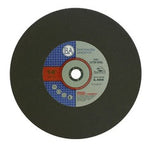


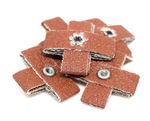










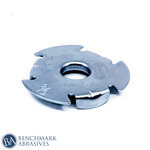






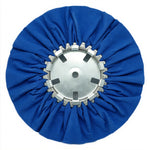



Stripping Discs
-

4-1/2" X 7/8" Long Life Paint & Rust Stripping Cup Wheel - 1 Piece
Original price $0.00 - Original price $0.00Original price $0.00$4.92$4.92 - $4.92Current price $4.92Product Specification Shipping Refund Product Specification 4-1/2" X 7/8" LONG LIFE PAINT & RUST STRIPPING CUP WHEEL - 1 PIECE The Benchmark...
View full detailsOriginal price $0.00 - Original price $0.00Original price $0.00$4.92$4.92 - $4.92Current price $4.92 -

4-1/2" X 7/8" Extra Coarse Paint & Rust Stripping Cup Wheel - 1 Piece
Original price $0.00 - Original price $0.00Original price $0.00$5.34$5.34 - $5.34Current price $5.34Product Specification Shipping Refund Product Specification 4-1/2" X 7/8" EXTRA COARSE PAINT & RUST STRIPPING CUP WHEEL - 1 PIECE The Benchm...
View full detailsOriginal price $0.00 - Original price $0.00Original price $0.00$5.34$5.34 - $5.34Current price $5.34 -

3" Premium Purple Extra Coarse Quick Change Stripper Discs - 5 Pack
Original price $13.64 - Original price $13.64Original price$13.64$13.64 - $13.64Current price $13.64Product Specification Shipping Refund Product Specification 3" PREMIUM PURPLE EXTRA COARSE QUICK CHANGE STRIPPER DISCS - 5 PACK The Benchmark Ab...
View full detailsOriginal price $13.64 - Original price $13.64Original price$13.64$13.64 - $13.64Current price $13.64 -

2" Premium Purple Extra Coarse Quick Change Stripper Discs - 5 Pack
Original price $9.44 - Original price $9.44Original price$9.44$9.44 - $9.44Current price $9.44Product Specification Shipping Refund Product Specification 2" PREMIUM PURPLE EXTRA COARSE QUICK CHANGE STRIPPER DISCS - 5 PACK The Benchmark Ab...
View full detailsOriginal price $9.44 - Original price $9.44Original price$9.44$9.44 - $9.44Current price $9.44 -

4-1/2" X 7/8" Paint & Rust Stripping Cup Wheel - 10 Pack
Original price $0.00 - Original price $0.00Original price $0.00$43.04$43.04 - $43.04Current price $43.04Product Specification Shipping Refund Product Specification 4-1/2" X 7/8" PAINT & RUST STRIPPING CUP WHEEL - 10 PACK The Benchmark Abrasives...
View full detailsOriginal price $0.00 - Original price $0.00Original price $0.00$43.04$43.04 - $43.04Current price $43.04 -

2" Long Life Quick Change Stripper Discs - 5 Pack
Original price $8.39 - Original price $8.39Original price$8.39$8.39 - $8.39Current price $8.39Product Specification Shipping Refund Product Specification 2" LONG LIFE QUICK CHANGE STRIPPER DISCS - 5 PACK The Benchmark Abrasives 2" long li...
View full detailsOriginal price $8.39 - Original price $8.39Original price$8.39$8.39 - $8.39Current price $8.39 -

4-1/2" X 5/8"-11 Long Life Paint & Rust Stripping Cup Wheel - 1 Piece
Original price $5.97 - Original price $5.97Original price$5.97$5.97 - $5.97Current price $5.97Product Specification Shipping Refund Product Specification 4-1/2" X 5/8"-11 LONG LIFE PAINT & RUST STRIPPING CUP WHEEL - 1 PIECE The Benchm...
View full detailsOriginal price $5.97 - Original price $5.97Original price$5.97$5.97 - $5.97Current price $5.97 -

2" Quick Change Stripper Discs - 10 Pack
Original price $0.00 - Original price $0.00Original price $0.00$15.74$15.74 - $15.74Current price $15.74Product Specification Shipping Refund Product Specification 2" QUICK CHANGE STRIPPER DISCS - 10 PACK The Benchmark Abrasives 2" quick change str...
View full detailsOriginal price $0.00 - Original price $0.00Original price $0.00$15.74$15.74 - $15.74Current price $15.74 -

3" Long Life Quick Change Stripper Discs - 5 Pack
Original price $12.59 - Original price $12.59Original price$12.59$12.59 - $12.59Current price $12.59Product Specification Shipping Refund Product Specification 3" LONG LIFE QUICK CHANGE STRIPPER DISCS - 5 PACK The Benchmark Abrasives 3" long li...
View full detailsOriginal price $12.59 - Original price $12.59Original price$12.59$12.59 - $12.59Current price $12.59 -

4-1/2" X 5/8"-11 Extra Coarse Paint & Rust Stripping Cup Wheel - 1 Piece
Original price $6.39 - Original price $6.39Original price$6.39$6.39 - $6.39Current price $6.39Product Specification Shipping Refund Product Specification 4-1/2" X 5/8"-11 EXTRA COARSE PAINT & RUST STRIPPING CUP WHEEL - 1 PIECE The Ben...
View full detailsOriginal price $6.39 - Original price $6.39Original price$6.39$6.39 - $6.39Current price $6.39 -

3" Quick Change Stripper Discs - 10 Pack
Original price $0.00 - Original price $0.00Original price $0.00$22.04$22.04 - $22.04Current price $22.04Product Specification Shipping Refund Product Specification 3" QUICK CHANGE STRIPPER DISCS - 10 PACK The Benchmark Abrasives 3" quick change str...
View full detailsOriginal price $0.00 - Original price $0.00Original price $0.00$22.04$22.04 - $22.04Current price $22.04 -

4-1/2" x 5/8”-11 Paint & Rust Stripping Cup Wheel – 1 Piece
Original price $5.34 - Original price $5.34Original price$5.34$5.34 - $5.34Current price $5.34Product Specification Shipping Refund Product Specification 4-1/2" X 5/8"-11 PAINT & RUST STRIPPING CUP WHEEL - 1 PIECE The Benchmark Abrasi...
View full detailsOriginal price $5.34 - Original price $5.34Original price$5.34$5.34 - $5.34Current price $5.34 -

4-1/2" X 4" Paint & Rust Stripping Sanding Drum - 1 Piece
Original price $41.99 - Original price $41.99Original price$41.99$41.99 - $41.99Current price $41.99Product Specification Shipping Refund Product Specification 4-1/2" X 4" PAINT & RUST STRIPPING SANDING DRUM - 1 PIECE The Benchmark Abrasive...
View full detailsOriginal price $41.99 - Original price $41.99Original price$41.99$41.99 - $41.99Current price $41.99 -

6" Paint & Rust Stripping Black Disc - 10 pack
Original price $0.00 - Original price $0.00Original price $0.00$62.99$62.99 - $62.99Current price $62.99Product Specification Shipping Refund Product Specification 6" PAINT & RUST STRIPPING BLACK DISC - 10 PACK The Benchmark Abrasives 6" paint ...
View full detailsOriginal price $0.00 - Original price $0.00Original price $0.00$62.99$62.99 - $62.99Current price $62.99 -

4" Paint & Rust Stripping Black Disc - 10 Pack
Original price $0.00 - Original price $0.00Original price $0.00$41.99$41.99 - $41.99Current price $41.99Product Specification Shipping Refund Product Specification 4" PAINT & RUST STRIPPING BLACK DISC - 10 PACK The Benchmark Abrasives 4" paint ...
View full detailsOriginal price $0.00 - Original price $0.00Original price $0.00$41.99$41.99 - $41.99Current price $41.99


Paint Stripping Discs for Angle Grinders
Old paint and rust come off fast with a grinder, and so does the metal underneath if you pick the wrong wheel. A nylon stripping web takes off the coating and leaves the base metal alone. That is why many buyers choose it ahead of a flap disc or a wire wheel for paint and rust jobs.
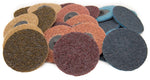
Our paint stripping disc range includes 4-1/2 inch cup wheels for angle grinders in three grades, plus 2 inch and 3 inch quick-change discs for tight spots. Each one uses silicon carbide in an open nonwoven nylon web. It is made for coating removal, not heavy stock removal.
Add stripping discs to your cart.
Strip the Coating, Keep the Metal
Removing a coating is not the same job as removing metal. A bonded grinding wheel cuts steel, shapes welds, and removes stock. That helps when you need to grind, but it can thin a panel, round an edge, or leave deep scratches when all you wanted was bare metal.
A stripping wheel works differently. Silicon carbide grain runs through an open nonwoven nylon web. The web flexes to follow curves and stamped sections, and its open structure sheds debris so the wheel resists loading. One wheel handles paint, rust, oxidation, adhesive, and epoxy on steel, stainless steel, cast iron, aluminum, copper, and brass.
Where a Stripping Wheel Stops
A stripping wheel removes what covers the metal. It cannot repair what the coating hid. Deep pitting, heavy scale, and gouges are still there after the paint is gone, and those may need grinding, filler, or replacement.
Stripping first shows you the real condition of the part. You avoid grinding away sound metal to chase a problem you cannot see yet. Pick this disc type when coating removal is the goal and the shape of the part matters.
Pick Black, Blue, or Purple for the Job
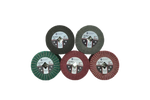
Color tells you how a wheel cuts and how long it lasts. Our cup wheels come in three grades, and the same color names carry over to our quick-change discs.
-
Black, standard: A general-purpose stripping wheel for everyday surface preparation.
-
Blue, long life: A harder resin gives a slower, more controlled cut and longer service life. Choose it for long jobs where wheel life matters most.
-
Purple, extra coarse: Sharper grain cuts faster and more aggressively. Choose this purple stripping disc when speed matters most on demanding jobs.
You may also see these sold as a poly strip disc or strip wheel. Whatever the name, check the abrasive, size, mounting, and RPM rating instead of choosing by color alone. Heavy coatings wear any wheel faster, so buy enough for the area you plan to strip.
Choose your grade and order your wheels.
Check Grinder Fit, Mounting, and RPM Before You Order
A wheel that fits the spindle is not automatically right for your grinder. Match the diameter, mounting style, guard, and maximum RPM to your tool before you order. Your grinder's no-load speed must never exceed the rating marked on the wheel.
| Wheel | Mounts with | Maximum RPM |
|
4-1/2 inch cup wheel, 7/8 inch bore |
Flange and locknut made for a 7/8 inch center hole |
13,300 |
|
4-1/2 inch cup wheel, 5/8-11 thread |
Threads directly onto a matching spindle |
13,300 |
|
2 inch quick-change disc |
2 inch Type R holder |
16,000 |
|
3 inch quick-change disc |
3 inch Type R holder |
10,500 |
Angle Grinder Cup Wheels
Our 4-1/2 inch cup wheels come with a 7/8 inch plain bore or a 5/8-11 threaded hub. The 7/8 inch version mounts on a grinder with the flange and locknut made for a 7/8 inch center hole. The threaded version screws onto a matching spindle, so follow your grinder manual for installation and any support hardware.
Our 4 inch and 6 inch black discs use a plain 1/2 inch center hole and need a properly rated mandrel. Their ratings are 8,000 RPM and 5,500 RPM. They do not mount like a cup wheel on an angle grinder spindle.
Quick-Change Discs for Tight Spots
Our quick-change stripping discs come in 2 inch and 3 inch sizes for small areas, contours, and edges. They attach with a Type R holder, so confirm that your tool accepts one and runs within the rating for the disc size.
Stripping Wheels vs. Wire Wheels and Flap Discs
These three accessories can remove rust and old finishes, but they leave the metal in different condition. Choose by whether you need coating removal, access to a tight recess, or a change to the base metal.
A stripping wheel is a good starting point for broad painted or lightly rusted surfaces. It removes paint, oxidation, and surface contamination without the cutting action used for weld grinding. Thin sheet metal, brackets, and parts with a profile to protect stay intact.
| Decision factor | Stripping wheel | Wire wheel | Flap disc |
|
Coating-removal speed |
Fast on paint, oxidation, and light rust across open surfaces |
Effective on loose rust and flaking material |
Effective, but may remove metal with the coating |
|
Effect on base metal |
Low risk of changing geometry with proper technique |
Limited cutting, but may leave brushing marks |
Higher material removal, especially on thin metal |
|
Crevices and contours |
Follows broad curves and irregular surfaces |
Reaches seams, corners, threads, and recesses |
Best on accessible areas, not narrow recesses |
|
Surface left behind |
Clean bare metal with a relatively uniform appearance |
Less uniform brushed surface, possible wire debris |
More pronounced scratch pattern for further finishing |
Steel wire wheels serve a different purpose. They reach loose corrosion in seams, corners, bolt areas, weld toes, and recesses that an open-web disc cannot fully reach. They may leave a less consistent look across wide panels, and broken wire is a real concern, so clear the work area and wear eye and face protection.
Bare steel and a primer-ready surface are not always the same step. A stripping wheel removes old paint and oxidation, but your coating system may call for a specific profile, cleaning method, or sanding step. Follow the primer maker's instructions before you apply the finish.
Flap discs suit jobs that need real cutting. They feather an edge, blend a weld, remove heavier corrosion, and leave a stronger scratch pattern for the next finishing step. That same action can thin sheet metal or change an edge when a flap disc is the default for paint removal.
Start with a stripping wheel when paint, rust, oxidation, or light scale is the problem. It works as your rust removal wheel for surface rust, too. Move to a wire wheel for seams and recesses. Switch to a flap disc when the job calls for weld blending, stock removal, or a more aggressive finish.
Strip Paint With an Angle Grinder in Five Steps
Thin sheet metal, stamped panels, and edges heat up quickly. Steady control and light pressure beat force, and they help prevent warping, gouges, and a glazed wheel.
Wear eye and face protection, gloves, hearing protection, and a respirator suited to the coating. Keep the guard on the grinder, and inspect the wheel for damage, distortion, or heavy loading before you mount it.
-
Identify the coating. Look for loose paint, rust, seam sealer, adhesive, undercoating, and damaged metal. Paint on a home built before 1978 may contain lead, so read the EPA lead guidance before you sand or strip it.
-
Confirm fit. Check the grinder, guard, wheel diameter, mounting system, and maximum RPM. There is no universal speed setting, because the wheel rating and your grinder speed both set the limit.
-
Secure the part and test first. Clamp small parts so they cannot move or catch the wheel, then test a hidden area to see how the coating responds.
-
Strip in light, overlapping passes. Keep the wheel moving instead of dwelling in one spot. On thin metal, use short passes to control heat.
-
Clean and inspect. Remove dust and residue, then check for pitting, corrosion, and paint left in seams before you weld, prime, or refinish.
When the Wheel Starts to Load
Gummy seam sealer, rubberized undercoating, and soft adhesive can smear and clog an open-web wheel instead of coming off cleanly. Too much pressure adds heat and glazes the surface. If the wheel loads, stop the grinder, check the coating, and clean or replace the wheel.
Switch to a scraper or chemical remover for coatings that keep smearing, then return to the stripping wheel for final cleanup. Also keep the edge of the wheel out of sharp 90-degree corners and flanges, where it can catch.
Build a Complete Coating-Removal Order
Most coating-removal jobs need more than one abrasive. A stripping wheel handles broad paint, oxidation, and light scale. A wire wheel reaches seams and corners. A flap disc blends welds and feathers edges once the surface is clean. Ordering them together keeps the project moving when you find rust in a seam or a weld that needs smoothing.
Benchmark Abrasives has supplied industrial-grade abrasives for more than 25 years. Our direct-to-consumer pricing runs up to 60% below traditional retail, and most in-stock orders ship within 24 hours. Repeat buyers earn rewards through our Super Points program.
Paint Stripping Disc FAQs
What is a paint stripping disc used for?
A paint stripping disc removes paint, rust, oxidation, adhesive, and epoxy from metal. People use it for surface preparation before welding, repainting, priming, or more abrasive work. It cleans the surface without the heavy stock removal of a grinding wheel.
Will a stripping wheel damage base metal?
It is made to remove coatings rather than metal, and the flexible web is gentler than a rigid grinding wheel. Technique still matters. Use light pressure, keep the wheel moving, and test a hidden area first, especially on thin sheet metal.
What is the difference between a purple stripping disc and a black or blue one?
Purple is our extra coarse grade, with sharper grain for a faster, more aggressive cut. Black is the standard general-purpose grade. Blue is the long life grade, which cuts more slowly and lasts longer. Color is not a standard across brands, so check the listing for each brand.
Can I use a paint removal disc for an angle grinder on a car panel?
Our listings name automotive work as an application, so yes, if the wheel matches your grinder and you work with control. Use short, overlapping passes at light pressure, and test a hidden spot first. Thin or repaired panels heat quickly, so stop often and check the metal.
How do I know a stripping wheel fits my grinder?
Confirm the diameter, bore or thread, guard, and maximum RPM. Your grinder's no-load speed must not exceed the RPM printed on the wheel. A 7/8 inch bore wheel mounts with a flange and locknut, and a 5/8-11 wheel threads straight onto the spindle.
When should I use a wire wheel or flap disc instead?
Use a wire wheel for loose rust and flaking paint in seams, threads, and corners. Use a flap disc when you need grinding, weld blending, or edge feathering. For broad coating removal, start with the stripping wheel.
Choose the right paint stripping disc for your coating, confirm the size, mounting, and RPM rating for your grinder, and you can clear paint and rust without cutting into the part.
Order your paint stripping discs today, or call (877) 841-1837 with any questions.