




























How to Use Surface Conditioning Tools in Metal Fabrication

To fulfill metal fabrication's various requirements, surface conditioning tools are available in different forms. They are mainly used for cleaning, blending, deburring, and finishing applications. These surface conditioning tools are widely used in automotive, maintenance, aviation, machinery, sheet metal coating, medical devices parts, and other metal fabrication processes.
What is a Surface Conditioning Disc?
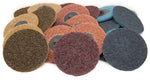
Surface conditioning discs are abrasive coated discs, made of nylon with abrasive grains. Surface conditioning materials are a non-woven polymer with a nylon fabric backing that is exceptionally durable. They are perfect for odd-angle surfaces as they produce a smooth and uniform finish with limited removal of material.
The discs are conformable and come in coarse medium, and very fine sizes, making them perfect for preparing uneven or curved work surfaces without damaging the base material, scraping, or undercutting. In little time, they form a constant, controlled, and even finish.
Uses of Conditioning Material in Metal Fabrication
Even though the polymers are soft, their composition with other abrasive grains like aluminum oxide, ceramic, zirconia, and titanium oxide will scrape glass. They're not the same scotch-Brite that is typically found in normal dish sponges. These are abrasive surface conditioning materials for industrial use that will aid in the manufacture of a consistent, burr-free, smooth, and paintable finish with fewer processes. They also won't harm or severely alter the object's shape or dimensions.
One way of using surface conditioning products is for finishing and linishing. Akin to finishing, Linishing’s the process of flattening a surface with a grinding or belt sanding technique, which can either be 2D or one-dimensional. Surface conditioning materials improve the appearance, become corrosion strong, tarnish-resistant, remove burrs and other superficial imperfections, regulating surface friction when used to finish.
Finishing/Linishing with a Surface Conditioning Belt
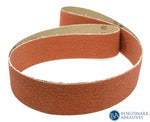
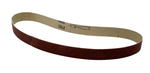
Surface conditioning belts have the versatility to both finish and polish, making them incredibly flexible. They are used in blending, finishing, polishing, applications on bench/platform mounted or portable finishing machines. If a perfect mirror finish is desired, the process should be commenced with the thickest (tan), then apply the medium grit (red/maroon), then the fine grain (blue), and lastly, the ultra-fine grain (purple) (grey). A knife maker's hidden weapon, as these surface conditioning belts are known, can be worn in a variety of ways and are available in different sizes.
Surface conditioning flap discs have the same integrating and scrubbing features as surface conditioning but with a long life span and more specific results thanks to the flap disc architecture. Surface conditioning flap discs are excellent because as the nylon material wears down, it falls away, exposing new material from underneath, allowing the flap disc to perform consistently. Because one won't have to change discs as frequently, they will have less downtime, and their productivity will also enhance.
What is a Surface Conditioning Flap Disc?
Because it combines the durability and adaptability of a flap disc with surface conditioning characteristics, a surface conditioning flap disc allows you to have a more mobile application. They're constructed of a superior non-woven surface conditioning material that's tough and long-lasting. The material is bonded to a durable fiberglass backing in an overlapping flap pattern. This will allow the user to substantially reduce the amount of time it takes to finish or polish their project.
Hook and Loop Discs for Surface Conditioning and Their Applications
Hook and loop is another term for Velcro, just like Scotch-Brite is a registered trademark for surface conditioning. The hook and loop surface conditioning discs, like the surface conditioning flap discs, attach to a backing pad or a hook and loop machine and provide the same utility and adaptability.
The flexibility of surface discs, which allows them to conform to irregular or contoured surfaces, is one of their most attractive features. Scotch-Brite surface conditioning discs can be used on heat-sensitive metals for polishing, grinding, finishing, blending, and deburring because their porous surface conditioning material allows airflow during operation.
Materials for Interleaf Flap Surface Conditioning
These tools come in various types for different applications, such as an interleaf flap wheel on a die grinder. Similar to a traditional flap wheel, these materials have sandpaper flaps that protrude from the tool's core. These vary in that nylon surface conditioning materials are used to cover the gaps.
Join Our Newsletter
Sign up to get the latest on sales, new releases and more …Join Our Newsletter
Sign up to get the latest on sales, new releases and more …Shop Categories
Recent Articles
- Proven Ways to Reduce Surface Roughness in Metal Milling
- What is Metal Shearing: Process, Applications, and Finishing
- 10 Essential Metal Fabrication Processes Explained
- Essential Metal Fabrication Tools: The Only Checklist You’ll Ever Need (Jason Hurst Approved)
- How To Deburr Metal
- A Step-By-Step Guide To Remove Spot Welds With Air File Sander
- How to Remove Mill Scale: Step-by-Step Guide
- The Role Of Abrasives In Modern Construction: Beyond The Surface
- Exploring The Art Of Metal Sculpting With Abrasives
- Abrasives in Renewable Energy: Applications In Solar And Wind Industries
Featured Products
-
 746 Reviews
4-1/2" x 7/8" T29 Zirconia High Density Flap Disc - 10 pack
$25.19
-
 738 Reviews
4-1/2" x .040 x 7/8" T1 Premium Thin Cut-off Wheel - 25 pack
$20.88
-
 220 Reviews
4-1/2" x 7/8" T27 Zirconia High Density Flap Disc - 10 pack
$25.19
-
 380 Reviews
6" x .045 x 7/8" T1 Premium Thin Cut-Off Wheel - 25 pack
$27.29
-
 123 Reviews
4-1/2" x 1/4" x 7/8" T27 Depressed Center Grinding Wheel - 25 pack
$28.34
-
 55 Reviews
Nonwoven 6" x 9" Scuff, Clean & Finish Hand Pads
$0.83


Blog Categories
- Abrasives
- Sanding
- Grinding Deburring Finishing
- Safety and Cleanliness
- Metal Working
- Selecting Tools And Equipment
- Wood Working
- Art And Design
- Diy Projects
- Industry 4.0
- Buffing
- Cutting Tools
- Carbide Burrs
- PPE
- Wire Brushes
- Bonded Abrasives
- TIG Electrodes
- Wire Wheels
- Bits
- Diamond Blades
- Power Brushes
- Product Reviews
- Grinding
- Finishing
- Industrial Cleaners