


























Spade bit vs Boring bit

Every woodworking project, whether it's fine carpentry or building a simple birdhouse or a sturdy swing, requires the right tools. One of the most essential tools is wood drill bits, which are designed to make precise and clean holes. Although high-speed steel (HSS) and spade drill bits are popular choices, it's essential to understand the differences between the different types, especially spade bits and boring bits, to achieve professional results.
HSS bits, often coated with black oxide for greater durability or titanium for reduced friction and sharper edges, are helpful for a wide range of tasks. However, when it comes to specific hole-drilling needs, specialized bits can significantly improve performance.
In this guide, we'll explore the specific features and applications of spade bits, boring bits, and other essential wood-boring tools to help you choose the right bit for your next project.
Spade Bit or Paddle Bit
Spade bits, also called paddle bits or flat boring bits, are valuable tools for quickly boring holes in wood, plastics, and thin metals. They have two cutting edges, two spurs, and a central point that helps guide the drill. It provides fast drilling with better accuracy. Spade bits are beneficial for tasks such as running electrical wire or plumbing lines through wall studs during rough construction.
Compared to other drill bits and hole saws, spade drill bits are also an affordable option for making larger holes, typically 1-1/2 inches wide. Although spade drill bits work well for general construction projects where a perfectly clean edge is not required, future improvements may include better coatings to reduce friction and improve chip removal, mainly when used on dense wood products.
Boring Bit or Bore Drill Bit
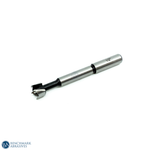
The term "boring bit" refers to a variety of drill bits that are used to make precise, often large-diameter, cylindrical holes. Compared to spade bits, "boring bits" usually denote tools designed for specific applications that require clean, large-diameter holes. It is most commonly associated with flat-bottom boring bits, such as Forstner bits or self-feed bits that do not use aggressive lead screws.
Flat flat-bottom boring Bit is used to drill large diameter holes through wood. They are used to make locks, doorknobs, and wiring holes. Flat-bottom boring bits are designed to work only on wood or plastic materials, not steel.
With the rise of smart home technology and integrated furniture, the demand for precise and clean holes for sensors, wiring, and custom hardware is increasing. Advanced boring bits with improved carbide tips and geometry for composite materials are currently in high demand.
Spade Bit Vs. Boring Bit: What’s the Difference
The basic difference lies in their primary function and the type of hole they make:
-
Spade bits: Prioritize speed and rough-in work. These are excellent for rapid material removal and drilling holes in places where a clean exit is not necessary.
-
Boring bits (e.g., Forstner, self-feed for large, clean holes): These prioritize precision, clean edges, and often flat-bottomed holes. They are ideal for finishing work, hardware installation, and applications where hole looks and accuracy are important.
Types of Wood Boring Drill Bits
The standard wood-boring drill bit types include:
1. Twist Drill Bit
The most common type of drill bit used for general-purpose drilling in wood, plastic, and thin metal.
2. Braid-Point Drill Bit
This wood drill bit is designed to cut and drill clean holes in soft and hardwood without splintering.
3. Auger Drill Bit
Another type of wood-boring drill bit with a sharp screw tip at the top to guide the drill bit's movement into the wood. An auger bit can drill more precisely and clean holes than spade bits and twist bits. Sizes of these drill bits are available up to 18 inches.
4. Self-feed Drill Bit
A self-feed bit is used to make clean holes in wood. This drill bit is somehow similar to an auger bit (though more compact) and has a screw at the top which helps the bit to remain stable during drilling.
5. Installer Drill Bit
This is a special twist bit designed to drill small holes for installing cables, internet, power, and security wires. The installer drill bit can be up to 18 inches long to drill through wood, plaster, and some masonry.
6. Spade Bit
A spade bit or paddle bit is used to drill large diameter holes (up to 1-1/2 inches) in wood, plastic, and drywall. They can also drill multiple rough holes in a short time.
7. Forstner drill bit
Forstner bits can drill smooth and clean holes in wood. These bits outperform auger and spade bits. Also, you can use them to make flat-bottom holes. To get our best Forstner bit set, visit our store.
8. Hole Saw
A perfect wood boring drill bit. A hole saw bit can drill large holes required for the door, hardware, and accessories installation. A bi-metal hole saw can cut through wood and metal.
9. Countersink Drill Bit
The countersink drill bit or screw pilot bit is a special drill bit for wood. This drill bit can drill pilot, countersink, and counterbore holes in a single use.
10. Step Drill Bit
The step drill bit is wood as well as a metal drill bit. This bit is designed to drill thin metal (up to 1/4 inch). The stepped design in this drill bit allows you to drill holes of multiple diameters.
Optimize Your Project with the Right Bit
Choosing the right drill bit is crucial to efficient, clean, and safe woodworking. While spade bits offer fast speeds for rough work, boring bits (and types like Forstner bits) excel in precision and finish. By understanding the unique characteristics and applications of each type, you can complete any woodworking project effectively.
Remember: Always choose your drill bit for the material and type of hole you want for best results. Investing in high-quality bits and understanding their proper use will not only improve your craftsmanship but also ensure safety and extend the life of your tools.
Join Our Newsletter
Sign up to get the latest on sales, new releases and more …Join Our Newsletter
Sign up to get the latest on sales, new releases and more …Shop Categories
Recent Articles
Featured Products
-
 746 Reviews
4-1/2" x 7/8" T29 Zirconia High Density Flap Disc - 10 pack
$25.19
-
 738 Reviews
4-1/2" x .040 x 7/8" T1 Premium Thin Cut-off Wheel - 25 pack
$20.88
-
 220 Reviews
4-1/2" x 7/8" T27 Zirconia High Density Flap Disc - 10 pack
$25.19
-
 380 Reviews
6" x .045 x 7/8" T1 Premium Thin Cut-Off Wheel - 25 pack
$27.29
-
 123 Reviews
4-1/2" x 1/4" x 7/8" T27 Depressed Center Grinding Wheel - 25 pack
$28.34
-
 55 Reviews
Nonwoven 6" x 9" Scuff, Clean & Finish Hand Pads
$0.83


Blog Categories
- Abrasives
- Sanding
- Grinding Deburring Finishing
- Safety and Cleanliness
- Metal Working
- Selecting Tools And Equipment
- Wood Working
- Art And Design
- Diy Projects
- Industry 4.0
- Buffing
- Cutting Tools
- Carbide Burrs
- PPE
- Wire Brushes
- Bonded Abrasives
- TIG Electrodes
- Wire Wheels
- Bits
- Diamond Blades
- Power Brushes
- Product Reviews
- Grinding
- Finishing
- Industrial Cleaners