


























Coated Abrasives: Types, Components, and Uses

A coated abrasive is a high-precision tool produced by bonding abrasive grains to a flexible or semi-rigid substrate using specialized adhesives. While often referred to by the general public as "sandpaper," these industrial tools rarely contain sand and are frequently backed by materials much stronger than paper, such as vulcanized fiber or polyester cloth.
Coated abrasives are manufactured in massive "jumbo" rolls before being converted into specific shapes like belts, discs, and flap wheels. They are the backbone of surface treatment in industries ranging from aerospace and automotive to furniture and jewelry manufacturing.
The Two-Stage Adhesive Process: Make and Size Coats
The durability of a coated abrasive is determined by its two-stage bonding process. First, a "make coat" of adhesive is applied to the backing. This layer holds the abrasive grains in their initial orientation. For high-performance products, an electrostatic coating process is used here to ensure the grains stand upright with their sharpest points facing outward.
Once the make coat is set, a second layer—the "size coat"—is applied over the abrasive grains. This layer is critical because it anchors the grains and provides the structural strength to resist the lateral forces of grinding. Without a properly sized coat, the grains would "strip" or "shell" off the backing prematurely. In many heavy-duty metalworking applications, a third layer called a "supersize" coat is added, containing grinding aids that reduce heat and prevent the abrasive from "loading" with soft metal debris.
Understanding Abrasive Flexing and Performance
Because coated abrasives are essentially a layer of "stone" on a flexible backing, they must undergo a controlled mechanical process called "flexing." This involves passing the abrasive over a series of rollers to create controlled, microscopic cracks in the adhesive bond.
Without flexing, the abrasive would be too stiff to wrap around a sanding belt pulley or conform to a contoured workpiece, causing the abrasive layer to shatter unevenly. "Single-flex" abrasives are stiff and used for flat surface grinding, while "Full-flex" abrasives are highly pliable and designed for intricate profiles and hand sanding. Matching the flex of the abrasive to the geometry of your workpiece is essential for preventing premature belt breakage and ensuring a uniform finish.
Primary Components of Coated Abrasives
Abrasive Grains Synthetic grains have largely replaced natural minerals in industrial settings due to their uniform hardness and predictable fracture rates.
- Ceramic: High-density micro-crystalline structure that self-sharps under pressure. Best for stainless steel and aerospace alloys.
- Aluminum Oxide: A tough, blocky grain ideal for high-speed grinding on carbon steel and wood.
- Zirconia Alumina: A dense, crystalline grain designed for heavy stock removal on steel and cast iron.
- Silicon Carbide: The sharpest and hardest mineral, but brittle. Essential for non-ferrous metals, glass, and marble.
- Garnet: A natural mineral that provides an excellent finish on wood but is too fragile for metalworking.
Backing Materials
- Paper: Rated by weight (A to F). A-weight is highly flexible for hand finishing; F-weight is heavy-duty for machine sanding.
- Cloth: Available in cotton, polyester, or blends. X-weight (stiff) is for heavy grinding; J-weight (flexible) is for contours.
- Fiber: Vulcanized rag stock used exclusively for high-pressure fiber discs.
- Combination: Laminated layers of paper and cloth for maximum shock resistance.
Types of Coated Abrasives

Standard options for finishing and polishing include:
Cartridge Rolls: Abrasive strips wrapped into a cylindrical shape. These are designed to reach inside corners and internal diameters where larger tools cannot fit. As the outer layer wears, it sheds to reveal a new abrasive.
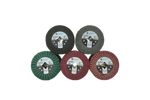
Flap Discs and Wheels: Composed of overlapping abrasive "flaps" attached to a hub. Flap discs allow for grinding and finishing in a single action, while flap wheels provide the flexibility needed to navigate tight contours and complex shapes.
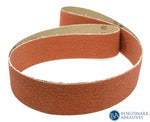
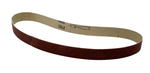
Sanding Belts and Sheets: Sanding Belts are used on fixed or portable machinery for rapid stock removal and blending. Sheets are the standard for hand-sanding and fine surface preparation.
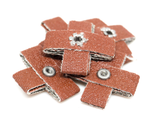
Deburring Wheels and Cross Pads: Cross pads provide a unique "see-through" contact region, making it easier to monitor the workpiece during end-deburring or small channel polishing. Deburring wheels are engineered for precision blending of metals and glass.
Proper Storage and Handling
Improper storage is the leading cause of coated abrasive failure. Because the backings (especially paper and cloth) are hygroscopic, they absorb moisture from the air.
- Humidity Control: Maintain between 35-50%. High humidity causes "cupping" (the disc curls toward the grain), while low humidity causes the backing to become brittle and crack.
- Temperature Control: Keep between 60-80°F. Avoid storing near heat sources or cold exterior walls.
- Hanging Belts: Belts should be stored on wide cylinders. Never hang a belt from a nail or peg, as the concentrated weight will crease the backing and crack the abrasive coating.
- Pressure Storage: Fiber discs should be stored in their original packaging or under pressure in a disc holder to maintain their flatness.
Built to Cut, Designed to Last
Coated abrasives offer flexibility, precision, and power across industries—from heavy-duty grinding to fine finishing. With a range of backing materials and abrasive grains, these tools are tailored for everything from woodworking and metal fabrication to delicate polishing work. Their versatility in form—rolls, belts, discs, flaps, and more—means there’s a match for every surface challenge. When stored and handled properly, coated abrasives deliver consistent performance and longer tool life, job after job.
Join Our Newsletter
Sign up to get the latest on sales, new releases and more …Join Our Newsletter
Sign up to get the latest on sales, new releases and more …Shop Categories
Recent Articles
- Winter Tool Care: How to Store Abrasives in Cold Weather
- What is Industrial Abrasive - Types, Uses and Materials
- How to Avoid Scratches When Using Coated Abrasives on Soft Metals
- How Bonded Abrasives Perform on Tough Materials like Stainless Steel
- Grinding Wheels: Resolving Common Abrasive Tool Issues
- Difference Between Cross Pads and Cartridge Rolls
- What is Friability: Importance and Affecting Factors
- 10 Pointers Show You Need to Change Your Abrasive Disc
- Difference Between Open and Closed Coat Abrasives
- How Do Abrasives Work?
Featured Products
-
 734 Reviews
4-1/2" x .040 x 7/8" T1 Premium Thin Cut-off Wheel - 25 pack
$20.88
-
 746 Reviews
4-1/2" x 7/8" T29 Zirconia High Density Flap Disc - 10 pack
$25.19
-
 220 Reviews
4-1/2" x 7/8" T27 Zirconia High Density Flap Disc - 10 pack
$25.19
-
 380 Reviews
6" x .045 x 7/8" T1 Premium Thin Cut-Off Wheel - 25 pack
$27.29
-
 123 Reviews
4-1/2" x 1/4" x 7/8" T27 Depressed Center Grinding Wheel - 25 pack
$28.34
-
 55 Reviews
Nonwoven 6" x 9" Scuff, Clean & Finish Hand Pads
$0.83


Blog Categories
- Abrasives
- Sanding
- Grinding Deburring Finishing
- Safety and Cleanliness
- Metal Working
- Selecting Tools And Equipment
- Wood Working
- Art And Design
- Diy Projects
- Industry 4.0
- Buffing
- Cutting Tools
- Carbide Burrs
- PPE
- Wire Brushes
- Bonded Abrasives
- TIG Electrodes
- Wire Wheels
- Bits
- Diamond Blades
- Power Brushes
- Product Reviews
- Grinding
- Finishing
- Industrial Cleaners