
































What is Industrial Abrasive - Types, Uses and Materials

The glossy shine of a stainless steel sink and the precision-machined finish of airplane components share a common manufacturing secret: abrasives. Behind virtually every smooth surface and precisely shaped component lies the work of specialized abrasive products that transform raw materials into finished goods.
So, what is an industrial abrasive? Industrial abrasives are hard substances used to grind, cut, or polish softer materials, serving as the foundation for countless manufacturing processes across industries.
Below, we’ll explore the different industrial abrasives and materials, from the basics to the specific abrasive tools and applications that depend on them.
What is an Industrial Abrasive?
To expand on what we mentioned above, an industrial abrasive is a hard substance used to shape an object through friction and rubbing. These substances may be natural abrasives or synthetic abrasives. They scrape away material from the targeted surface by using tiny, sharp edges. To determine an abrasive's effectiveness, you must consider the hardness and grit size of its particles, the quality of its binder, and the base material used for the tool.
The primary functions of an abrasive are cutting, removing material, and creating a specific surface finish. For fast material removal, use coarse grits. For delicate polishing and a smooth finish, use finer grits.
Types of Abrasives
Abrasives are classified based on their origin and hardness, which directly affects their applications.
Natural Abrasives
Natural abrasives are derived from minerals found in nature and were historically the only option available before synthetic alternatives were developed.
Common examples include garnet, quartz, emery, and natural diamond, which ranks as the hardest substance on the Mohs scale. Glass beads and steel shot are also considered natural abrasives, particularly for blasting applications. These materials are typically used on softer substances such as tin and non-ferrous metals like aluminum.
Synthetic Abrasives
Modern industry relies heavily on synthetic abrasives due to their consistent performance, superior purity, and reliable quality control. These artificially manufactured abrasive grains are produced under strict manufacturing guidelines to ensure uniformity and predictable results.
Common examples include silicon carbide, valued for its exceptionally sharp and hard particles, and aluminum oxide, a durable material widely used for working with wood and most metals. The most advanced synthetic abrasives include synthetic diamond and cubic boron nitride, which fall into the specialized category of superabrasives.
Superabrasives
Superabrasives are a class of materials with exceptionally high hardness, making them ideal for working with hard metals and ferrous alloys, such as steel and iron. The most common superabrasives used today are synthetic diamond and cubic boron nitride. These materials are specially designed for precision work and applications where conventional abrasives would wear out too quickly.
| Category | Natural Abrasives | Synthetic Abrasives | Superabrasives |
| Origin | Derived from naturally occurring minerals | Manufactured to precise standards | A specialized subclass of synthetic abrasives |
| Purity & Consistency | Contain impurities | High quality and consistent performance | Extremely high purity and consistency |
| Examples | Quartz, Garnet, glass beads, natural diamond, emery | Aluminum oxide, Silicon carbide, cubic boron nitride, synthetic diamonds | Synthetic diamond, cubic boron nitride (CBN) |
| Typical Use | Softer materials (e.g., tin, aluminum, non-ferrous metals) | Broad range of materials (e.g., wood, most metals) | Very hard materials (e.g., hardened steel, cast iron, superalloys) |
| Advantages | Historically available, often cost-effective for specific uses | Consistent quality, purity, and performance | Extreme hardness and durability for precision work on very hard materials |
Common Abrasive Forms and Tools
Abrasives are integrated into various cutting tools, each designed for a specific machining process.
Coated Abrasives
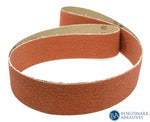
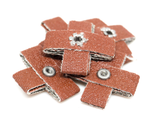
Coated abrasives consist of abrasive particles attached to a flexible base material such as paper, cloth, or vulcanized fibers. These are some of the most widely used abrasive products in the industry today.
Common examples include sanding belts, abrasive belts, fiber discs, and flap discs. Flap wheels are another type of coated abrasive that is particularly valued for their adaptability to curved and contoured surfaces. The exposed sharp edges of the particles allow for effective sanding and material removal.
Bonded Abrasives
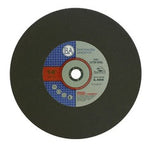
In bonded abrasives, the particles are combined with a binding agent and shaped into a specific shape, such as a wheel or grinding stone. A common example of this is the cut-off wheel used on an angle grinder or abrasive chop saw. Grinding wheels used on bench grinders are another form of bonded abrasive, designed to withstand high pressure and high temperatures without losing their shape.
Abrasive Blasting and Specialty Tools
Abrasive blasting uses a high-pressure air stream to deliver an abrasive medium to clean, scrape, or carve a surface. Specialized tools such as abrasive discs, cutting tools, and drill bits are designed for specific power tools or machines.
For precise, intricate cuts, modern cutting tools like the waterjet combine a high-pressure water stream with an abrasive material.
Different Applications of Industrial Abrasives
Industrial abrasives are used in a wide range of industries for tasks that involve shaping, finishing, and polishing materials. Each industry utilizes different abrasive tools tailored to its specific requirements:
| Industry/Application | Primary Uses | Examples of Tools/Abrasives |
| Metalworking & Manufacturing | Grinding, cutting, deburring, and surface finishing of metal parts. | Grinding wheels, cut-off discs, sanding belts, mounted points, sandpaper |
| Automotive & Aerospace | Refinishing body panels, polishing chrome, removing paint, and preparing surfaces for painting. | Sanding discs, polishing compounds, flap discs, abrasive sponges |
| Woodworking & Furniture | Sanding raw wood, shaping furniture, and applying a smooth final finish. | Sandpaper, sanding belts, abrasive sheets, sanding pads |
| Construction & Masonry | For heavy-duty cutting and grinding of concrete, stone, brick, and tile. As well as for surface preparation. | Diamond blades, grinding wheels, masonry cutting discs, sandblasting media |
| Electronics & Optics | Specialized lapping and polishing of semiconductors, PCBs, and optical components. | Polishing compounds, diamond paste, ultra-fine abrasive slurries |
| Jewelry & Gemstone Polishing | Cutting, shaping, and polishing gemstones, gold, silver, and other precious metals. | Diamond paste, buffing pads, polishing compounds, abrasive wheels |
| Medical Devices | Precise fabrication and finishing of surgical tools, implants, and prosthetics. | Precision grinding wheels, polishing compounds, honing stones |
Related Article: How to Cut Metal For Every Project Using Tools and Materials
Choosing the Right Abrasive
Selecting the right abrasive is crucial to success in various industrial applications. The best choice depends on several factors: the hardness of your workpiece, the machining process required, and the desired surface preparation or smooth finish. For example, when working on stainless steel, choose a hard abrasive that will not corrode the metal, while for glass, a fine-grit silicon carbide abrasive may be the best choice.
Performance factors include cutting efficiency, high-speed rating, and heat resistance. A good abrasive has a uniform cutting edge and high hardness, ensuring it lasts a long time and delivers the desired results. Selecting the right product from a variety of options is the key to achieving a professional finish.
The Foundation of Precision Manufacturing
Industrial abrasives serve as the backbone of modern manufacturing, enabling the transformation of raw materials into precisely finished products across countless industries. From general-purpose industrial supplies to highly specialized precision tools, the selection of appropriate abrasive technology directly impacts project outcomes, production efficiency, and final product quality.
Understanding the relationship between material properties, abrasive characteristics, and application requirements is essential for optimizing manufacturing processes and achieving superior results. Benchmark Abrasives provides comprehensive abrasive solutions engineered to meet the demanding specifications of today's advanced manufacturing environments.
Join Our Newsletter
Sign up to get the latest on sales, new releases and more …Join Our Newsletter
Sign up to get the latest on sales, new releases and more …Shop Categories
Recent Articles
- Poly Strip Discs for Paint & Rust Removal
- How to Blend Welds Flat Without Gouging
- Winter Tool Care: How to Store Abrasives in Cold Weather
- What is Industrial Abrasive - Types, Uses and Materials
- How to Avoid Scratches When Using Coated Abrasives on Soft Metals
- How Bonded Abrasives Perform on Tough Materials like Stainless Steel
- Grinding Wheels: Resolving Common Abrasive Tool Issues
- Difference Between Cross Pads and Cartridge Rolls
- What is Friability: Importance and Affecting Factors
- 10 Pointers Show You Need to Change Your Abrasive Disc
Featured Products
-
 746 Reviews
4-1/2" x 7/8" T29 Zirconia High Density Flap Disc - 10 pack
$25.19
-
 738 Reviews
4-1/2" x .040" x 7/8" t1 premium thin cut-off wheel - 25 pack
$20.88
-
 220 Reviews
4-1/2" x 7/8" T27 Zirconia High Density Flap Disc - 10 pack
$25.19
-
 380 Reviews
6" x .045 x 7/8" T1 Premium Thin Cut-Off Wheel - 25 pack
$27.29
-
 55 Reviews
Nonwoven 6" X 9" Scuff, Clean & Finish Hand Pads
$0.83
-
 123 Reviews
4-1/2" x 1/4" x 7/8" T27 Depressed Center Grinding Wheel - 25 pack
$28.34


Blog Categories
- Abrasives
- Sanding
- Grinding Deburring Finishing
- Safety and Cleanliness
- Metal Working
- Selecting Tools And Equipment
- Wood Working
- Art And Design
- Diy Projects
- Industry 4.0
- Buffing
- Cutting Tools
- Carbide Burrs
- PPE
- Wire Brushes
- Bonded Abrasives
- TIG Electrodes
- Wire Wheels
- Bits
- Diamond Blades
- Power Brushes
- Product Reviews
- Grinding
- Finishing
- Industrial Cleaners