




























Guide to Industrial Sanding Belts: Applications and Selection Tips

Are you searching for reliable tools that can handle both heavy stock removal and delicate fine finishing with ease? Industrial sanding belts are the solution you're looking for. These essential abrasive tools are crucial for professionals in woodworking, metal fabrication, and manufacturing, offering the efficiency and precision required for all kinds of surface finishing tasks.
Choosing the right abrasive belt is crucial for achieving smooth, professional-grade results. In this guide, we'll dive into the different abrasive materials, grit sizes, and applications that make industrial sanding belts such a powerful tool.
At Benchmark Abrasives, we're dedicated to supplying high-quality abrasive belts that help you achieve outstanding results and elevate the standards of your work.
What Are Industrial Sanding Belts?
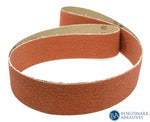
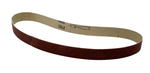
Industrial sanding belts are powerful abrasive tools made from grains embedded on a flexible backing, specifically designed for heavy-duty applications such as stock removal, fine finishing, and surface preparation. Unlike other abrasives—such as sanding discs, flap discs, sheets, and rolls—abrasive sanding belts offer continuous motion and consistent pressure, making them ideal for long, uninterrupted operations.
Abrasive Grains: Choosing the Right Belt Material
Selecting the correct abrasive grain and belt size is essential for maximizing performance and achieving a high-quality finish. Different grain types offer distinct advantages depending on your application—some are ideal for woodworking, while others are better suited for shaping metal or polishing.
Let’s explore the most common abrasive grains, compare their strengths, weaknesses, and typical applications, and provide real-world examples.
1. Aluminum Oxide
An aluminum oxide sanding belt is perfect for woodworking projects. It's affordable, versatile, and delivers consistent results on a wide range of materials.
2. Zirconia Alumina & Zirconia Belts
Zirconia belts made from zirconia alumina handle tough metals. Ideal for stainless steel, built with strong raw materials.
3. Ceramic Belts & Ceramic Alumina
Ceramic alumina excels in grinding. Trusted by knife makers, this abrasive material removes stock fast.
4. Silicon Carbide Sanding Belts
Silicon carbide sanding belts cut non-ferrous metals. Perfect for solid surface work and ultra-fine polishing.
Grit Size and Backing Materials
The grit size of industrial abrasive belts plays a crucial role in determining their effectiveness and overall results. Choosing the right grit size depends on the stage of your project, coarse for heavy stock removal, and fine grits for detail work and finishing touches.
An abrasive belt's grit size is the key factor in its function and performance.
- Coarse Grits (40-60): Coarse grits are designed for rapid stock removal and shaping rough materials. Use them for the first step in a project when you need to quickly grind down and shape a surface.
- Medium Grits (80-120): Suitable for general grinding tasks, deburring, and preparing surfaces for finish work.
- Finer Grits (150-220): Ideal for fine finishing, polishing, and achieving a smooth, glossy surface. Perfect for delicate work and detail finishing.
- Extra-Fine Grits (240+): Employed for polishing, buffing, and final surface refinement, ensuring an ultra-smooth finish.
Backing Materials
The backing material provides support to the abrasive grains and affects flexibility, durability, and application suitability.
One common type is J Weight backing, known for its flexibility and ability to conform to complex shapes, making it ideal for detailed or curved surfaces. Heavier backings, such as K or M weight, offer increased strength and durability for aggressive grinding, but they are less flexible.
Using the appropriate backing material ensures an optimal balance of durability and performance, customized to meet the specific needs of your project.
-
J Weight: This backing, with flexibility and lightweight, is ideal for detailed work, contouring, and finishing. J Weight conforms easily to complex surfaces and curves, making it perfect for delicate polishing and fine detail work.
-
K Weight: Slightly thicker and more durable, K Weight backing provides a good balance of flexibility and strength. Suitable for medium-heavy grinding tasks.
-
M and Higher: Heavy-duty backings such as M, N, or Q weight are designed for aggressive stock removal. They offer higher durability but less flexibility.
Matching Belt Types, Sizes, and Their Compatible Machines
Choosing the right type and size of industrial sanding belt is essential for delivering peak performance and a high-quality finish. Belts must match their machines to maximize performance, whether for hand tools or heavy-duty power tools.
1. Wide Belts and Wide Sanding Belts
These belts are designed for use on wide belt sanders, for high-volume production and large-scale projects. They are ideal for heavy material removal, smoothing large panels, and achieving uniform finishes on wood and metal. Sizes can range from 24 inches up to over 120 inches in length.
2. Custom Belts
When standard options fall short, custom belts provide tailored solutions for unique dimensions, grits, or abrasive needs. They are essential for specialized shapes and materials, ensuring precision and efficiency.
3. Belt Grinder & Drum Sander
A belt grinder is robust for shaping, carving, and aggressive stock removal, widely used in knife making and metal fabrication. A drum sander, on the other hand, maintains steady contact for fast, even finishing across wide surfaces.
4. Edge Sander & Disc Sander
For precision finishing, an edge sander smooths moldings and aligns edges, while a Disc Sander excels at detail work on smaller parts.
5. Bench Grinder
Compact yet versatile, the bench grinder excels at sharpening tools, grinding metal parts, and performing routine workshop maintenance with ease.
Related Article: Ultimate Guide On How to Measure a Sanding Belt
Sanding Belt Applications & Best Practices
Sanding belts are commonly used across various industries for both material removal and surface conditioning. In woodworking, they’re ideal for removing rough stock and refining surfaces. In solid surface fabrication, they're perfect for shaping and finishing materials like acrylic.
Achieve the best results by matching your belt to your goal: use coarse belts for rapid material removal and finer belts to achieve a smooth finish. To extend the industrial sanding belt life, professionals often use grease sticks or belt-cleaning sticks, a helpful accessory that reduces heat and friction. Regular maintenance and correct tensioning are essential to prevent belt slippage and ensure consistent performance.
Comparing Alternatives: Belts vs. Discs, Rolls & Sheets
| Abrasive Type | Pros | Cons | Best For |
| Sanding Belts |
|
|
|
| Sanding Discs |
|
|
|
| Flap Discs |
|
|
|
| Sanding Rolls |
|
|
|
| Sanding Sheets |
|
|
|
When to Choose Sanding Belts
Sanding belts are ideal when continuous sanding, surface leveling, or aggressive stock removal is required—especially in industrial or manufacturing environments. Their efficiency and durability make them a top choice for surface finishing professionals.
Perfect Sanding Belt for Every Application
A sanding belt's performance depends on three key factors: material, grit, and size. Choose the right one for your job: aluminum oxide for all-purpose use, zirconia for heavy-duty tasks, ceramic for tough metals, and silicon carbide for glass and stone. Grit determines finish: coarse for rapid removal, medium for balanced sanding, fine for smooth surfaces, and extra-fine for polishing.
For reliable sanding results, choosing proven brands is key. Quality belts not only last longer but also deliver consistent performance across applications. In the USA, some of the most trusted names include:
- Benchmark Abrasives
- 3M
- Norton Abrasives
- Klingspor
- Mirka
- Grainger
- MSC Industrial Supply
Focusing on quality and durability gives the best experience with the abrasive sanding belts. Cost-effectiveness is achieved by investing in belts that withstand wear and tear, minimizing frequent replacements.
Related Article: Best Sandpaper For Metal
Ready to Find Your Perfect Belt?
Selecting the right industrial sanding belts is essential for achieving consistent performance, durability, and cost savings in any application. From woodworking to heavy-duty metal finishing, the choice of abrasive sanding belts directly impacts quality and efficiency.
At Benchmark Abrasives, we pride ourselves on providing the best abrasive products trusted by professionals across industries. Explore our complete product catalog today or contact us to request custom belts designed to fit your exact needs.
Join Our Newsletter
Sign up to get the latest on sales, new releases and more …Join Our Newsletter
Sign up to get the latest on sales, new releases and more …Shop Categories
Recent Articles
- Resin Fiber Discs: Proper Storage and Handling Techniques
- Sanding Belt Safety Tips: Best Practices for Safe Operation
- 1X30 Sanding Belts for Metalworking & Knife Making
- Why Sanding Belts Stop Cutting Efficiently
- Best Sanding Discs for Automotive Paint Preparation
- How to Change Sandpaper on a Drum Sander
- Sanding Drums for Metal, Finishing, and Deburring
- Sanding Disc Accessories: Backing Pads & Disc Tools
- Random Orbital Sander
- Ways to Remove Rust from Metal
Featured Products
-
 746 Reviews
4-1/2" x 7/8" T29 Zirconia High Density Flap Disc - 10 pack
$25.19
-
 738 Reviews
4-1/2" x .040 x 7/8" T1 Premium Thin Cut-off Wheel - 25 pack
$20.88
-
 220 Reviews
4-1/2" x 7/8" T27 Zirconia High Density Flap Disc - 10 pack
$25.19
-
 380 Reviews
6" x .045 x 7/8" T1 Premium Thin Cut-Off Wheel - 25 pack
$27.29
-
 123 Reviews
4-1/2" x 1/4" x 7/8" T27 Depressed Center Grinding Wheel - 25 pack
$28.34
-
 55 Reviews
Nonwoven 6" x 9" Scuff, Clean & Finish Hand Pads
$0.83


Blog Categories
- Abrasives
- Sanding
- Grinding Deburring Finishing
- Safety and Cleanliness
- Metal Working
- Selecting Tools And Equipment
- Wood Working
- Art And Design
- Diy Projects
- Industry 4.0
- Buffing
- Cutting Tools
- Carbide Burrs
- PPE
- Wire Brushes
- Bonded Abrasives
- TIG Electrodes
- Wire Wheels
- Bits
- Diamond Blades
- Power Brushes
- Product Reviews
- Grinding
- Finishing
- Industrial Cleaners