



























How Humidity Impacts Sanding Belts

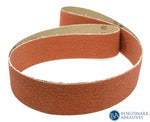
Sanding belts consist of coated abrasives engineered to perform under specific environmental conditions. Their complex construction—including abrasive grains, backing materials, and bonding agents—means even slight changes in moisture levels can have noticeable consequences.
If you depend on your sanding belts for consistent, high-quality results, understanding how humidity affects their performance and longevity is key to maximizing their performance and longevity.
Why Humidity Affects Sanding Belts?
The core composition of a sanding belt determines its moisture sensitivity. Abrasive grains, such as aluminum oxide, are bonded to a backing, typically polyester fabric or synthetic fiber, using a resin-based bonding agent.
The backing material naturally absorbs moisture like a sponge. This absorption affects the belt's essential balance. The belt's flexibility depends on this balance; if the belt becomes too dry, it can become weak and stiff, increasing the risk of tearing, especially at belt joints.
Conversely, if it becomes too wet, the fibers swell, the bonding agent softens, and the abrasive material can peel away rapidly.
Related Article: What Are Sanding Belts and Their Applications?
Effects of High Humidity on Belt Performance
High humidity and excessive humidity significantly increase the moisture content inside the belt fibers. This softens the entire structure, leading to several performance issues:
- Reduced Cutting Efficiency: The abrasive grains cannot stand up as rigidly, leading to a duller cut and a slower sanding process.
- Stretching: A softened backing can stretch during operation, making it difficult to maintain proper tension on the machine.
- Decreased belt life: The premature shedding of abrasive particles due to a weakened bonding agent dramatically shortens the service life and overall life of the belt. Ultimately, the life of the abrasive belt is compromised.
Effects of Low Humidity and High Temperatures
A different risk called brittleness arises when high temperatures are combined with low humidity.
When the belt dries out completely, its backing can become brittle and hard. This makes the belt prone to breakage at the edge, potentially causing serious damage during operation. A brittle belt will also wear out faster during the grinding process because it loses its ability to bend slightly on the sanding surface. This significantly increases wear on the grinding material.
Material-Specific Sensitivity to Humidity
While all abrasives are affected, some backings are more sensitive than others.
Aluminum Oxide belts are durable, but their adhesive bonds are still affected by moisture. Abrasive Paper backing is generally more susceptible to rapid changes in humidity than Abrasive Film or polyester cloth, making it more prone to warping or wrinkling.
Some specialized processes, like stainless steel grinding, require a high-quality abrasive with stable performance. Humidity-induced instability can lead to inconsistent finishes or even heat buildup.
It's worth noting that similar abrasives, such as flap wheels and grinding wheels, use a more rigid, more powerful backing and are generally less susceptible to immediate performance degradation from ambient moisture than flexible sanding belts.
Related Article: Ceramic vs. Aluminum Oxide vs. Zirconia Abrasive Grains
Ideal Storage Conditions to Preserve Belt Quality
Proper storage of your abrasives is crucial to getting the most out of them. When abrasive tools are stored properly, their integrity is maintained, and their optimal performance is guaranteed.
- Humidity Requirements: The ideal humidity range for Store belts is typically between 35% and 50% relative humidity.
- The ideal temperature is a steady 60°F to 80°F (15°C to 27°C).
- Avoid heat sources and direct sunlight as they accelerate the drying process.
- Avoid heavy objects, such as compressing belts, as this can lead to permanent distortion.
- Keep belts in their unopened packaging until you are ready to use them.
- Never expose belts to water or excessive moisture.
Protective Packaging and Handling
Proper packaging is your first line of defense against moisture fluctuations. Storing belts in sealed plastic bags minimizes moisture exposure and significantly extends their shelf life. This is especially true for delicate abrasives like PSA discs and hook-and-loop, which require a controlled environment to maintain the strength of their adhesive or backing systems. When purchasing long-term stock, always check the expiration date to ensure you're using belts that are still within their best performance window.
Practical Tips for Maintaining Optimal Performance
If your workshop has unstable humidity levels, here are some tips for maintaining optimal performance:
- Acclimation: Allow belts to acclimate to your work environment for 24-48 hours before use. This allows the fibers to stabilize.
- Rotation: Monitor your stock and rotate it regularly so that belts don’t sit unused for too long.
- Monitoring: Consider using a simple hygrometer to monitor indoor humidity levels in your storage area.
Extend the Service Life of Your Belt
Understanding how moisture affects sanding belts is essential to abrasive care. By adopting proper storage practices, maintaining consistent humidity and temperature, and keeping belts in their unopened packaging, you can significantly extend your product's service life.
Prioritizing proper storage ensures consistent cutting quality, helping you maintain efficiency and achieve the best results from your high-quality abrasives every time.
Join Our Newsletter
Sign up to get the latest on sales, new releases and more …Join Our Newsletter
Sign up to get the latest on sales, new releases and more …Shop Categories
Recent Articles
- Resin Fiber Discs: Proper Storage and Handling Techniques
- Sanding Belt Safety Tips: Best Practices for Safe Operation
- 1X30 Sanding Belts for Metalworking & Knife Making
- Why Sanding Belts Stop Cutting Efficiently
- Best Sanding Discs for Automotive Paint Preparation
- How to Change Sandpaper on a Drum Sander
- Sanding Drums for Metal, Finishing, and Deburring
- Sanding Disc Accessories: Backing Pads & Disc Tools
- Random Orbital Sander
- Ways to Remove Rust from Metal
Featured Products
-
 746 Reviews
4-1/2" x 7/8" T29 Zirconia High Density Flap Disc - 10 pack
$25.19
-
 738 Reviews
4-1/2" x .040" x 7/8" t1 premium thin cut-off wheel - 25 pack
$20.88
-
 220 Reviews
4-1/2" x 7/8" T27 Zirconia High Density Flap Disc - 10 pack
$25.19
-
 380 Reviews
6" x .045 x 7/8" T1 Premium Thin Cut-Off Wheel - 25 pack
$27.29
-
 55 Reviews
Nonwoven 6" X 9" Scuff, Clean & Finish Hand Pads
$0.83
-
 123 Reviews
4-1/2" x 1/4" x 7/8" T27 Depressed Center Grinding Wheel - 25 pack
$28.34


Blog Categories
- Abrasives
- Sanding
- Grinding Deburring Finishing
- Safety and Cleanliness
- Metal Working
- Selecting Tools And Equipment
- Wood Working
- Art And Design
- Diy Projects
- Industry 4.0
- Buffing
- Cutting Tools
- Carbide Burrs
- PPE
- Wire Brushes
- Bonded Abrasives
- TIG Electrodes
- Wire Wheels
- Bits
- Diamond Blades
- Power Brushes
- Product Reviews
- Grinding
- Finishing
- Industrial Cleaners