





























What's The Best Approach To Achieve A Uniform Satin Finish On Stainless Steel?

A smooth and satin finish on stainless steel requires a systematic and methodical approach. This blog will cover all the essential elements involved in the process, such as emphasizing the significance of surface preparation and selecting and using the right abrasives with the right technique. We will also cover the necessary tips to ensure a uniform and long-lasting result.
Steps To Achieve A Uniform Satin Finish On Stainless Steel
The secret method for achieving a uniform satin finish on stainless steel involves a lengthy process focusing on careful preparation and regular application of abrasives. Below are the steps involved in achieving the desired result.
1. Thorough Surface Preparation Is Crucial
The first and mandatory step in achieving a uniform satin finish on stainless steel is thorough surface preparation. This process involves cleaning all the contaminants on the surface and fixing any existing faults to ensure a clean and uniform base for further abrasive operations that will generate the required consistent texture.
-
Initial Cleaning: Start by cleaning the surface of the stainless steel. Clean all signs of contaminants like dirt, grease, oil, fingerprints, etc. Ensure that you use a mild detergent and water to clean the surface. Rinse thoroughly and dry the surface with a clean, lint-free cloth. For stubborn coatings, use specialized stainless steel cleaners.
-
Resolving Current Flaws: It's also crucial to resolve any current flaws or errors, such as dents, scratches, or welds, while doing the process. Minor scratches can also be eliminated by using finer abrasive compounds or pads. Deep scratches may require grinding or filling after blending carefully.
The primary focus is eliminating the flaws and ensuring that the treated area is even and ready to withstand the consistent abrasion required to get the perfect satin finish. This also helps prevent the flaws from worsening or producing irregularities in the final look. Careful attention to this step is necessary for a perfect and consistent smooth finish throughout the stainless steel surface.
2. Choosing The Right Abrasives And Tools
Selecting the right abrasives and tools is essential for a uniform satin finish on stainless steel. This includes abrasive grades, types, and tools like sanders, grinders, and much more. They all contribute to a uniform and smooth satin finish.
-
Abrasive Grades: Try using fine to very fine abrasives to achieve a satin-smooth finish. If necessary, begin with a slightly coarse grit to smooth out flaws, then gradually increase to finer grits. Popular grits for satin finishes range between 180 and 400 grit, though this might differ based on the desired amount of grain and reflectivity.
-
Abrasive Types: A smooth satin finish on stainless steel can be obtained on different scales and stages using different abrasives.
-
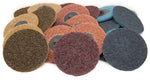
Non-woven abrasive Pads, similar to scotch-brite, are perfect for producing a uniform linear grain and come in a wide range of grits, from coarser blending to very fine finishing.
-
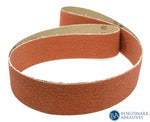
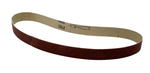
Abrasive Belts—When used with belt sanders, abrasive belts help remove material efficiently and provide a consistent direction as long as proper control is maintained. They are perfectly suitable for larger and flatter surfaces.
-
Abrasive Discs are highly compatible with angle grinders or rotary tools and are useful for blending welds, cleaning bigger areas, and even reaching more curved surfaces.
-
Rubbing Compounds—The final step after all the abrasive work is rubbing compounds. These are fine abrasive pastes that can be applied with products like buffing wheels or cloths. They help refine the surface texture and enhance the desired appearance. They are perfect for achieving a very subtle satin shine.
Selecting the right abrasive type is usually based on the size and shape of the workpiece, the initial surface condition, and the required level of satin refinement.
-
Tools: choosing the right tools is essential for effectively applying the selected abrasives and getting a uniform satin finish on stainless steel. Following is the list of some useful tools:
-
Hand sanding blocks- ensures even pressure by providing a uniform and controlled interface
-
Orbital Sanders - mostly used for larger and flatter surfaces but uses straight, overlapping strokes to keep the grain in the same direction.
-
Belt Sanders is often used for larger or flatter surfaces. They need to be carefully managed to prevent gouging.
-
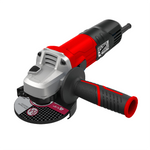
Angle Grinders with the Right Attachments are mostly used for blending welds and larger areas. Ensure that you use the right safety equipment and exercise caution.
-
Rotary Tools - they are perfectly suitable for smaller and complex areas.
-
Buffing Wheels and compounds are used for final finishing or polishing after abrasive work. They generate a very fine satin finish.
3. The Finishing Process
The sanding or finishing process is crucial in achieving a uniform and satin finish on stainless steel. This involves the following factors:
-
Work in one direction: This is essential in getting a uniform, linear satin finish. Move your abrasive tool or pad in straight, overlapping strokes throughout the length of the area you're working on, avoiding random or circular motions.
-
Applying even pressure: apply even and moderate pressure as applying too much pressure can cause deep scratches and produce uneven scratches. On the other hand, applying too little pressure won’t be effective for the required finish.
-
Overlap strokes: overlap each pass by around 50% to achieve even coverage and prevent lines or gaps.
-
Observe the Current Grain (if any): If the stainless steel already has a directional grain, try to follow it for a smoother finish.
-
Progress through grits: If you need to eliminate flaws or begin with a coarser finish, gradually progress to finer grits. Ensure you give each grit enough time to remove any scratches from the one before it. Do not jump too many grit levels.
-
Lubrication: Applying lubricants like light oil or soapy water can help avoid clogging the abrasive, minimize heat buildup, and generate a smoother finish. Before proceeding to the next grit, ensure the surface is cleaned after applying lubrication.
-
Frequent Cleaning: Ensure the surface is cleaned with a fresh cloth between grit changes to eliminate abrasive residue. This helps prevent coarser particles from scratching the finer particles.
-
Frequent Inspection: Inspect your work frequently for any remaining residue and uniformity. Also, make sure that you have a good lighting system.
4. Final Touches
This is the last step in achieving a uniform and the desired satin finish on stainless steel. This process involves two crucial final steps, let's discuss them one by one:
-
Final Cleaning: Once you have obtained the required satin finish, clean the surface thoroughly to remove any remaining abrasive particles or fingerprints.
-
Apply protective coating: In some applications, you may apply a transparent protective coating made especially for stainless steel to help preserve the finish and prevent corrosion or fingerprints.
Key Considerations For Uniformity
Following are some of the crucial factors to achieve uniformity while doing the process:
-
Consistent Technique: The key factor in maintaining uniformity is constant direction, pressure, and overlap throughout all stages.
-
Use Quality Abrasives: Always use premium-quality abrasives to get long-lasting and uniform results.
-
Patience is a virtue. As you have heard multiple times, patience is key to success. It is true in this case, too. It takes time and patience to achieve the desired satin finish and uniformity. Do not rush the process.
-
Practice: Ensure you practice using scrap material or stainless steel before working on your stainless steel. This is a must if you are working on a high-demanding project.
By following these steps and paying attention to details, you can achieve an outstanding and uniform satin finish on your stainless steel. Ensure that you wear protective gear, including safety glasses and gloves, to enhance your safety while doing the process.
Join Our Newsletter
Sign up to get the latest on sales, new releases and more …Join Our Newsletter
Sign up to get the latest on sales, new releases and more …Shop Categories
Featured Products
-
 746 Reviews
4-1/2" x 7/8" T29 Zirconia High Density Flap Disc - 10 pack
$25.19
-
 738 Reviews
4-1/2" x .040" x 7/8" t1 premium thin cut-off wheel - 25 pack
$20.88
-
 220 Reviews
4-1/2" x 7/8" T27 Zirconia High Density Flap Disc - 10 pack
$25.19
-
 380 Reviews
6" x .045 x 7/8" T1 Premium Thin Cut-Off Wheel - 25 pack
$27.29
-
 55 Reviews
Nonwoven 6" X 9" Scuff, Clean & Finish Hand Pads
$0.83
-
 123 Reviews
4-1/2" x 1/4" x 7/8" T27 Depressed Center Grinding Wheel - 25 pack
$28.34


Blog Categories
- Abrasives
- Sanding
- Grinding Deburring Finishing
- Safety and Cleanliness
- Metal Working
- Selecting Tools And Equipment
- Wood Working
- Art And Design
- Diy Projects
- Industry 4.0
- Buffing
- Cutting Tools
- Carbide Burrs
- PPE
- Wire Brushes
- Bonded Abrasives
- TIG Electrodes
- Wire Wheels
- Bits
- Diamond Blades
- Power Brushes
- Product Reviews
- Grinding
- Finishing
- Industrial Cleaners