



























How to Blend Welds Flat Without Gouging

Getting welds flush without valleys, edge-digging, or heat damage comes down to choosing the best abrasives for removing welds without gouging. Operator skill matters, but it cannot compensate for the wrong tool.
Follow this rule: coarse for knockdown, flexible for blending, non-woven for finishing. Pros do not rely on one magic disc. They cycle through specific abrasives in sequence. Restock your common discs in our general-purpose catalog.
Start with the abrasive that does the heavy lifting without forcing you to lean on the grinder.
1. Ceramic Resin Fiber Discs for Controlled Weld Knockdown
Ceramic resin fiber discs are the go-to choice for initial weld bead knockdown. Paired with a stiff backing pad, they act as a flattening tool that prevents low spots. The rigid pad distributes pressure evenly, while sharp ceramic grains cut without excessive heat buildup, so you do not have to push.
Use a stiff pad on flat plates and a flexible pad near edges. Work across the bead at a low grinder angle. Read our guide on fiber disc vs flap disc to understand when to switch tools.
2. Type 29 Angled Flap Discs for Contour Shaping
Flat discs easily gouge tight spaces. Conical Type 29 flap discs provide an angled profile for fast, controlled metal removal on fillet welds, corners and transitions, and mild contours.
To avoid gouging, keep the disc face at a shallow angle and keep the tool moving. Never hook the edge. Run 40 to 60 grit to bridge knockdown and blending. Stop once the bead is nearly flush. Do not attempt to finish with a shaping disc.
3. Type 27 Flat Flap Discs for Flat Surface Blending
Switching from a Type 29 to a Type 27 flat flap disc is non-negotiable on flat work. The flat profile spreads contact pressure to eliminate edge concentration, making it easy to feather transitions. Run your grinder nearly flat and sweep wider than the bead to blend, using 60 to 80 grit for a paint-ready finish.
The Stop Rule: Once the scratch pattern is uniform and the bead is invisible by touch, move to non-woven discs. Do not keep grinding for looks.
4. Non-Woven Surface Conditioning Discs for Final Blending
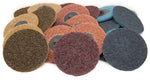
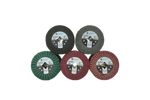
For thin-gauge metal, non-woven conditioning discs are the ultimate damage-prevention tool. These Scotch-Brite-style discs blend surfaces rather than remove stock, making them ideal when you are close to flush and cannot risk thinning the metal.
Use them after flap discs to erase harsh scratch patterns and soften transitions without over-grinding. Keep pressure light and use broad, sweeping strokes. Let the disc's conformity do the work. Find options in our surface conditioning collection.
5. Semi-Flexible Grinding Wheels as a Safer Alternative to Rigid Wheels
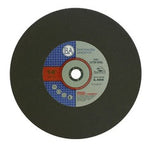
If you constantly gouge metal with rigid Type 27 wheels, semi-flexible grinding wheels offer a safer, high-control alternative. These wheels conform slightly to the workpiece, making them ideal for contours, edges, and high-consequence parts where a single dig ruins the job. They cut slower than standard hard wheels, but they are far more forgiving.
Keep passes short without leaning into the tool. Use them after fiber-disc knockdown but before flap-disc blending.
6. Quick-Change Discs for Tight Spots
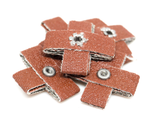
When a standard 4.5-inch grinder cannot fit, forcing a steep gouge-prone angle, switch to small-diameter quick-change discs on a right-angle die grinder. These tools excel in tight geometry where awkward angles cause accidental edge gouges.
Do not use them for primary bead knockdown. Use mid-range grits for detail shaping, then swap to fine conditioning discs for blending. Because small discs concentrate pressure quickly, keep a light touch and keep the tool moving.
7. Double-Cut Carbide Burrs for Pinpoint Corrections
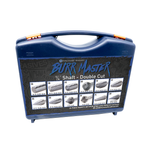
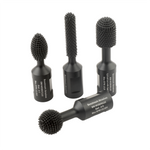
For pinpoint correction, run a double-cut carbide burr on a die grinder. These high-speed tools excel at clearing weld starts and stops, small nubs or root-side protrusions, and tight corners where wider discs skip.
Prevent parent metal gouging by using a strict touch-and-check approach: grind only the high spot, then switch back to a flap or non-woven disc for blending. Carbide burrs remove metal incredibly fast, so always practice on scrap pieces first.
8. Match Your Abrasive to the Metal Type
Using the wrong disc on different metals ruins your finish and causes gouging. Here is what to use by material:
- Stainless Steel: Prevent contamination with INOX-rated abrasives. Choose ceramic grains for cooler cutting to avoid heat tint, and read our heat discoloration guide for stainless.
- Aluminum: Prevent loading with non-ferrous abrasives. Apply anti-loading wax, use light pressure, and swap discs frequently.
- Carbon Steel: Zirconia flap discs deliver the best cost-to-performance ratio for daily fabrication. Follow a steady grit progression to prevent gouges.
If you have to push, the disc is dull or the wrong tool for the job. Swap it.
Frequently Asked Questions
What grit progression should I use to grind welds smooth without gouging?
Start with 36 to 40 grit on a resin fiber disc or aggressive flap disc for initial bead knockdown. Transition to 40 to 60 grit on a Type 29 flap disc to shape contours. Follow with 60 to 80 grit on a Type 27 flap disc to flatten and blend. Finish with a non-woven conditioning disc or 120-grit finishing disc to erase remaining scratch patterns.
Type 27 vs. Type 29 flap disc: which causes fewer gouges?
The Type 27 flat flap disc causes fewer gouges on flat surfaces. Its flat profile distributes contact pressure evenly across a wider area, making it safer for smooth blending. The Type 29 conical flap disc removes metal faster but its angled shape can dig into the metal if your working angle gets too steep.
What is the primary cause of gouging during weld removal?
Gouging is almost always caused by excessive pressure at a steep working angle. This typically happens when the disc is worn out or when using the wrong grit for the job. Lower your grinder angle, keep the tool moving, and replace dull discs before forcing them.
How do I avoid ruining thin sheet metal during weld removal?
Take short passes, monitor metal temperature, and check the surface frequently by feel. Stop early with coarse discs and switch to flexible, non-woven surface conditioning discs before you risk thinning the metal. Flexibility over aggressive stock removal is the rule for auto body panels and other thin-gauge materials.
How do I stop aluminum from loading and tearing while blending welds?
Use specialized non-loading or non-ferrous abrasives and apply anti-loading wax or paste to the disc before grinding. Keep operating pressure light, swap discs as soon as they start to load, and finish with a non-woven conditioning disc for a clean, tear-free surface.
Where can I stock up on general-purpose abrasives for weld blending?
Find a complete selection of discs, wheels, and specialty tools in our general-purpose collection. Professional fabricators and DIYers can buy direct and get premium quality at significantly lower prices than traditional retail.
Join Our Newsletter
Sign up to get the latest on sales, new releases and more …Join Our Newsletter
Sign up to get the latest on sales, new releases and more …Shop Categories
Recent Articles
- Poly Strip Discs for Paint & Rust Removal
- How to Blend Welds Flat Without Gouging
- Winter Tool Care: How to Store Abrasives in Cold Weather
- What is Industrial Abrasive - Types, Uses and Materials
- How to Avoid Scratches When Using Coated Abrasives on Soft Metals
- How Bonded Abrasives Perform on Tough Materials like Stainless Steel
- Grinding Wheels: Resolving Common Abrasive Tool Issues
- Difference Between Cross Pads and Cartridge Rolls
- What is Friability: Importance and Affecting Factors
- 10 Pointers Show You Need to Change Your Abrasive Disc
Featured Products
-
 746 Reviews
4-1/2" x 7/8" T29 Zirconia High Density Flap Disc - 10 pack
$25.19
-
 738 Reviews
4-1/2" x .040" x 7/8" t1 premium thin cut-off wheel - 25 pack
$20.88
-
 220 Reviews
4-1/2" x 7/8" T27 Zirconia High Density Flap Disc - 10 pack
$25.19
-
 380 Reviews
6" x .045 x 7/8" T1 Premium Thin Cut-Off Wheel - 25 pack
$27.29
-
 55 Reviews
Nonwoven 6" X 9" Scuff, Clean & Finish Hand Pads
$0.83
-
 123 Reviews
4-1/2" x 1/4" x 7/8" T27 Depressed Center Grinding Wheel - 25 pack
$28.34


Blog Categories
- Abrasives
- Sanding
- Grinding Deburring Finishing
- Safety and Cleanliness
- Metal Working
- Selecting Tools And Equipment
- Wood Working
- Art And Design
- Diy Projects
- Industry 4.0
- Buffing
- Cutting Tools
- Carbide Burrs
- PPE
- Wire Brushes
- Bonded Abrasives
- TIG Electrodes
- Wire Wheels
- Bits
- Diamond Blades
- Power Brushes
- Product Reviews
- Grinding
- Finishing
- Industrial Cleaners