



























Can You Use a Forstner Bit in a Hand Drill - Complete Guide

Every woodworker, whether a seasoned pro or a weekend warrior, eventually faces the challenge of drilling precise holes and achieving a clean hole in their woodworking projects.
While a drill press is often considered the standard for this task, the question usually arises: Can you use a Forstner bit in a hand drill?
It's a common dilemma, especially for those with limited shop space or who primarily use a hand drill for their job.
This guide will explore the details and mechanics of drilling holes with Forstner bits using a handheld drill, helping you decide whether this is the best tool for your next project and how to do it effectively if you choose this method.
Understanding Forstner Bits: Design and Purpose
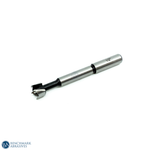
Forstner bits are specialized wood-boring drill bits specifically designed for creating flat-bottomed holes and making fine, clean cuts in wood. Unlike standard twist bits that bore with a spiral motion, Forstner bits utilize a different cutting mechanism. They feature a central center point that guides the bit, surrounded by sharp cutting spurs and a rim. This design lets them precisely cut wood fibers around the hole before the inner cutters remove the waste.
Some variations, often referred to as Forstner-style bits, might have a saw tooth rim, but the principle remains the same: to produce a perfectly flat bottom at the base of the hole. This feature makes them ideal for applications such as creating mortises, installing concealed hinges, or any scenario where clean, flat-bottom holes and precise depth control are essential. The sharp edge of a high-quality Forstner drill bit ensures excellent results.
Hand Drills vs. Power Tools
The fundamental difference between hand drills and power tools comes in precision drilling. A hand tool or handheld drill, whether it's a cordless or a corded drill, offers portability and versatility. You can carry it to the workpiece, drill overhead, or work in tight spaces.
However, maintaining stability, consistent pressure, and a straight angle is entirely up to the user.
In contrast, the pillar drill (or drill press) provides a stable, steady platform, ensuring the bit enters the material precisely perpendicularly. It also offers precise depth control and constant pressure, reducing deflection and vibration.
For many complex jobs in woodworking, a drill press is undoubtedly the best way to achieve consistent results.
So, why consider a hand drill?
For many woodworkers, limited space, budget limitations, or a need for flexibility on site make a hand brace or other woodworking tools, such as a handheld drill, their primary choice. Achieving drill press stability and control with only a manual drill chuck is a significant challenge.
Related Article: What is a Tungsten Carbide Bit?
The Technical Answer: Speed and Control Requirements
Using a Forstner bit effectively, especially with a hand drill, depends on understanding drill speed, torque, and control. Forstner bits perform best at slow speeds or low speeds.
Why?
Because their design involves removing a considerable amount of material from around the circumference, running them at high speeds can quickly generate excessive heat, which can dull the bit, burn the wood, and increase the risk of kickback.
The correct speed also depends on the material. When working with hardwoods, you'll generally need lower RPMs than with softwoods. The type of wood also determines how much pressure to apply; harder woods require less pressure to avoid binding, while softer woods can tolerate a bit more. Drilling into end grain also presents a unique challenge, as the wood fibers are different, requiring even more control and a very slow, deliberate approach to avoid tearing. Maintaining consistent pressure and a perpendicular angle to the workpiece throughout the cut is key to clean results and preventing the bit from wandering.
Practical Application: Making It Work
Despite being challenging, it is possible to successfully use a Forstner bit in a hand drill with the proper technique and preparation.
Here is a step-by-step guide:
-
Preparation is Key: Start by securing your workpiece firmly. Clamps are your best friend here. Even a slight movement of the wood can throw off your alignment.
-
Mark Your Spot: Accurately mark the starting point of your hole. For added precision, use a center punch to create a slight indentation. This gives the Forstner bit's center point something to register against, preventing it from skating across the surface.
-
The Test Hole: Always drill a test hole on a scrap piece of the same material. This lets you fine-tune your speed, pressure, and technique, protecting your project piece.
-
Slow and Steady: As discussed earlier, a slow speed is critical. Let the bit do the work. Avoid applying much pressure initially. Guide the bit gently into the wood, allowing the spurs to establish the cut.
-
Maintain Perpendicularity: This is perhaps the most challenging aspect. Keep your drill as straight as possible relative to the workpiece. Use your eye, and if available, a small drill guide or jig can be invaluable for maintaining a straight hole.
-
Clear the Chips: Forstner bits produce a lot of wood chips. Periodically, back the bit out of the hole to clear the debris. This prevents clogging, reduces heat buildup, and allows the bit to cut more efficiently.
-
Depth Control: If precise depth is required, use a depth stop on your drill. If you don't have one, mark the desired depth on the bit with tape.
-
Exiting the Backside: When drilling through the material, be mindful of tear-out on the backside. To minimize this, once the center point just pokes through, flip the workpiece over and finish drilling from the other side, using the small pilot hole as your guide. This ensures a clean exit for the diameter of the hole.
-
Addressing Existing Holes: While enlarging an existing hole, ensure the Forstner bit's center point has enough material to grab onto. If the existing hole is too large, the bit may wander.
When to Choose Alternatives
Although Forstner bits can be used with a hand drill, this is not always the best way, and sometimes, using other drill bits is a better option.
-
Spade Bit / Paddle Bits: They are ideal for drilling rough, quick holes, especially in softwoods. While spade bits may not offer the highest precision and can sometimes cause tear-out (splitting around the hole), they are a fast and affordable option for jobs where a perfectly clean hole isn't required.
-
Brad Point Bits: They are ideal for making small, clean holes in the wood when a flat bottom is not required. Their sharp points and spurs ensure precise drilling, prevent the bit from wandering, and create clean entry and exit holes. Brad-point bits are a better alternative to standard twist bits for making clean holes in woodworking.
-
Hole Saw: When you need to cut large-diameter holes, such as for pipes or recessed lighting, a hole saw is your best tool. It works by cutting a circular groove around the edge, leaving a neat plug in the center.
-
Auger Bit: Do you need to drill a deep hole in thick wood? An auger bit is your best option, especially with a hand brace. It's great for clearing off wood chips and keeping the hole straight.
-
Router Bits: When you need very precise, flat-bottomed recesses or dados, a router equipped with the right router bits is usually your best option. It offers more control and a better finish than any other drill bit.
-
Drill Press Necessity: When you are looking for precise, repeatable, large-diameter holes, especially in dense hardwood or hard materials like metal, you need a drill press. While your hand drill and its bits are super versatile, they can't match the stability and control a drill press provides for those specific tasks. And just like a table saw is essential for particular cuts, a drill press plays a vital role in precision drilling jobs.
Size Considerations and Limitations
The diameter of the hole is an essential factor when deciding whether to use a Forstner bit with a hand drill. While a small hole (e.g., under 1 inch) is typically manageable, attempting large-diameter holes or big holes with a significant Forstner bit using a handheld drill becomes challenging and risky. The larger the bit, the more torque it requires, and the more difficult it is to keep it steady and perfectly perpendicular. This increased resistance makes it harder to maintain control, leading to wandering bits, uneven holes, and greater strain on your wrists.
For huge holes, especially those required for counterbore applications or deep recesses, the sheer amount of material removal combined with the difficulty of maintaining alignment makes a hand drill a poor choice. While you might find Forstner bit sets with a wide range of sizes, the practical limit for effective and safe hand drill use often caps around 1.5 to 2 inches, depending on the wood type and your skill level.
Making the Right Choice for Your Workshop
You can use a Forstner bit with a hand drill, especially for smaller holes. This is a good way to get clean, flat-bottomed holes in various popular woodworking projects, particularly if you don't have a drill press handy.
However, for the best and most precise results, especially with larger holes or tougher wood, a drill press is generally the better tool for the job.
For precise drilling with Forstner bits, especially in fine woodworking, prioritize a sharp, high-quality bit, ideally with a hex shank for better grip. Always practice on scrap wood first and wear eye protection, securing your workpiece to prevent kickback. Consider a drill guide for accuracy and never force the bit; know when to re-evaluate your approach or tools. Good luck with your general woodworking projects.
Join Our Newsletter
Sign up to get the latest on sales, new releases and more …Join Our Newsletter
Sign up to get the latest on sales, new releases and more …Shop Categories
Recent Articles
- Can You Use a Forstner Bit in a Hand Drill - Complete Guide
- What is a Tungsten Carbide Bit - A Complete Beginners Guide
- Step Drill Bit Tip Sheet
- The Best Drill Bits For Heavy-Duty Applications
- Choosing Between Carbide and Diamond Bits
- How To Drill Perfect Holes With Specialty Bits
- Auger Bit vs Spade Bit vs Hole Saw
Featured Products
-
 746 Reviews
4-1/2" x 7/8" T29 Zirconia High Density Flap Disc - 10 pack
$25.19
-
 738 Reviews
4-1/2" x .040" x 7/8" t1 premium thin cut-off wheel - 25 pack
$20.88
-
 220 Reviews
4-1/2" x 7/8" T27 Zirconia High Density Flap Disc - 10 pack
$25.19
-
 380 Reviews
6" x .045 x 7/8" T1 Premium Thin Cut-Off Wheel - 25 pack
$27.29
-
 55 Reviews
Nonwoven 6" X 9" Scuff, Clean & Finish Hand Pads
$0.83
-
 123 Reviews
4-1/2" x 1/4" x 7/8" T27 Depressed Center Grinding Wheel - 25 pack
$28.34


Blog Categories
- Abrasives
- Sanding
- Grinding Deburring Finishing
- Safety and Cleanliness
- Metal Working
- Selecting Tools And Equipment
- Wood Working
- Art And Design
- Diy Projects
- Industry 4.0
- Buffing
- Cutting Tools
- Carbide Burrs
- PPE
- Wire Brushes
- Bonded Abrasives
- TIG Electrodes
- Wire Wheels
- Bits
- Diamond Blades
- Power Brushes
- Product Reviews
- Grinding
- Finishing
- Industrial Cleaners