



























Which Tools Are Best For Precision Cutting
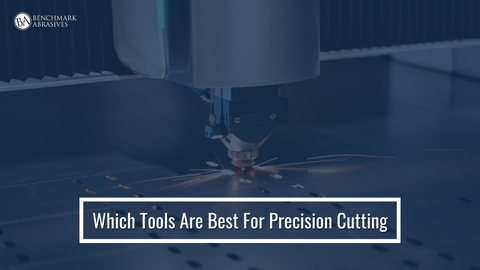
Precision cutting tools come in various forms, but they all share the fundamental goal of removing material while achieving a clean surface finish and holding extremely tight dimensional tolerances. While simple hand tools have their place, industrial precision relies on advanced materials and automated control.
What Defines a Precision Cutting Tool?
Precision cutting tools, often called cutters, are mechanical devices designed to remove materials from a workpiece. True precision in manufacturing means holding dimensional accuracy and positional accuracy, often measured in thousandths of an inch (mils) or microns.
Key Features of Precision Tools
For a precision tool to work effectively, it must meet high standards for material and geometry:
-
Material: Compared to the workpiece, the tool material must be substantially more powerful, durable, and resistant to wear. The three primary cutting materials are High-Speed Steel (HSS) (general purpose), Tungsten Carbide (high heat resistance for hard metals), and Ceramics (for machining superalloys).
-
Geometry: Tools must have precise clearance angles, a specific number of flutes (teeth), and perfect flute width to maximize cutting efficiency and facilitate easy chip removal.
The Role of CNC Automation
The tool's potential precision is only realized when it is paired with a CNC (Computer Numerical Control) machine. CNC systems use closed-loop feedback to precisely control the feed rate (how fast the tool moves into the material) and the spindle speed (RPM). This control ensures that the cutting forces and heat generation remain constant to hold the required micrometer-level tolerances throughout the manufacturing process.
Which Kinds of Tools Are Essential for Precision Cutting?
Precision cutting tools can be grouped into categories based on their cutting mechanism and the type of material removal they perform (single-point vs. multi-point).
|
Tool Category |
Primary Mechanism |
Cut Outcome and Precision Metric |
|
Rotary Multi-Point |
High-speed spinning (milling, drilling). |
Hole size, surface finish (Roughness Average). |
|
Fixed-Position Saw |
Continuous belt or circular blade. |
Dimensional accuracy (length/width), squareness/angle. |
|
Single-Point |
Planing or turning (Lathe). |
Outer Diameter (OD), Inner Diameter (ID), and roundness. |
1. Rotary Multi-Point Tools
These tools, used in drilling and milling operations, use multiple cutting edges and are defined by their complex geometry.
-
End Mills: Used for milling—cutting pockets, slots, and contours. The number of flutes dictates the finish quality; more flutes result in a finer finish but require lower chip loads. The helix angle ensures smooth chip evacuation, preventing re-cutting that damages the surface finish.
-
Step Drill Bits: A drill bit with multiple cutting edges on one shaft. While often used for creating holes of different sizes, their precision lies in creating clean, chamfered holes with minimal breakthrough burrs.
-
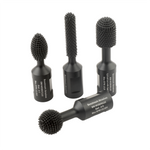
Carbide Burrs (Rotary Files): High-speed tools (often driven by die grinders) used for final deburring, chamfering, and grinding cast iron, aluminum, and stainless steel.
2. Fixed-Position Sawing Tools
These cutters prioritize dimensional accuracy and straightness over micro-tolerances.
-
Table Saw: Features a large, tiltable table and a circular blade to cut materials (often wood or composites) into exact lengths and angles. Its precision is measured by the squareness of the cut and the consistency of the dimension.
-
Band Saw: Uses a continuous blade spinning around an axis. It's ideal for shaping and creating curved cuts in metal and wood, where the precision metric is the accuracy of the contoured line.
3. Specialty and Single-Point Tools
These address niche precision requirements.
-
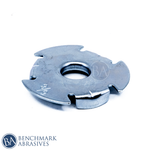
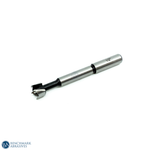
Woodruff Cutter: A specialized rotary milling cutter used to drill slots (keyways) in shafts for retaining keys, pins, and bearing races. The precision lies in the slot's depth and width to ensure a perfect mechanical fit.
-
Single-Point Tools: Used primarily on lathes for turning and facing. These tools remove material from a spinning workpiece to achieve an extremely precise final outer or inner diameter and a very fine surface finish.
Join Our Newsletter
Sign up to get the latest on sales, new releases and more …Join Our Newsletter
Sign up to get the latest on sales, new releases and more …Shop Categories
Recent Articles
- Concrete Grinding: Diamond Cup Wheels vs PCD vs T-Segment
- A Complete Guide to Angle Grinder Parts & Replacement Parts
- Impact Wrench vs Impact Driver: The Ultimate Guide
- Cutting Tools Demystified: A Deep Dive Into Drill Bits and Their Uses
- Safety Tips For Using Chop Saws
- What to Know About Silver and Deming Drill Bits
- What are Tungsten Carbide Tipped (TCT) Hole Cutters
- What Are Bi-Metal Hole Saws
- Beginners Guide to Hacksaws: Types and Applications
- Which Tools Are Best For Precision Cutting
Featured Products
-
 746 Reviews
4-1/2" x 7/8" T29 Zirconia High Density Flap Disc - 10 pack
$25.19
-
 738 Reviews
4-1/2" x .040" x 7/8" t1 premium thin cut-off wheel - 25 pack
$20.88
-
 220 Reviews
4-1/2" x 7/8" T27 Zirconia High Density Flap Disc - 10 pack
$25.19
-
 380 Reviews
6" x .045 x 7/8" T1 Premium Thin Cut-Off Wheel - 25 pack
$27.29
-
 55 Reviews
Nonwoven 6" X 9" Scuff, Clean & Finish Hand Pads
$0.83
-
 123 Reviews
4-1/2" x 1/4" x 7/8" T27 Depressed Center Grinding Wheel - 25 pack
$28.34


Blog Categories
- Abrasives
- Sanding
- Grinding Deburring Finishing
- Safety and Cleanliness
- Metal Working
- Selecting Tools And Equipment
- Wood Working
- Art And Design
- Diy Projects
- Industry 4.0
- Buffing
- Cutting Tools
- Carbide Burrs
- PPE
- Wire Brushes
- Bonded Abrasives
- TIG Electrodes
- Wire Wheels
- Bits
- Diamond Blades
- Power Brushes
- Product Reviews
- Grinding
- Finishing
- Industrial Cleaners