




























Linear vs Circular Scratch Patterns: How to Control Your Finish Like a Pro

Let’s talk about scratches… the kind you actually want.
That clean brushed stainless fridge? Those high-end architectural panels with that soft satin glow? That wasn’t luck—that was controlled abrasion. And if you know how to control your scratch pattern, you control how your work looks, feels, and performs.
This guide breaks down linear vs circular (swirl) scratch patterns, how they’re created, and exactly what tools and abrasives get you there—without wasting time reworking a finish that didn’t come out right the first time.
The Basics: How Abrasives Actually Make Scratches
Before we get fancy, let’s keep it simple.
Abrasives are just hard grains (aluminum oxide, zirconia, ceramic, silicon carbide, etc.) bonded to a backing—paper, cloth, discs, sanding belts, wheels.
Each grain acts like a tiny cutting tool:
- Low grit (40–80) = big grains → deep, aggressive scratches
- Mid grit (120–220) = moderate cut → visible pattern
- High grit (320–2000+) = fine cut → shallow, refined finish
Key rules:
1. Scratch depth = grain size
2. Scratch pattern = tool motion
That second one is where most people mess up.
Linear Scratch Patterns (Brushed Finishes)
What It Looks Like
Straight, parallel lines all running in the same direction.
Think:
- Brushed stainless appliances
- Handrails
- Architectural panels
- #4 finish stainless
How It’s Created
Every abrasive grain follows the same straight path, so scratches line up like railroad tracks.
That means:
- Straight feed direction
- No wobble
- No circular motion sneaking in
Why It Matters
- Professional appearance → clean, directional look
- Light reflection → consistent sheen along grain
- Coating adhesion → uniform surface for paint, plating, and anodizing
Best Tools for Linear Finishes
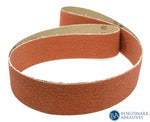
1. Drum / Wide Belt Sanders (Gold Standard)
- Perfect for flat sheets
- Conveyor feed = flawless parallel lines
- Go-to for production work
2. Linear Burnishers/ Portable Drum Sanders
- Designed for stainless finishing
- Great for handrails, panels, and architectural work
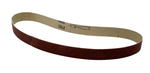
3. File Belt / Straight-Line Sanders
-
Ideal for weld cleanup, tubing, and edges
Grit Progression (Real-World Use)
- 24–60 → aggressive material removal
- 80–120 → cleanup/leveling
- 180–220 → standard brushed finish
- 240–400 → refined satin
Pro tip: Never skip more than one grit jump, or you’ll be chasing scratches all day.
Circular & Swirl Scratch Patterns (Non-Directional Finishes)
What It Looks Like
- Overlapping arcs, loops, or random scratches
- No dominant direction
- Soft, uniform “haze” finish
Two Types to Know
1. True Circular (Rotary)
- Visible arcs or loops
- Made by angle grinders or rotary polishers
2. Swirl / Non-Directional (Random Orbit)
- Fine, scattered pattern
- Looks uniform from every angle
Why It Matters
- Hides imperfections → great for real-world parts
- Diffuses light → no harsh reflection lines
- Cleaner aesthetic → “soft satin” instead of directional grain
Best Tools for Circular & Swirl Finishes
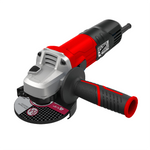
Angle Grinders (Your Shop Workhorse)
- 4-1/2" or 5" grinder + flap disc or non-woven abrasive disc
- Produces visible circular patterns
-
Great for:
- Weld blending
- Quick satin finishes
- Field work
Keep it flat and light pressure, leaning on it = ugly gouges.
Rotary Polishers
- Pure spinning motion
- Used for polishing metals or paint
- Can create swirl marks if used incorrectly
Random Orbital (DA) Sanders
- Spins + oscillates
- Produces a true non-directional finish
Best for:
- Final finishing
- Paint correction
- High-end satin metal work
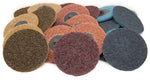
Non-Woven Abrasives (Game Changer)
- Scotch-Brite style materials
- Don’t load up like sandpaper
- Produce smooth, consistent swirl finishes
Linear vs Circular: Quick Cheat Sheet
| Goal | Motion | Best Tools | Abrasives |
| Linear ( Brushed) | Straight line | Drum sander, linear burnisher, file belt | AO, zirconia belts |
| Circular (Visible) | Pure rotation | Angle grinder, rotary polisher | Flap discs, surface conditioning |
| Swirl / Non-Directional | Random orbit | DA sander | Foam discs, non-woven, Trizact |
Where Most People Screw This Up
Let’s save you a few headaches:
1. Mixing Motions
You start linear… then hit it with a grinder “just a little.”
Now you’ve got:
- Straight scratches
- Random arcs
Result? Looks like you sanded it blindfolded.
2. Skipping Grits
Jumping from 80 → 220:
- Deep scratches stay behind
- Final finish looks inconsistent
3. Not Cleaning Between Steps
Leftover grit = random deep scratches
Translation: back to square one.
4. Wrong Tool for the Finish
- Want linear? Don’t grab a grinder
- Want swirl-free? Don’t finish with a rotary
Match the tool to the pattern—every time.
Advanced Finishing Tips (This Is Where You Level Up)
Change Direction Between Steps (For Linear Work)
Sand 90° to the previous pass:
- Makes it easy to see when scratches are gone
- Ensures consistency
Use the Right Grain Type
- Ceramic → aggressive, long life
- Zirconia → heavy stock removal
- Aluminum Oxide → general purpose
- Non-woven → finishing magic
Closed Coat vs Open Coat
- Closed = more uniform, faster cut
- Open = less clogging
Final Grit Controls Everything
- 220 linear → bold brushed
- 320–400 → refined satin
- 1000+ → near mirror
Same grit + different motion = totally different look.
So… Which One Should You Use?
Go Linear If:
- You want that clean, brushed look
- You’re working on stainless panels, countertops, and rails
- You need consistent coating adhesion
Go Circular / Swirl If:
- You want a soft satin finish
- You’re hiding imperfections
- You’re working on curved or irregular parts
Working on Paint?
Different game:
- Swirls = bad
- DA polisher = your best friend
Bottom Line
Scratch patterns aren’t just cosmetic—they’re controlled engineering of the surface.
- Grain size controls depth
- Tool motion controls the pattern
Master those two variables, and you control:
- Light reflection
- Finish quality
- Coating performance
- Customer perception
Final Shop Talk
Next time someone looks at your work and says,
“Damn… that finish is clean.”
You’ll know exactly why.
It wasn’t luck.
It wasn’t magic.
It was the grains—and how you ran them.
Frequently Asked Questions
1. What is the Difference Between a Linear and Circular Scratch Pattern?
A linear scratch pattern runs in one consistent direction, creating a uniform look, while a circular scratch pattern forms swirls or arcs, often used for blending and surface leveling.
2. Which Scratch Pattern is Best For Stainless Steel Finishing?
A linear scratch pattern is preferred for stainless steel finishing because it provides a clean, uniform brushed look that enhances appearance and matches common industrial and decorative finishes.
3. What Grit is Best For a Brushed Metal Finish?
A grit range between 120 and 240 is ideal for achieving a brushed metal finish, offering the right balance between material removal and a smooth, consistent surface texture.
4. Can You Change a Circular Scratch Pattern Into a Linear Finish?
Yes, you can convert a circular pattern into a linear finish by sanding in one direction with progressively finer grits until the desired uniform scratch pattern is achieved.
5. Which Scratch Pattern is Better for Coating Adhesion?
A circular or cross-hatch scratch pattern is better for coating adhesion, as it creates more surface area and texture, helping paints and coatings bond more effectively to the material.
Join Our Newsletter
Sign up to get the latest on sales, new releases and more …Join Our Newsletter
Sign up to get the latest on sales, new releases and more …Shop Categories
Recent Articles
- Linear vs Circular Scratch Patterns: How to Control Your Finish Like a Pro
- Guide To Cross Pad Abrasive Sheets
- Understanding the Difference: T27 vs T29 Flap Discs
- Unveiling The Secrets Of Grinding Wheels: Types And Applications
- The Art Of Deburring: Techniques and Tools For Smooth Edges
- Exploring The Art Of Precision Grinding In Metalworking
- What Is The Strongest Abrasive Material?
- Bonded Abrasives Vs Coated Abrasives
- What is Electrochemical Deburring
- Are Ceramic Abrasive Products Superior?
Featured Products
-
 746 Reviews
4-1/2" x 7/8" T29 Zirconia High Density Flap Disc - 10 pack
$25.19
-
 738 Reviews
4-1/2" x .040" x 7/8" t1 premium thin cut-off wheel - 25 pack
$20.88
-
 220 Reviews
4-1/2" x 7/8" T27 Zirconia High Density Flap Disc - 10 pack
$25.19
-
 380 Reviews
6" x .045 x 7/8" T1 Premium Thin Cut-Off Wheel - 25 pack
$27.29
-
 55 Reviews
Nonwoven 6" X 9" Scuff, Clean & Finish Hand Pads
$0.83
-
 123 Reviews
4-1/2" x 1/4" x 7/8" T27 Depressed Center Grinding Wheel - 25 pack
$28.34


Blog Categories
- Abrasives
- Sanding
- Grinding Deburring Finishing
- Safety and Cleanliness
- Metal Working
- Selecting Tools And Equipment
- Wood Working
- Art And Design
- Diy Projects
- Industry 4.0
- Buffing
- Cutting Tools
- Carbide Burrs
- PPE
- Wire Brushes
- Bonded Abrasives
- TIG Electrodes
- Wire Wheels
- Bits
- Diamond Blades
- Power Brushes
- Product Reviews
- Grinding
- Finishing
- Industrial Cleaners