


























Guide to Bonded Abrasives: Grits, Grains and Types

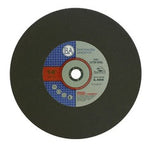
Bonded abrasives are a category of cutting tools where natural or synthetic abrasive grains are held within a fixed matrix—usually a wheel, stone, or plug. Unlike a single-point cutting tool, such as a lathe bit, a bonded abrasive acts as a multi-point cutting tool, where thousands of individual grains act as tiny saw teeth to remove material at high speeds.
The Anatomy of a Bonded Abrasive: The 3-Part System
Most users believe a grinding wheel consists of only two things: grain and bond. In reality, an engineered bonded abrasive is a three-part system:
- Abrasive Grain: The teeth that perform the actual cutting.
- Bonding Matrix: The glue that holds the grains in place.
- Pores (Air Spaces): The voids that allow for coolant flow and provide clearance for the metal chips (swarf) being removed.
Abrasive Grain Selection: Hardness and Friability
The choice of grain depends on the material's hardness and its chemical reactivity.
| Grain Type | Composition | Best For | Characteristics |
| Aluminum Oxide | Al2O3 | Iron, Steel, and Alloy Steels | Most common: tough and fracture-resistant. |
| Silicon Carbide | SiC | Stone, Aluminum, and Cast Iron | More brittle yet harder than alumina. |
| Zirconia Alumina | ZrO2 - Al2O3 | Strong grinding | Self-sharpening; great for high-pressure tasks. |
| Ceramic Alumina | Micro-crystalline | Hard Steels and Aerospace Alloys | Extreme durability; fractures at a sub-micron level. |
The Standard System of Marking
To select the right tool, you must understand the Standard Marking System (ANSI/ISO). Every professional wheel features an alphanumeric code, such as A60-M5-V, which describes its entire mechanical profile.
- Prefix (A): The Abrasive Type (e.g., 'A' for Aluminum Oxide, 'C' for Silicon Carbide).
- Grit Size (60): Indicates the coarseness. Lower numbers (10–30) are for rapid stock removal; higher numbers (60–120+) are for fine finishes.
- Grade (M): This letter denotes the Hardness of the Bond, ranging from A (Soft) to Z (Hard). A soft grade releases grains easily, while a hard grade retains them longer.
- Structure (5): A number (usually 1–15) indicating the grain density. Lower numbers are dense; higher numbers are open or porous.
- Bond Type (V): The chemical nature of the bond (e.g., 'V' for Vitrified, 'B' for Resinoid).
The Physics of Self-Sharpening and Friability
The most unique characteristic of a bonded abrasive is its ability to self-sharpen. This is governed by Friability—the tendency of an abrasive grain to fracture under pressure.
As you grind, the cutting edges of the grain eventually dull. This increases the friction and the load on that specific grain. In a well-matched system, this increased force causes the grain to fracture (revealing new, sharp edges) or causes the bond post to snap, ejecting the dull grain entirely. If the bond is too hard for the material, the wheel will glaze, meaning the dull grains stay stuck and heat the workpiece. If the bond is too soft, the wheel will shed grains too quickly, leading to excessive tool wear.
Understanding Bond Types
The bond's job is to provide the structural integrity required to withstand centrifugal forces and the heat of friction.
- Vitrified Bonds (V): These are ceramic-based and fired in a kiln. They are exceptionally rigid, porous, and unaffected by water or oils. They are the standard for precision grinding.
- Organic/Resinoid Bonds (B): Made from synthetic resins. These are more flexible than vitrified bonds and can operate at much higher speeds—often used in cut-off wheels and heavy-duty snagging in foundries.
- Rubber Bonds (R): Used where a high-quality, burr-free finish is required, such as in the manufacturing of roller bearings or control wheels for centerless grinding.
Read More - Components of Bonded Abrasives
Operating Factors and Safety
Because bonded abrasives operate at extreme speeds—often exceeding 6,500 surface feet per minute—safety is paramount.
| Safety Factor | Guideline |
| The Ring Test | Before mounting, tap the wheel with a non-metallic object. A clear ring indicates a solid bond; a thud indicates a hidden crack. |
| RPM Matching | Never exceed the Max RPM printed on the wheel. Centrifugal force scales with the square of the speed. |
| Mounting | Always use clean, equal-sized flanges and blotters to distribute clamping pressure evenly. |
Conclusion
Optimizing a grinding system requires balancing the machine's power, the material's hardness, and the wheel's grade. By understanding the Marking System and the Friability of your grains, you can significantly increase productivity while ensuring a safer workspace.
Join Our Newsletter
Sign up to get the latest on sales, new releases and more …Join Our Newsletter
Sign up to get the latest on sales, new releases and more …Shop Categories
Recent Articles
Featured Products
-
 746 Reviews
4-1/2" x 7/8" T29 Zirconia High Density Flap Disc - 10 pack
$25.19
-
 734 Reviews
4-1/2" x .040 x 7/8" T1 Premium Thin Cut-off Wheel - 25 pack
$20.88
-
 220 Reviews
4-1/2" x 7/8" T27 Zirconia High Density Flap Disc - 10 pack
$25.19
-
 380 Reviews
6" x .045 x 7/8" T1 Premium Thin Cut-Off Wheel - 25 pack
$27.29
-
 123 Reviews
4-1/2" x 1/4" x 7/8" T27 Depressed Center Grinding Wheel - 25 pack
$28.34
-
 55 Reviews
Nonwoven 6" x 9" Scuff, Clean & Finish Hand Pads
$0.83


Blog Categories
- Abrasives
- Sanding
- Grinding Deburring Finishing
- Safety and Cleanliness
- Metal Working
- Selecting Tools And Equipment
- Wood Working
- Art And Design
- Diy Projects
- Industry 4.0
- Buffing
- Cutting Tools
- Carbide Burrs
- PPE
- Wire Brushes
- Bonded Abrasives
- TIG Electrodes
- Wire Wheels
- Bits
- Diamond Blades
- Power Brushes
- Product Reviews
- Grinding
- Finishing
- Industrial Cleaners