




























Grinding Wheel Types & Different Specifications

The grinding wheel is the most essential attachment in abrasive machining, used to achieve high-precision cuts, specific geometries, and fine surface finishes. A wheel is an engineered composite defined by five core specifications: the abrasive material, the grit size, the bond, the grade, and the structure. Understanding these specifications is essential for safe operation and maximizing efficiency in any metalworking or tool sharpening task.
The Anatomy and Uses of Grinding Wheels

A grinding wheel is composed of two primary elements: the abrasive grains (the cutting compound) and the bond (the cementing matrix) that holds the grains together in a solid circular shape.
Primary Uses:
- High Precision: Grinding wheels can perform tasks with very high dimensional tolerances and produce superior surface finishes.
- Grinding Hard Metals: Tool steels and other super alloys are among the hard materials that grinding wheels are suitable for cutting and shaping.
- Versatile Molding: They are essential for producing metals with complex geometries.
The wheel is secured to the grinding machine's supporting arbors, and the rotational force is transferred via sized flanges clamping the sides of the wheel.
Understanding the Grinding Wheel Code (Specifications)
The identity of every grinding wheel is defined by a standard ANSI/ISO alphanumeric marking system (e.g., 51-A-60-K-8-V-17). Knowing this code is crucial for selecting the right wheel for the job.
The standard sequence typically follows six essential components:
- Abrasive Type (e.g., A): The core material that does the cutting.
- Grit Size (e.g., 60): The physical size of the abrasive particles.
- Grade (e.g., K): The hardness of the wheel (how tightly the bond holds the grain).
- Structure (e.g., 8): The spacing between the abrasive grains (porosity).
- Bond Type (e.g., V): The material that cements the grains together.
- Manufacturer's Code (e.g., 17): Specific batch or internal code.
1. Abrasive Material
The abrasive material dictates what types of materials the wheel can effectively cut:
- Aluminum Oxide (A): The standard workhorse. Ideal for high-tensile strength materials like carbon steel, alloy steel, and high-speed steel (HSS). It is tough and fractures under stress to create new cutting edges.
- Silicon Carbide (C): Harder and more brittle than aluminum oxide. It is used for low-tensile strength, hard materials like cast iron, non-ferrous metals (bronze, copper), and non-metals (stone, ceramics).
- Diamond and CBN (Cubic Boron Nitride): Used for specialty wheels to grind extremely hard materials, such as industrial ceramics and hardened tool steels.
2. Grit Size
Grit size (the number in the code) refers to the size of the abrasive particles. The numbers typically range from 8 (very coarse) to 600 (very fine).
- Coarse Grits (8-30): Used for rapid material removal (roughing).
- Medium Grits (36-60): Used for general-purpose grinding.
- Fine Grits (80-600): Used for achieving a fine surface finish and sharpening.
3. Bond Type
The bond is the element (like glue) that binds the abrasive grains together. It dramatically affects the wheel's strength and cutting properties:
- Vitrified (V): The most common bond, made from fused glass and ceramic materials. It is strong and rigid. Vitrified wheels are used for most high-precision grinding operations.
- Resinoid (B): Made from synthetic resins. These wheels are faster and more flexible than vitrified bonds and are often used for cutting-off wheels and rough grinding.
- Rubber (R) and Shellac (E): Used for specialized applications requiring high finish, flexibility, or thin cross-sections.
Grinding Wheel Shapes (Types)
The shape and profile of the grinding wheel must match the type of application and the geometry of the workpiece.
| Wheel Shape | Description | Primary Usage |
| Straight Wheel (Type 1) | The most basic wheel, flat on both sides. | General-purpose sharpening (chisels, tools) and cylindrical grinding. |
| Cylinder or Ring Wheel | The end part of the wheel is used for grinding. | Production of large, flat surfaces and Blanchard grinding. |
| Straight Cup Wheel | Shaped like a cup with a large end face. | Tool and cutter grinding, polishing stone, or concrete. |
| Dish Wheel | Shallow, thin-edged wheel (looks like a dish). | Fitting into tight crevices and complex cutter grinder applications (jig grinders). |
| Saucer Wheel | Tapered towards the edge. | Grinding of milling cutters, twist drills, and specialized thread grinding. |
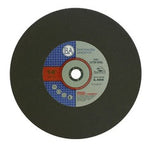
| Cut-off Wheel | Very thin resinoid-bonded straight wheel. | Fast removal and trimming, cutting reinforcement bars (rebar), or pipes. |
Ending Note
A grinding wheel is a standard, essential tool in manufacturing industries, automotive shops, and construction sites. However, using a grinding wheel without the proper knowledge and practice can be extremely dangerous. Always have a clear understanding of wheel grinder safety and ensure you get the right kind of wheel for the job by matching the material and grit size to your application.
Benchmark Abrasives has more than 20 years of experience in dealing with industrial abrasive tools. We deliver premium quality industrial products from around the world to the USA market.
For further queries, please contact us at 877-841-1837 or drop a message at https://benchmarkabrasives.com/pages/contact-us
Join Our Newsletter
Sign up to get the latest on sales, new releases and more …Join Our Newsletter
Sign up to get the latest on sales, new releases and more …Shop Categories
Recent Articles
- Felt Polishing Discs, Flap Discs & Flap Wheels
- How to Polish a Weld to a Mirror Finish
- How to Polish Cast Aluminum
- Luke Hummer - Erie County Community College
- Industrial Quick Change Discs for Fast-Lock Grinding and Finishing
- Felt Polishing Wheels, Bobs & Discs: Guide to Detail Work
- Matthew Cartwright
- Jacob Martinez (Foxholes to Fabworks)
- The Gathering
- David Fisher (Fisher Forge)
Featured Products
-
 746 Reviews
4-1/2" x 7/8" T29 Zirconia High Density Flap Disc - 10 pack
$25.19
-
 738 Reviews
4-1/2" x .040" x 7/8" t1 premium thin cut-off wheel - 25 pack
$20.88
-
 220 Reviews
4-1/2" x 7/8" T27 Zirconia High Density Flap Disc - 10 pack
$25.19
-
 380 Reviews
6" x .045 x 7/8" T1 Premium Thin Cut-Off Wheel - 25 pack
$27.29
-
 55 Reviews
Nonwoven 6" X 9" Scuff, Clean & Finish Hand Pads
$0.83
-
 123 Reviews
4-1/2" x 1/4" x 7/8" T27 Depressed Center Grinding Wheel - 25 pack
$28.34


Blog Categories
- Abrasives
- Sanding
- Grinding Deburring Finishing
- Safety and Cleanliness
- Metal Working
- Selecting Tools And Equipment
- Wood Working
- Art And Design
- Diy Projects
- Industry 4.0
- Buffing
- Cutting Tools
- Carbide Burrs
- PPE
- Wire Brushes
- Bonded Abrasives
- TIG Electrodes
- Wire Wheels
- Bits
- Diamond Blades
- Power Brushes
- Product Reviews
- Grinding
- Finishing
- Industrial Cleaners