



























What are Forstner Drill Bits and When Should You Use One

If you've ever tried to drill a large, clean hole in wood using a standard drill bit, you might have ended up with splinters and a bumpy hole. This is where one special tool you require: a forstner drill bit.
A Forstner bit is a special type of drill bit known for its ability to create perfectly smooth, flat-bottomed holes with extreme precision. While other bits can do the job, a Forstner bit is often the best choice when a clean, professional finish is essential.
What is a Forstner Drill Bit?
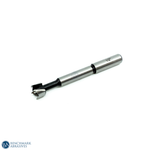
A Forstner bit is a large-bore bit easily recognizable by its unique design. Its central spur guides the bit, while a pair of cutting edges work to slice wood fibers from the outside of the hole, resulting in a clean and accurate cut. This design allows it to cut a perfectly smooth hole along its circumference. Unlike a twist bit or spade bit, the Forstner bit’s cutters work from the edge of the hole inward, removing material with a shearing action rather than a tearing one.
This geometry makes it ideal for several applications that are difficult or impossible with other drill bits.
Forstner Bits: Common Uses and Applications
The primary use of a Forstner bit is to drill large-diameter holes in wood, but its clean-cutting action makes it perfect for a variety of specific tasks:
- Creating Flat-Bottomed Holes: This is the Forstner bit's specialty. It is the best tool for drilling blind holes with a perfectly flat bottom, which is essential for installing hardware like concealed hinges in cabinet doors.
- Drilling Angled Holes: With a drill press, a Forstner bit can create precise holes at an angle without splintering the wood, which is crucial for certain types of joinery.
- Cutting Overlapping Holes: Because the bit’s cutting action is confined to its outer edge, you can use it to create holes that overlap or intersect with a previously drilled hole.
- Starting a Hole on an Edge: Unlike bits with a central screw thread, a Forstner bit can be used to start a hole right on the edge of a board, making it perfect for custom joinery and dowel work.
Advantages of Using Forstner Bits

Why Choose a Forstner Bit? Key Advantages
For woodworkers, the benefits of a Forstner bit over other common bits are significant.
- Clean, Smooth Results: Achieve clean, smooth results with our shearing cutters, which leave a perfectly flat bottom and a smooth bore with virtually no tear-out. You'll spend less time on sanding and more time on the next step of your project.
- No Drifting: The central spur provides a stable anchor point, preventing the bit from wandering away from your intended mark.
- Less Waste: The Forstner bit removes material only where it's needed, leaving behind larger wood chips rather than fine dust.
- Versatility: While best for woodworking, they can be used with a hand drill, a portable drill, or a drill press to create a wide variety of holes.
Comparison: Forstner bit, spade bit, or twist bit?
| Feature | Forstner Bit | Spade Bit | Twist Bit |
| Hole Bottom | Perfectly flat and clean | Rough, uneven | V-shaped |
| Bore Walls | Very smooth and clean | Rough with tear-out | Rough with tear-out |
| Precision | High. The central spur prevents drifting. | Low. Prone to drifting and binding. | Perfect for small holes, less effective for large ones. |
| Best For | Blind holes, furniture, and hardware installation | Rough framing, quick drilling | Small-diameter holes |
Forstner Drill Bit Sizes and Use
Forstner bits are typically found in larger sizes, from 1/4 inch up to several inches in diameter. While they can be used with a handheld drill, a drill press is highly recommended for optimal results. A drill press provides the stability and control needed to create a perfectly perpendicular hole and avoid overheating the bit.
However, the other common size of Forstner drill bit you'll find in hardware stores is 3/4 inch (+). This is because many users have already drilled smaller diameter holes with different drill bits.
What is the Smallest Forstner Bit?
The 5/64ths is the smallest Forstner bit. The regular common size is ¼’. For jewelry work, they also make inverted cone burrs down to 1/2 mm that will give a similar cut.
The reason for choosing Forstner drill bits is to get a large-diameter hole, and that can only be achieved with the Forstner bit. Also, bits are less expensive than the others.
Safety First: How to Use a Forstner Bit Correctly
Working with a Forstner bit requires proper technique and a focus on safety.
- Secure Your Workpiece: Always clamp the wood to your workbench. A spinning piece of wood can be hazardous.
- Wear PPE: Wear safety glasses to protect your eyes from flying debris and goggles, especially when working on a drill press.
- Work at the Right Speed: Use a slower speed for larger bits. Running a large Forstner bit at a high speed will cause it to overheat, burn the wood, and dull the bit.
- Prevent overheating: To keep the bit from getting too hot and to clear the debris, periodically pull it out of the hole.
Conclusion
While a Forstner bit may not be the tool for every job, it is an indispensable addition to any woodworker's collection. For any project that requires a clean, precise, and flat-bottomed hole, the Forstner bit is unmatched in its performance. Understanding its unique design and applications is the first step toward achieving a professional finish in all your woodworking projects.
Join Our Newsletter
Sign up to get the latest on sales, new releases and more …Join Our Newsletter
Sign up to get the latest on sales, new releases and more …Shop Categories
Recent Articles
- Felt Polishing Discs, Flap Discs & Flap Wheels
- How to Polish a Weld to a Mirror Finish
- How to Polish Cast Aluminum
- Luke Hummer - Erie County Community College
- Industrial Quick Change Discs for Fast-Lock Grinding and Finishing
- Felt Polishing Wheels, Bobs & Discs: Guide to Detail Work
- Matthew Cartwright
- Jacob Martinez (Foxholes to Fabworks)
- The Gathering
- David Fisher (Fisher Forge)
Featured Products
-
 746 Reviews
4-1/2" x 7/8" T29 Zirconia High Density Flap Disc - 10 pack
$25.19
-
 738 Reviews
4-1/2" x .040" x 7/8" t1 premium thin cut-off wheel - 25 pack
$20.88
-
 220 Reviews
4-1/2" x 7/8" T27 Zirconia High Density Flap Disc - 10 pack
$25.19
-
 380 Reviews
6" x .045 x 7/8" T1 Premium Thin Cut-Off Wheel - 25 pack
$27.29
-
 55 Reviews
Nonwoven 6" X 9" Scuff, Clean & Finish Hand Pads
$0.83
-
 123 Reviews
4-1/2" x 1/4" x 7/8" T27 Depressed Center Grinding Wheel - 25 pack
$28.34


Blog Categories
- Abrasives
- Sanding
- Grinding Deburring Finishing
- Safety and Cleanliness
- Metal Working
- Selecting Tools And Equipment
- Wood Working
- Art And Design
- Diy Projects
- Industry 4.0
- Buffing
- Cutting Tools
- Carbide Burrs
- PPE
- Wire Brushes
- Bonded Abrasives
- TIG Electrodes
- Wire Wheels
- Bits
- Diamond Blades
- Power Brushes
- Product Reviews
- Grinding
- Finishing
- Industrial Cleaners