


























What is an Abrasive Wheel and it's Types

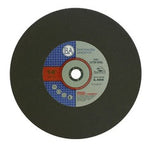
Abrasive wheels are precision power tools used in grinding machines across various industrial workshops. Unlike a traditional saw blade with large, distinct teeth, an abrasive wheel is composed of thousands of small abrasive particles, often called grit, which act as individual cutting points.
These particles are held together by a unique bonding material that forms a solid structure of various thicknesses and shapes. The capability of an abrasive wheel is primarily determined by the specific mineral used as the abrasive, which dictates the wheel's hardness, toughness, and ability to maintain sharp cutting edges under pressure.
Components of an Abrasive Wheel
An engineered abrasive wheel consists of five primary components that define its performance profile:
- Abrasive Grain: The actual mineral (e.g., Aluminum Oxide or Silicon Carbide) that does the cutting.
- Grit Size: The size of the individual grains; coarse for heavy removal, fine for finishing.
- Grade: The strength of the bond holding the particles in place.
- Structure: The spacing or "porosity" between the grains.
- Bond Type: The chemical adhesive used (e.g., Vitrified, Resinoid, or Rubber).
Understanding Wheel Structure and Porosity
The structure of an abrasive wheel refers to the relative spacing of the abrasive grains and the bonding material. In the industry, this is typically designated by a number from 1 (dense) to 15 (open).
A dense structure has grains packed closely together with minimal air space, which is ideal for maintaining the shape of the wheel and performing precision finish grinding. Conversely, an open structure features larger "pores" or air gaps. These gaps are critical for heavy stock removal on soft or ductile materials. The pores act as cooling channels, allowing air or coolant to reach the cut site and providing space for the metal chips (swarf) to be carried away. Without proper porosity, the wheel would "load up" with metal debris, leading to excessive friction and heat damage to the workpiece.
Decoding the Standard Marking System
Every professional abrasive wheel follows a standardized marking system that serves as the tool's DNA. This alphanumeric code, usually found on the wheel’s blotter, allows an operator to predict exactly how the wheel will behave. For example, a code like A36-L5-V tells us the following:
- A: Abrasive Type (Aluminum Oxide)
- 36: Grit Size (Coarse)
- L: Grade (Medium hardness)
- 5: Structure (Medium density)
- V: Bond Type (Vitrified)
By understanding this code, manufacturers can select a "Soft" grade wheel (A–H) for grinding hard materials, ensuring the bond breaks down fast enough to keep the wheel sharp. For softer materials, a "Hard" grade wheel (Q–Z) is selected to prevent premature abrasive wear.
Types of Abrasive Wheel

Different machining processes require specific wheel geometries to reach the desired surface or slot.
- Straight Grinding Wheels: The most common type found on pedestal or bench grinders. They are used for centerless, cylindrical, and surface grinding operations.
- Cylinder or Wheel Ring: This wheel lacks a center mounting support and instead rests on a broad, extended surface. These are primarily used in vertical or horizontal spindle grinders to produce large, flat surfaces.
- Tapered Grinding Wheels: A straight wheel that tapers outward toward the midpoint. This specific geometry is used for grinding gear teeth and specialized thread grinding.
- Cup and Dish Wheels: Straight Cup wheels are used in cutters and gear grinders due to their increased surface area. Dish Cup wheels, featuring a thinner profile, are ideal for reaching into narrow crevices and slots.
- Saucer Grinding Wheels: Commonly used for sharpening milling cutters and twist drills. They are also vital in non-machining areas, such as saw-filing shops, to maintain the edges of large saw blades.
Read More About - Types of Abrasive Wheel
Abrasive Wheel Categories by Type Number
The industry uses "Type" numbers to categorize the physical shape of the wheel:
- Type 1: A standard thick disc-shaped wheel.
- Type 11: A cup-shaped wheel for side-grinding.
- Type 27: A depressed center wheel, commonly used on right-angle grinders.
- Type 29: A saucer-shaped wheel, often seen in flap-disc configurations for blending.
- Type 41/42: Specialized thin wheels used specifically for cutting-off operations.
Benefits of Abrasive Wheel

The modern grinding process offers several distinct advantages over traditional milling or turning:
- Provide Smooth Surfaces: Capability to achieve micro-inch finishes.
- High Accuracy: Can maintain tolerances within ten-thousandths of an inch.
- Cut Hardened Materials: Able to process materials that are too hard for steel or carbide bits.
- Fast Removal Rates: Modern ceramic abrasives allow for rapid stock removal with minimal heat.
- Enhanced Productivity: Reduced downtime due to the self-sharpening nature of high-quality grains.
Conclusion
Abrasive wheels are the backbone of modern finishing. Whether you are shaping high-quality alloy steels or maintaining the edge on a twist drill, success depends on matching the wheel's grade and structure to the specific demands of the workpiece. By using the standard marking system and understanding the role of porosity, operators can achieve high accuracy and superior surface finishes in less time.
Join Our Newsletter
Sign up to get the latest on sales, new releases and more …Join Our Newsletter
Sign up to get the latest on sales, new releases and more …Shop Categories
Recent Articles
- Bryce Green (Big Kid Custom Rides)
- Marc Rapaport (Studio Rapaport)
- Ben Evilsizor (Naxja Winterfest)
- Justin Stauffer (J&E's Fine Woodworking)
- Jaybird (Lost Souls Customz)
- James Lowery (Veteran MX Throttle Therapy)
- John Kovalcik (@olddogmetalworks)
- Tommy Mazz (@jln_weldingservice_)
- Ivan Lopez
- Jeremy Werkheiser (@metalrelic)
Featured Products
-
 734 Reviews
4-1/2" x .040 x 7/8" T1 Premium Thin Cut-off Wheel - 25 pack
$20.88
-
 746 Reviews
4-1/2" x 7/8" T29 Zirconia High Density Flap Disc - 10 pack
$25.19
-
 220 Reviews
4-1/2" x 7/8" T27 Zirconia High Density Flap Disc - 10 pack
$25.19
-
 380 Reviews
6" x .045 x 7/8" T1 Premium Thin Cut-Off Wheel - 25 pack
$27.29
-
 123 Reviews
4-1/2" x 1/4" x 7/8" T27 Depressed Center Grinding Wheel - 25 pack
$28.34
-
 55 Reviews
Nonwoven 6" x 9" Scuff, Clean & Finish Hand Pads
$0.83


Blog Categories
- Abrasives
- Sanding
- Grinding Deburring Finishing
- Safety and Cleanliness
- Metal Working
- Selecting Tools And Equipment
- Wood Working
- Art And Design
- Diy Projects
- Industry 4.0
- Buffing
- Cutting Tools
- Carbide Burrs
- PPE
- Wire Brushes
- Bonded Abrasives
- TIG Electrodes
- Wire Wheels
- Bits
- Diamond Blades
- Power Brushes
- Product Reviews
- Grinding
- Finishing
- Industrial Cleaners