




























PPE Checklist for Fabrication Shops

Metalworking comes with serious safety risks, from flying debris and welding sparks to harmful dust and fumes. That is why a PPE checklist for fabrication shops is essential for protecting workers and creating a safer, more consistent work environment.
This guide covers the key personal protective equipment fabrication shops need, including eye protection, respiratory protection, hearing protection, and other important safety gear to help support OSHA compliance and everyday shop safety.
Why Every Fabrication Shop Needs a PPE Inspection Checklist
Safety is not a task that can be set and forgotten. Many shop owners make the mistake of buying gear once and assuming the job is done. However, a PPE inspection checklist is an ongoing compliance program. It begins with a comprehensive hazard assessment and risk assessment of your specific floor.
Different manufacturing processes introduce distinct dangers. Cutting and grinding create high-velocity projectiles, while welding introduces ultraviolet radiation and toxic fumes. Because these PPE requirements change based on the task, you must have a formal inspection process to ensure gear hasn't been compromised by wear and tear. Meeting legal requirements tied to safety standards and safety regulations isn't just about avoiding fines; it’s about ensuring every person who walks into the shop walks out in one piece.
Respiratory Protection for Dust, Fumes, and Hazardous Substances
The air in a fabrication shop can be a cocktail of hazardous substances. When you are working with sheet metal, you aren't just dealing with steel; you’re dealing with coatings, alloys, and the fumes produced during the process.
The Occupational Safety and Health Administration (OSHA) and the broader health administration guidelines are very clear on control measures. When engineering controls like local exhaust ventilation aren't enough, appropriate PPE is mandatory. This ranges from disposable respirators to sophisticated air purifying respirators and cartridge systems. Choosing the proper PPE requires understanding the concentration of contaminants and the extreme temperatures of the work environment.
Respiratory Protection for Sanding with PSA & Hook-and-Loop Discs
Sanding operations are particularly deceptive. Using high-speed power tools with psa or hook-and-loop discs creates a cloud of fine particulate matter. This sanding dust is often small enough to bypass the natural filters in your nose and settle deep in the lungs.
Even if you are only doing a quick cleanup, safety procedures mandate respiratory protection. Fine metal dust can be just as damaging as silica or coatings over long-term exposure. In these scenarios, you should always pair your respirator with safety goggles or safety glasses to prevent the dust from irritating the eyes.
Safety Warning: Never rely on a standard nuisance dust mask for metal fabrication. Ensure your respirator is rated for the specific particulates or fumes you are encountering.
Eye and Face Protection Against Flying Debris
In a shop, serious injuries to the eyes can happen in a millisecond. Whether it is a shard of metal from a cut-off wheel or a splash of molten metal during a pour, your eye protection must be up to the task.
Basic safety glasses provide a first line of defense, but for grinding and heavy cutting, safety goggles that seal against the face are often required to block fine sparks. For the highest risk tasks, face protectors are necessary. However, a face shield is not a replacement for glasses; it is an additional layer of face protection. In high-impact environments, the layered approach—glasses under a shield—is the industry gold standard for preventing serious injuries.
Head Protection in Fabrication Environments
While you might associate hard hats more with a construction site, they are vital in shops with overhead cranes and heavy machinery. Head protection is divided into two categories: the standard hard hat for falling objects and bump caps for confined spaces.
In a fabrication shop, head injuries often occur when workers are maneuvering around large sheet metal assemblies or under heavy machinery. A hazard assessment will determine if you need the full suspension of a hard hat or the lower-profile protection of a bump cap.
Hand Protection for Cutting, Grinding, and Welding
Your hands are your most valuable hand tools, yet they are the most frequently injured. Hand protection in a shop is task-specific. You need cut-resistant gloves when handling raw sheet metal edges, but those same gloves might be dangerous if worn near rotating heavy machinery, where they could get snagged.
For welding, gloves must withstand molten metal and extreme heat. Furthermore, if you are using solvents for surface prep, you’ll need chemical-resistant gloves to prevent skin absorption. Regular inspection for wear and tear is critical; a hole in a welding glove is an invitation for a localized burn or serious injury.
Hearing Protection and Noise Control
The noise levels in a fabrication shop are often well above the threshold where hearing loss begins. Grinders, pneumatic presses, and even the constant hum of large power tools contribute to long-term damage.
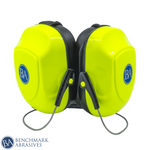
Hearing protection shouldn't be optional. You should provide a choice between disposable ear protection and high-fidelity earmuffs. Consistent hearing protection use is the only way to prevent permanent hearing loss. If you have to shout to be heard by someone three feet away, the noise levels are too high—put the protection on.
Foot, Leg, and Body Protection
A dropped piece of a plate or a heavy impact can end a career. Safety boots with a steel or composite toe cap are the bare minimum for foot protection. In heavy fabrication, metatarsal guards might also be necessary to prevent foot injuries from crushing.
Body protection is equally important. When grinding, sparks can easily ignite synthetic clothing. Fire safety dictates the use of flame-resistant aprons or leathers. Treating the shop floor as a potential fire hazard is a key part of your safety features checklist. Always ensure leg protection is used when heavy grinding or torch cutting is performed.
Fall Protection and Elevated Work Risks
Many modern fabrication shops utilize mezzanines for storage or elevated platforms for large-scale assemblies. Fall protection becomes a legal requirement once a worker is at an elevated height.
Your PPE inspection checklist must include fall arrest systems, harnesses, and inspected anchor points. Don't treat these as construction site only gear; identify the potential risks during maintenance on top of heavy machinery or while loading high racks.
Fire Safety and Emergency Preparedness
Emergency preparedness starts with easy access to safety equipment. This includes clearly marked fire extinguishers that undergo regular inspection.
Your safety culture should also include an up-to-date file of safety data sheets for every chemical in the building. Furthermore, with the high electrical draw of welders and plasma cutters, monitoring electrical systems for faults is a primary fire safety task. Ensure all exits are unobstructed and that every worker knows the evacuation route.
Building a Strong Safety Culture in Fabrication Shops
A safety program is only as strong as the people following it. Building a safety culture means that PPE compliance is viewed as a point of pride, not a chore. This ties directly into quality control; a shop that is organized and safe is a shop that produces high-quality work.
Clear and effective safety procedures include:
- Safety protocols that are written down and displayed.
- Regular safety improvements based on worker feedback.
- Safety management systems that track training and certifications.
- Strict safety compliance from leadership to lead by example.
PPE Inspection Checklist: What to Review Weekly and Monthly
To maintain gear in good condition, you need a formal inspection process. Use the following as a baseline for your PPE inspection checklist:
Weekly Checks
- Eye protection: Inspect safety glasses and face shields for deep scratches or cracks.
- Hand protection: Check for holes or thinning in welding and cut-resistant gloves.
- Cleanliness: Ensure respirators are cleaned and stored in airtight bags to prevent contamination.
- Fit: Verify that air purifying respirators still have a proper seal.
Monthly Checks
- Documentation: Review PPE use logs and update work orders for replacements.
- Stock levels: Ensure you have an adequate supply of ear protection, filters, and lenses.
- Integrity: Inspect hard hats for brittle plastic and safety boots for exposed steel toes.
- Replacement schedule: Proactively replace gear showing significant wear and tear before it fails.
- Safety Warning: If any piece of PPE is involved in an incident, it must be removed from service immediately, even if it appears to be in good condition.
Matching PPE to Specific Fabrication Tasks
Not all manufacturing operations are created equal. You must match different types of gear to specific needs:
- Sheet metal fabrication: Focus on cut-resistant gloves, leg protection, and eye protection against sharp slivers.
- Welding processes: Prioritize auto-darkening helmets, body protection, and respiratory protection for hazardous substances.
- Materials handling: Focus on safety boots, head protection, and hearing protection around loud conveyor systems.
- Industrial safety: In specialized fields like the gas industry, you may require non-sparking tools and anti-static clothing.
Documentation, PPE Use, and Compliance Tracking
From a legal requirements standpoint, if it isn't documented, it didn't happen. Maintaining proof of PPE usage and the use of personal protective equipment is essential for audits and insurance.
Modern shops use digital data entry systems to track work orders for safety gear. This allows you to see if certain teams are going through gloves too fast or if PPE use is dropping in certain departments. This data is the foundation of long-term worker safety.
Conclusion: A Smarter Approach to Workplace Safety
Preventing workplace injuries begins with the honest identification of potential hazards. A ppe checklist for fabrication shops is your most powerful tool in the fight against accidents. By ensuring the proper use of appropriate PPE, you aren't just following safety compliance rules; you are investing in the future of your team.
The manufacturing industry will always be dangerous, but it doesn't have to be deadly. Whether you are addressing respiratory protection during a heavy sanding session or checking your fire safety gear, every small step contributes to a broader safety culture.
Join Our Newsletter
Sign up to get the latest on sales, new releases and more …Join Our Newsletter
Sign up to get the latest on sales, new releases and more …Shop Categories
Recent Articles
- PPE Checklist for Fabrication Shops
- Respiratory Protection for Grinding and Welding
- Why Abrasive Safety Still Matters for Grinding Wheels
- Caring For Your Abrasives: Maintenance Tips For Extended Lifespan
- Woodworking Safety: Best Practices When Using Abrasives
- How To Remove Glue From Hands
- How To Remove Oil From Hands
- How To Remove Gap Filler or Spray Foam From Hands
- How To Remove Paint From Hands
- How To Remove Adhesives From Hands
Featured Products
-
 746 Reviews
4-1/2" x 7/8" T29 Zirconia High Density Flap Disc - 10 pack
$25.19
-
 734 Reviews
4-1/2" x .040 x 7/8" T1 Premium Thin Cut-off Wheel - 25 pack
$20.88
-
 220 Reviews
4-1/2" x 7/8" T27 Zirconia High Density Flap Disc - 10 pack
$25.19
-
 380 Reviews
6" x .045 x 7/8" T1 Premium Thin Cut-Off Wheel - 25 pack
$27.29
-
 123 Reviews
4-1/2" x 1/4" x 7/8" T27 Depressed Center Grinding Wheel - 25 pack
$28.34
-
 55 Reviews
Nonwoven 6" x 9" Scuff, Clean & Finish Hand Pads
$0.83


Blog Categories
- Abrasives
- Sanding
- Grinding Deburring Finishing
- Safety and Cleanliness
- Metal Working
- Selecting Tools And Equipment
- Wood Working
- Art And Design
- Diy Projects
- Industry 4.0
- Buffing
- Cutting Tools
- Carbide Burrs
- PPE
- Wire Brushes
- Bonded Abrasives
- TIG Electrodes
- Wire Wheels
- Bits
- Diamond Blades
- Power Brushes
- Product Reviews
- Grinding
- Finishing
- Industrial Cleaners