

























Types of Metal Fabrication Processes and Their Applications

Metal manufacturing is the foundation of today's consumer products, transportation, and infrastructure. Essentially, the process of shaping, cutting, and joining raw metal into finished metal parts and products is called metal fabrication. Nearly every aspect of our daily lives is impacted by the metal fabrication sector, from the massive steel beams in high-rise buildings to the smallest parts of your smartphone.
Understanding the correct fabrication method is crucial for any project, as it determines the strength, accuracy, and cost of the final product. Whether you're working on a large metal fabrication project or a small metal manufacturing process, the quality of the work often depends on the coordination between heavy machinery and the abrasive products used for post-fabrication finishing.
Cutting Processes in Metal Fabrication
Cutting is almost always the first step in the fabrication process in the manufacturing world. It involves taking raw material, such as a metal sheet, plate, or bar stock, and reducing it into smaller pieces of metal to achieve the desired shape.
1. Laser Cutting
Laser cutting is the best method for precise fabrication. This technology uses a powerful light beam to deliver excellent accuracy when working with carbon steel, stainless steel, and other alloys. It's perfect for straight lines and complex shapes, with minimal material waste. Although lasers create perfect edges, small metal parts may still require some sanding to ensure a proper paint or coating application.
2. Waterjet Cutting / High-Pressure Waterjet
A waterjet uses a supersonic stream of water, often mixed with an abrasive medium, to erode a narrow line through the metal. Because it doesn't use heat, it eliminates "heat-affected zones," making it the perfect choice for aluminum and high-strength metals that might warp or lose their temper under a torch.
3. Plasma Cutting / Flame Cutting
For thicker metal pieces, plasma cutting and flame cutting are essential in industry. Plasma cutting uses an electrically conductive gas to transfer energy from a power supply to the metal. It’s significantly faster than laser cutting for heavy plates, but often leaves behind dross or a rough edge. This is where post-cut grinding with flap discs is essential to achieve smooth edges.
4. Saw Cutting
Old-school but effective, saw cutting with band saws or circular saws is still widely used for bar stock and large metal components. It provides a highly predictable mechanical cut, though it almost always requires abrasive products to deburr the edges before the next stage of fabrication.
Forming Processes in Metal Fabrication
Unlike cutting, forming is about controlled deformation. Instead of removing material, these metal fabrication processes use force to bend or stretch the metal into a new geometry.
1. Press Braking / Press Braking Machines
Press brakes are used to create precise bends in metal sheets. By pressing a "punch" into a "die," the machine can create angles ranging from simple 90-degree bends to complex multi-bend metal components. This is essential for creating enclosures and brackets in sheet metal fabrication.
2. Metal Stamping / Stamping Presses
For mass production, stamping presses are unrivaled. This process uses a die to "stamp" a shape into a metal sheet in a single stroke. Specialty techniques like fine blanking offer high-precision edges, while deep drawing allows the metal to be stretched into cup-like or "deep" shapes—think of an aluminum soda can or a stainless steel kitchen sink.
3. Rolling and Other Forming
Rolling involves passing metal pieces through pairs of rollers to reduce thickness or create a uniform curve (like a pipe or a fuel tank). This is a crucial fabrication process in manufacturing for high-volume production where uniform thickness control is a project requirement.
Joining Processes in Metal Fabrication
Once the metal parts are cut and formed, they must be joined to create a functional end product.
1. Arc Welding / MIG Welding / TIG Welding
Welding is the most common of the metal fabrication techniques for joining.
- MIG Welding: Fast and versatile, great for general metal manufacturing.
- TIG Welding: Offers the highest precision and is preferred for stainless steel and thin metal components. Regardless of the type, surface preparation using a wire brush or grinding wheel is a safety standard and a quality requirement to ensure a strong, contaminant-free weld.
2. Brazing and Soldering
In brazing and soldering methods, metal pieces are joined by melting a filler metal into the joint. Because the base metal does not melt, it is excellent for thin materials or joining different material types where traditional arc welding might cause surface damage.
3. Mechanical Fastening
In modular construction, bolts, rivets, and clamps are used to join metal components. This is preferred when the final product needs to be disassembled or when heat-sensitive coatings are already applied.
Related Article: Difference Between Metal Fabrication and Welding
Finishing Processes in Metal Fabrication
The "Final Polish" is what protects the metal manufacturing effort from the elements. Surface finishing is critical for corrosion resistance, wear resistance, and aesthetics.
1. Abrasive Grinding and Deburring
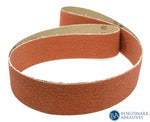
This is the most critical post-fabrication step. Using abrasive products like grinding wheels, flap discs, and sanding belts, metal fabricators smooth out sharp sheared edges and remove weld splatter. Without proper deburring, metal parts can be hazardous to handle and prone to coating failure.
2. Powder Coating and Painting
Once the surface is prepped, powder coating or painting provides a durable barrier against rust. This is a common requirement for metal fabrication applications in outdoor environments.
3. Polishing and Buffing
For the food processing and medical industries, a highly reflective surface finish is required to prevent bacterial growth. Polishing and buffing achieve these smooth surfaces, ensuring the final product meets stringent hygiene and aesthetic standards.
Applications of Metal Fabrication Processes
The metal fabrication process you require depends on your project's specific requirements.
- Construction Projects: Select the steel fabrication process, including heavy-duty arc welding and CNC machining, to ensure structural integrity.
- Electronics Industry: Utilizes precision fabrication, laser cutting, and intricate stamping presses to create small, highly conductive metal parts.
- Food Processing: Demands stainless steel forming and high-level surface finishing to ensure sanitation and corrosion resistance.
- Automotive Sector: Uses a mix of mass production stamping and robotic MIG welding for vehicle manufacturing.
Safety and Quality Considerations in Metal Fabrication
Metal fabrication work is inherently hazardous. Safety standards must be the priority, involving:
- PPE: Full-face shields, heat-resistant gloves, and hearing protection are must-have accessories.
- Machine Guarding: Ensuring press brakes and saws have appropriate sensors.
- Abrasive Safety: Always match the RPM of your abrasive products to your power tool to prevent disc shatter.
Quality control checkpoints, such as checking for burrs, verifying dimensional accuracy, and inspecting weld penetration, ensure that the precision fabrication meets the client's material selection needs.
Related Article: How to Get Started in Metal Fabrication
FAQs
Q. What are the main types of metal fabrication?
The primary types include cutting (laser, plasma, saw), forming (bending, rolling, stamping), and joining (welding, fastening).
Q. How do I choose the correct fabrication process for the metal?
Selection depends on material selection, the thickness of the metal sheet, the required precision, and whether you are doing a one-off or mass production.
Q. What metals can be used in fabrication projects?
The most common are stainless steel, carbon steel, and aluminum, but specialty projects may use copper, brass, or titanium.
Q. How do abrasives support metal fabrication?
Abrasives are used in surface preparation before welding and for surface finishing (deburring and polishing) after the metal components are shaped.
Ready To Elevate Your Fabrication Job?
From the initial laser cutting of a metal sheet to the final powder coating of a metal product, the various types of metal fabrication work to build the world around us. By selecting the right fabrication method and maintaining high safety standards, you ensure that your metal fabrication projects are both durable and professional.
If you are looking to elevate your next fabrication project, ensuring you have the right abrasive products for every stage of the fabrication process in manufacturing is the best way to achieve a perfect finish. For professional-grade tools and supplies that meet the demands of the metal fabrication industry, trust Benchmark Abrasives to deliver the quality you need.
Join Our Newsletter
Sign up to get the latest on sales, new releases and more …Join Our Newsletter
Sign up to get the latest on sales, new releases and more …Shop Categories
Recent Articles
- Types of Metal Fabrication Processes and Their Applications
- Guide to Cloth-Backed Abrasives: Weights and Flexibility
- Abrasives in Automotive Restoration: Tools, Stages, and Techniques
- Understanding RPM Ratings on Abrasive Tools
- How Does The Hardness Of A Material Influence The Choice Of Abrasive?
- How to Maximize Efficiency with Bonded Abrasives
- Understanding Grinding Wheel Hardness: What You Need to Know
- The Right Abrasive Cut-Off Wheels For Your Application
- How to Understand Grinding Wheel Specifications
Featured Products
-
 734 Reviews
4-1/2" x .040 x 7/8" T1 Premium Thin Cut-off Wheel - 25 pack
$20.88
-
 746 Reviews
4-1/2" x 7/8" T29 Zirconia High Density Flap Disc - 10 pack
$25.19
-
 220 Reviews
4-1/2" x 7/8" T27 Zirconia High Density Flap Disc - 10 pack
$25.19
-
 380 Reviews
6" x .045 x 7/8" T1 Premium Thin Cut-Off Wheel - 25 pack
$27.29
-
 121 Reviews
4-1/2" x 1/4" x 7/8" T27 Depressed Center Grinding Wheel - 25 pack
$28.34
-
 54 Reviews
Nonwoven 6" x 9" Scuff, Clean & Finish Hand Pads
$0.83


Blog Categories
- Abrasives
- Sanding
- Grinding Deburring Finishing
- Safety and Cleanliness
- Metal Working
- Selecting Tools And Equipment
- Wood Working
- Art And Design
- Diy Projects
- Industry 4.0
- Buffing
- Cutting Tools
- Carbide Burrs
- PPE
- Wire Brushes
- Bonded Abrasives
- TIG Electrodes
- Wire Wheels
- Bits
- Diamond Blades
- Power Brushes
- Product Reviews
- Grinding
- Finishing
- Industrial Cleaners