



























Guide to Cloth-Backed Abrasives: Weights and Flexibility

When it comes to coated abrasives, the backing material is just as important as the abrasive grain, playing a crucial role in the product's effectiveness and performance. If you’re involved in metal fabrication, heavy-duty woodworking, or industrial grinding, you’ve likely relied on a cloth-backed abrasive.
This guide highlights the mechanism and practical application of cloth abrasives—defining what they are, explaining how the abrasive fabric structure impacts performance, and decoding the cryptic weight system (sandpaper backing weight).
Understanding these factors is the key to achieving superior durability, flexibility, and cut rate in your most demanding sanding applications.
What are Cloth-Backed Abrasives?
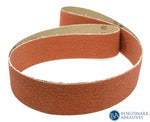
A cloth-backed abrasive is a flexible material in which the abrasive grains (e.g., aluminum oxide or silicon carbide) are securely bonded to a woven abrasive fabric rather than to an abrasive paper backing. This woven fabric, the backing material, provides exceptional strength and resilience compared with paper backings.
The backing material is typically made from different types of fibers, primarily cotton, polyester, or a poly-cotton blend (known as poly-cotton blends). The woven structure of the cloth abrasive is designed to resist heat, tension, and tearing. The way the abrasive grains penetrate the fabric (glue penetration) and the density of the weave (warp density) are key factors determining product quality.
While paper backings are suitable for light tasks, cloth-backed abrasives excel in high-pressure, general-purpose, and heavy stock removal applications—a fundamental industry truth dating back to the early days of coated abrasives. The fabric's fiber affinities and fiber ratios in blends are engineered for maximum durability, making them the most common backing types in heavy industry.
How Cloth Backing Affects Abrasive Performance
The abrasive fabric structure is not just about strength; it directly influences cutting consistency, heat resistance, and overall performance, whether you're working on woodworking, auto body, or metal fabrication.
Strength and Tear Resistance
Woven cloth provides vastly superior tear resistance compared to paper, especially along the edges. Heavier fabrics are less prone to edge wear and maintain stability under sustained high pressure. This makes them ideal for aggressive sanding applications, such as belt sanding or using fiber-type discs.
When applying high torque, such as in metal grinding, paper belts quickly fail, underscoring why cloth is mandatory for end-use and for applications requiring maximum durability across the surface area of the workpiece.
Flexibility and Conformability (Including Extreme Flex Backing)
A crucial difference among backing types is flexibility. Cloth-backed abrasives can be engineered for extreme flexibility to follow contours and tight curves, a property determined primarily by fiber loops and weave density.
-
J-weight cloth (lightweight) is highly flexible, making it an ideal backing for contour work and polishing. This material conforms effortlessly to complex shapes, allowing fine grits to achieve a uniform finish and mirror finishes necessary for high-end polishing tasks.
- Y-weight cloth (heavyweight) is stiff and strong, making it perfect for flat, aggressive grinding.
The ability of extreme-flex backing material to bend without cracking or shedding abrasive grains is a significant advantage over stiffer film backings when precision demands a highly conformable abrasive.
Durability and Heat Resistance
Cloth's woven structure allows it to withstand significantly high-temperature grinding operations, where friction is constant. Unlike paper, which degrades rapidly under heat, the woven cotton or synthetic fiber helps dissipate heat and prevents the abrasive from prematurely failing.
When choosing grain type, pairing aluminum oxide (general use) or silicon carbide (non-ferrous metals, fine finishing) with cloth provides extended life. For challenging sanding projects, applying grease sticks to a grinding belt can help lubricate the surface and reduce heat, extending belt life. The backing allows the use of durable grain coating types, such as open-coat or closed-coat, to optimize power grinding for different grit sizes.
Related Article: Common Abrasive Mistakes Fabricators Make
Decoding Cloth Backing Weights (What “X,” “Y,” and “J” Really Mean)
When selecting the right backing, understanding sandpaper backing weight is vital. The letter designation refers to the relative strength, thickness, and flexibility of the fabric backing.
-
J-Weight (Jeans): This is the lightest and most flexible of the different backings. It is used for contour work, polishing tasks, and applications requiring extreme conformability. If you need a flexible belt or strip for fine finishing, J-weight is the ideal selection criterion.
-
X-Weight (Extra): This is a medium-weight, general-purpose backing. It balances strength and moderate flexibility, making it a great choice for different types of backing for applications requiring both durability (like on a belt sander) and some conformability (like on a backup pad).
- Y-Weight (Heavy-Duty): This is the thickest and strongest backing. It is stiff and used exclusively for heavy stock removal, wide belt sanding, and high-pressure grinding applications where maximum tear resistance and stability are required.
This weight system provides manufacturers and consumers with clear metrics to match the abrasive to the end-use. Stiffer backing types like Y-weight are suitable for flat, aggressive work, while J-weight is essential for detailed, contoured tasks.
Cloth-Backed Abrasives vs Paper-Backed Abrasives
The selection between abrasive paper backing vs cloth backing depends entirely on the sanding job's requirements for strength, cost, and finish quality.
Pros and Cons of Cloth
Cloth-backed abrasives offer unmatched performance in demanding sanding applications:
| Pros (Cloth) | Cons (Cloth) |
| Superior stock removal and longevity. | Generally, a higher initial cost. |
| Excellent tear resistance and edge stability. | Less suitable for extremely fine grits (paper is often better for delicate, final polishing). |
| Handles high pressure and heat well. | Stiffer weights (Y-weight) have poor conformability. |
| Suitable for wet or dry use (due to water-resistant resins). | Requires high motor power to run effectively. |
Pros and Cons of Paper
Paperbackings dominate the finer finishing tasks and DIY projects where cost is a factor:
| Pros (Paper) | Cons (Paper) |
| Lower cost, especially for fine grits. | Easily tears and creases under high pressure. |
| Excellent for holding very fine grits for delicate finishing. | Degrades rapidly with heat or moisture. |
| Available in large sanding sheets or discs for random orbital sanders. | Paper belts are highly limited in heavy-duty applications. |
Common Forms of Cloth-Backed Abrasives
The durability of cloth makes it the backing material of choice for high-stress abrasive formats.
Sanding Belts (Narrow Belts, File Belts, and Wide Belts)
Sanding belts are the most common format for cloth abrasives. Wide-belt machines, belt sander bench grinders, and narrow belts used for file work rely on cloth's resistance to heat and to continuous tension. The backing ensures the belt tracks accurately and maintains integrity during continuous stock removal on workpiece materials. This format is essential for industrial machines.
Sanding Discs
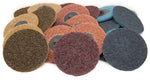
Sanding discs (such as resin-fiber discs or abrasive disc pads) use cloth to withstand the heat and pressure generated by random-orbital sanders or right-angle grinders. Whether attached via hook-and-loop or pressure-sensitive adhesive (PSA), the cloth backing provides a stable base against the backup pad to ensure an even cut and maximum lifespan.
Shop Rolls, Strips, and Specialty Products
Shop rolls and sanding strips provide a convenient, general-purpose solution. They are essentially abrasive cloths that can be torn or cut to size for hand-sanding contour work or reaching tight spaces. Spiral bands—small, cylindrical abrasives—also rely on cloth for the strength needed during high-speed internal grinding on intricate, specific applications. The durability of the material types makes cloth far superior to abrasive paper backing in this flexible hand-finishing format.
Related Article: Belt Sander vs Orbital Sander
Selecting the Ideal Cloth-Backed Abrasive
Selecting the best abrasive involves balancing the abrasive type, grit sizes, and the backing weight using the following selection criteria:
- Workpiece Material: Use Aluminum Oxide for wood and general metal; choose silicon carbide for non-ferrous metals, glass, and fine polishing tasks.
- Desired Finish: For stock removal and speed, use Y-weight, coarse grits, and strong resins. For precision needs, mirror finishes, and contour work, use J-weight and fine grits.
- Tool Type/Pressure: Belt sander operations demand X or Y-weight for stability. Random orbital sanders often use X-weight sanding discs.
By applying this knowledge of different backings and grain types to your sanding job, you can confidently select the right backing for maximum efficiency and superior quality in any product category.
FAQs
Here are answers to some of the most common questions regarding cloth-backed abrasives:
Q. What is abrasive cloth used for?
A. Abrasive cloth is primarily used for heavy stock removal, shaping, grinding metal welds, and contour work where strength, flexibility, and resistance to heat are needed.
Q. Why choose cloth-backed over paper-backed sandpaper?
A. You choose cloth-backed abrasives for superior tear resistance, durability, longevity, and tolerance for high pressure and heat.
Q. What does extreme flex backing mean?
A. It refers to a J-weight cloth or highly flexible weave that allows the abrasive to bend sharply without cracking, ideal for following tight curves and complex profiles.
Q. When should I use shop rolls vs discs vs belts?
A. Sanding belts are for machines; sanding discs are for power sanders; shop rolls are for cutting to size for flexible hand sanding or specific general-purpose machine tasks.
Join Our Newsletter
Sign up to get the latest on sales, new releases and more …Join Our Newsletter
Sign up to get the latest on sales, new releases and more …Shop Categories
Recent Articles
- Bonded Abrasives Accessories Guide for Grinding Tools
- The Most Common Angle Grinder Mistakes That Ruin Abrasives
- When to Replace a Diamond Blade | Warning Signs Guide
- Ceramic vs Zirconia vs Aluminum Oxide Grinding
- Carbide Burrs: The Complete Guide to Types, Uses, and Selection
- General Purpose Diamond Blades
- Buffing Wheel Guide: How to Polish, Finish, and Perfect Any Surface
- Hole Saws: Complete Guide to Types, Uses, and Choosing the Right Kit
- Introduction to Drum Sanders and Linear Finishing for Metalworkers
- How to Polish Aluminum to a Mirror Finish
Featured Products
-
 746 Reviews
4-1/2" x 7/8" T29 Zirconia High Density Flap Disc - 10 pack
$25.19
-
 738 Reviews
4-1/2" x .040 x 7/8" T1 Premium Thin Cut-off Wheel - 25 pack
$20.88
-
 220 Reviews
4-1/2" x 7/8" T27 Zirconia High Density Flap Disc - 10 pack
$25.19
-
 380 Reviews
6" x .045 x 7/8" T1 Premium Thin Cut-Off Wheel - 25 pack
$27.29
-
 55 Reviews
Nonwoven 6" x 9" Scuff, Clean & Finish Hand Pads
$0.83
-
 123 Reviews
4-1/2" x 1/4" x 7/8" T27 Depressed Center Grinding Wheel - 25 pack
$28.34


Blog Categories
- Abrasives
- Sanding
- Grinding Deburring Finishing
- Safety and Cleanliness
- Metal Working
- Selecting Tools And Equipment
- Wood Working
- Art And Design
- Diy Projects
- Industry 4.0
- Buffing
- Cutting Tools
- Carbide Burrs
- PPE
- Wire Brushes
- Bonded Abrasives
- TIG Electrodes
- Wire Wheels
- Bits
- Diamond Blades
- Power Brushes
- Product Reviews
- Grinding
- Finishing
- Industrial Cleaners