



























Quick-Change Discs: Surface Prep, Grinding, and Finishing

In the fast-paced world of metal fabrication, downtime is the enemy of profit. Whether you are welding in a tight corner or preparing a surface for a new gasket, you don't want to spend five minutes fumbling with wrenches just to change an abrasive.
This is where quick-change discs become the ultimate productivity tool.
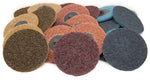
Designed specifically for fast swaps and precise results, these abrasive sanding discs enable operators to transition from aggressive grinding to fine finishing in seconds.
However, the performance of these sanding discs isn't just about the abrasive grain; it is fundamentally tied to the backing and attachment system.
Choosing the right backing is the difference between a disc that flies off the tool and one that delivers a flawless finish. This guide serves as a decision-making resource to help you match the right disc to your specific project needs.
Why Backing Type Matters for Sanding Discs
When selecting a disc, many people focus solely on the grit. However, the disc type and its attachment system determine stability, cut rate, and final surface finish.
If the backing is too flexible for a heavy grinding task, the disc will "mush" against the metal, generating excessive heat and slowing down your progress. Conversely, if a backing is too rigid for a finishing task, you risk gouging the material.
Furthermore, sanding disc performance is inextricably linked to tool compatibility. The various fastening systems, from threaded plastic hubs to adhesive backings, are designed to handle specific RPM ranges and pressures.
Understanding the comparison between quick-change, PSA, and hook-and-loop systems is the first step toward optimizing your workflow.
Type R Quick-Change Discs
The Type R system is the industry standard for most quick-change sanding discs. It features a "roll-on" male threaded plastic hub that locks securely into a female backing pad with a simple half-turn.
- Best For: These are the workhorses for die grinders and compact power tools. Because they lock so securely, they can handle the high RPMs (often 20,000+) typical of pneumatic tools.
- Applications: Ideal for surface prep, light material removal, and blending in tight spaces where a larger angle grinder won't fit.
- Safety Note: Always ensure the disc is fully "clicked" into the holder. A partially seated Type R disc can vibrate loose at high speeds, creating a projectile hazard.
Type S Quick-Change Discs
While the Type R is the most common, the Type S (sometimes referred to as SocAtt or Turn-On) disc type offers a different geometry. Instead of a plastic roll-on thread, it typically features a flat-based threaded metal or heavy-duty plastic stud.
- Best For: High-torque and high-heat applications. The Type S system is often preferred for heavy deburring and weld grinding because the attachment is designed to resist loosening under extreme vibration.
- Applications: If you are working with stainless steel or tough alloys that require coarse grits and significant "elbow grease," Type S provides a more rigid, centered feel that minimizes disc chatter.
Hook & Loop Sanding Discs
If your work involves multi-stage finishing where you need to switch between grits frequently, Hook and Loop discs are the gold standard. Much like the hook-and-pile fasteners on clothing, these discs stick to a fuzzy backing pad.
- Best For: Finishing, surface conditioning, and light rework.
- Benefits: The primary advantage is the ability to peel a disc off and stick it back on later. This is perfect for finer grits and fine grit applications where you might need to step back a grit size to fix a scratch.
- Pro Tip: For the best results on metal, use non-woven abrasives with a hook and loop backing to get a consistent finish.
PSA Sanding Discs
PSA Discs (Pressure Sensitive Adhesive) are "peel and stick" abrasives. Unlike Type R or Hook and Loop, these rely on a strong glue bond to the backing pad.
- Best For: Flat sanding and stationary applications. Because they are thin and have no central hub, they offer a very flat profile.
- Applications: They are widely used in solid surface fabrication and for sanding wide flat panels where you need the disc to stay perfectly flush with the workpiece.
- Limitations: Unlike sanding sheets used on a block, once a PSA disc is removed, the adhesive is usually compromised, meaning they aren't meant for reapplication. They are also more sensitive to heat; if the metal gets too hot, the glue can soften, causing the disc to slide.
Matching Disc Backing to Tools and Equipment
Choosing the right backing is also a matter of safety and tool synergy.
- Die Grinders: Use Type R or Type S quick-change discs. These tools spin too fast for PSA or hook and loop discs, which can fly off if the adhesive or hooks fail at 25,000 RPM.
- Power Drills: While power drills have lower RPMs, they are great for hook and loop or PSA discs when using a mandrel-mounted backing pad for light surface preparation.
- Bench Grinder: Many operators use sanding Rolls or large PSA discs mounted to a side-plate on a bench grinder for sharpening or flat-grinding tools.
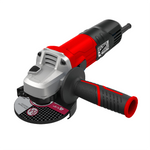
- Angle Grinders: For heavy stock removal, you are usually moving away from quick-change discs and toward flap discs or larger fiber discs.
Choosing Abrasive Materials for Sanding Disc Performance
The abrasive grains are the engine of the disc. At Benchmark Abrasives, we recommend matching the grain to the material:
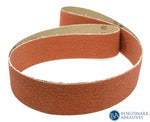
- Aluminum Oxide: The most versatile. Use it for general-purpose sanding on wood and carbon steel. It is also the standard for an aluminum oxide sanding belt.
- Zirconia Alumina: This is a "self-sharpening" grain that is excellent for high-pressure grinding on cast iron and steel.
- Silicon Carbide: Extremely sharp but brittle. Perfect for non-ferrous metals like aluminum and for silicon carbide sanding belts used on stone or glass.
- Ceramic Alumina: The premium choice. Ceramic alumina stays sharp longer and runs cooler than any other grain. It is the best choice for stainless steel to prevent heat discoloration.
Common Sanding Tasks and Recommended Disc Types
To simplify your choice, follow this task-based logic:
| Task | Recommended Backing | Recommended Grit |
| Rust Removal | Type R / Type S | Coarse (36 - 60) |
| Gasket Removal | Type R (Non-woven) | Medium (80 - 120) |
| Weld Blending | Type S | Coarse to Medium |
| Fine Finishing | Hook & Loop | Fine Grit to Ultra Fine |
| Paint Prep | PSA/Hook & Loop | grit size 220 - 400 |
Always prioritize a "sanding-first" mentality. If you can achieve the result with a fine grit size, you will save time on the back end by not having to remove deep scratches caused by overly aggressive grinding.
Quick-Change Discs vs Other Abrasive Tools
It is essential to recognize when a quick-change disc is not the ideal solution.
- vs. Fiber Disc: A fiber disc is for large, flat areas of heavy scale or weld. A quick-change disc is for detail and smaller surfaces.
- vs. Flap Discs: Flap discs last longer on heavy metal but lack the precision of a small Type R disc in a corner.
- vs. Cut-Off Wheels: Never use a sanding disc to cut. Cut-off wheels and saw blades are designed for edge cutting; sanding discs are used for surface finishing work.
- vs. Abrasive Sanding Belts: Belts provide a linear scratch pattern, whereas discs provide a circular pattern. Use belts for long, uniform graining.
Choose the Right Backing, Get Better Sanding Results
Matching your backing type to your sanding task is the easiest way to improve your shop's efficiency.
If you take away anything from this guide, you should:
- Use Type R for general maintenance and high-speed die grinding.
- Use Type S for heavy-duty metal removal where stability is key.
- Use Hook & Loop for multi-stage fine finishing and rework.
- Use PSA for flush, flat-panel sanding.
By understanding the relationship between the attachment system, the tool, and the abrasive grains, you ensure safer operation and a superior surface finish.
Ready to upgrade your abrasive kit?
Explore our full range of quick-change discs to find the perfect match for your die grinder, or compare our hook-and-loop and PSA sanding discs for your next finishing project. If you're still not sure which backing or grit size is right for your application, contact the experts at Benchmark Abrasives today.
Join Our Newsletter
Sign up to get the latest on sales, new releases and more …Join Our Newsletter
Sign up to get the latest on sales, new releases and more …Shop Categories
Recent Articles
- Bonded Abrasives Accessories Guide for Grinding Tools
- The Most Common Angle Grinder Mistakes That Ruin Abrasives
- When to Replace a Diamond Blade | Warning Signs Guide
- Ceramic vs Zirconia vs Aluminum Oxide Grinding
- Carbide Burrs: The Complete Guide to Types, Uses, and Selection
- General Purpose Diamond Blades
- Buffing Wheel Guide: How to Polish, Finish, and Perfect Any Surface
- Hole Saws: Complete Guide to Types, Uses, and Choosing the Right Kit
- Introduction to Drum Sanders and Linear Finishing for Metalworkers
- How to Polish Aluminum to a Mirror Finish
Featured Products
-
 746 Reviews
4-1/2" x 7/8" T29 Zirconia High Density Flap Disc - 10 pack
$25.19
-
 738 Reviews
4-1/2" x .040 x 7/8" T1 Premium Thin Cut-off Wheel - 25 pack
$20.88
-
 220 Reviews
4-1/2" x 7/8" T27 Zirconia High Density Flap Disc - 10 pack
$25.19
-
 380 Reviews
6" x .045 x 7/8" T1 Premium Thin Cut-Off Wheel - 25 pack
$27.29
-
 55 Reviews
Nonwoven 6" x 9" Scuff, Clean & Finish Hand Pads
$0.83
-
 123 Reviews
4-1/2" x 1/4" x 7/8" T27 Depressed Center Grinding Wheel - 25 pack
$28.34


Blog Categories
- Abrasives
- Sanding
- Grinding Deburring Finishing
- Safety and Cleanliness
- Metal Working
- Selecting Tools And Equipment
- Wood Working
- Art And Design
- Diy Projects
- Industry 4.0
- Buffing
- Cutting Tools
- Carbide Burrs
- PPE
- Wire Brushes
- Bonded Abrasives
- TIG Electrodes
- Wire Wheels
- Bits
- Diamond Blades
- Power Brushes
- Product Reviews
- Grinding
- Finishing
- Industrial Cleaners