




























Introduction to Drum Sanders and Linear Finishing for Metalworkers

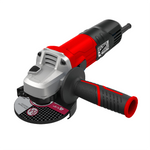
For metalworkers, achieving a truly "professional" product, as opposed to a merely "finished" one, hinges on the quality of the surface grain. While the angle grinder is a common tool for weld cleanup in many fabrication shops, the most skilled artisans rely on drum sanders and linear finishing to achieve unmatched surface control.
Linear finishing is the art of creating a consistent, repeatable, and directional scratch pattern. Unlike the chaotic "swirl" marks left by a random orbital sander or the uneven gouges of a handheld grinder, a drum sander allows you to lay down a perfect grain that flows with the geometry of your part. Whether you are working on metalworking projects involving heavy-duty structural steel or delicate decorative pieces, these metal sanders provide a level of surface finishing that is simply unattainable by hand.
What are Drum Sanders?
A drum sander is a machine designed to provide a linear finish. While a disc sander or an angle grinder uses a rotating disc that creates a circular or "cross-hatch" pattern, a drum sander uses a cylindrical drum that spins parallel to the workpiece.
This creates a "grain" similar to what you see on stainless steel kitchen appliances or architectural sheet metal. Linear finishing is not just about aesthetics; it’s about surface finish consistency. Using a drum sander makes sure that every square inch of the metal has the same depth and frequency of scratches, which is vital for parts that must match or for surfaces that will be plated or coated.
Core Components of a Drum Sander and How It Works
To understand how these machines deliver such precision, you have to look under the hood. A professional benchtop drum sander or floor-standing unit consists of several critical parts:
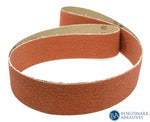
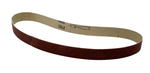
- Sanding Drum: The heart of the machine. This is a precision-machined cylinder wrapped in sanding belts or abrasive drums.
- Conveyor Belt: Unlike a thickness planer that uses rollers, a drum sander uses a conveyor belt. This ensures that even small or thin flat surfaces stay perfectly flat and don't "snipe."
- Powerful Motor: To maintain a constant RPM under the friction of metal sanding, these machines require a powerful motor (often 1.5 HP or higher).
- Conveyor Motor: A separate, variable-speed conveyor motor allows you to slow down the feed rate for tougher materials or speed it up for a lighter touch.
Some advanced setups feature a dual drum configuration. This allows you to run a coarse grit on the first drum and a finer grit on the second, finishing the metal in a single pass.
Related Article: Wide Belt Sander vs. Drum Sander
What is Linear Finishing?
Industrial linear finishing is the standard for high-end fabrication. When you see a "brushed" texture on a finishing machine, you are seeing the result of a controlled linear finishing process.
Surface preparation is the most common reason for using these machines. If a metal surface has "mill scale" or oxidation, brush sanders can remove it uniformly without changing the thickness of the part unevenly. This results in a high-quality, uniform finish that makes subsequent steps—like welding, painting, or anodizing—far more effective.
Safety Warning: Metal finishing creates fine, metallic dust that is both a respiratory hazard and potentially combustible. Always ensure your dust collectors are specifically rated for metal (non-sparking systems) and that you are wearing a dust mask and safety glasses.
Drum Sanders vs Angle Grinders, Discs, and Hand Sanding
Why invest in a specialized sanding solution when you already have an angle grinder?
- Uniformity: An angle grinder or sanding discs rely on the operator's hand pressure. This almost always leads to uneven surfaces and "low spots."
- Directionality: Abrasive discs create swirls. In linear finishing, the scratch pattern is unidirectional, which is more visually appealing and professional.
- Speed: Hand sanding a 4-foot sheet of metal could take hours; a drum sander does it in minutes.
While there are different types of handheld finishers (like the Line-Mate III), a stationary drum sander is the ultimate sanding solution for flat, repeatable results.
Common Uses for Drum Sanders and Linear Finishing Machines
Where do these machines truly shine in the shop?
- Plasma Tables: After cutting parts on plasma tables, there is often "dross" or slag. A drum sander quickly levels the surface of these smaller pieces.
- Stainless Steel Panels: Achieving a No. 4 brushed finish on large panels.
- Metal Deburring: Removing sharp edges and burrs from punched or sheared sheet metal.
- Edge Rounding: Softening the edges of multiple parts simultaneously by feeding them through the machine.
- Toughest Jobs: Removing heavy rust or scale from cast iron surfaces or reclaimed steel.
Key Features That Matter When Choosing a Drum Sander
If you’re in the market for metal sanders, don't just look at the price tag. Consider the product specifications, such as:
- Maximum Width: This determines the largest workpiece you can fit. Note that many open-ended sanders can double their width in two passes.
- Belt Size: Standard sizes make it easier to find related products like replacement sanding belts.
- Outfeed Tables: Critical for supporting long sheet-metal pieces to prevent tipping as they exit the machine.
- Belt Tracking: High-end machines feature automatic belt-tracking systems to prevent abrasive from slipping off the drum.
- High-Efficiency Motor: Look for a high-efficiency motor that stays cool during long runs on the toughest jobs.
Abrasives for Drum Sanders and Linear Finishing
Your results are only as good as the abrasive belt you choose.
- Aluminum Oxide: The standard for most metalworking projects. It offers a great balance of lifespan and cost.
- Zirconia/Ceramic: Better for stainless steel and high-torque applications where you need a faster cut.
- Finer Grits: Use finer grits (180-220+) to refine the surface finish to a decorative "satin" look.
Always select the appropriate abrasive for each material. What works for cast iron may be too harsh for thin sheet metal.
How Drum Sanders Fit into a Modern Metal Shop
The modern shop is becoming increasingly "hybrid." It’s common to see a table saw or drill press alongside a high-end finishing machine.
While woodworking projects focus on thicknessing, metalworking projects focus on surface conditioning. However, the crossover is real. A disc sander used for wood can be used for metal (with the right safety precautions), and a drum sander is arguably the most versatile bridge between the two worlds. Integrating these power tools with your existing hand tools creates a workflow in which the machine does the "heavy lifting," leaving the manual work to the fine details.
Products and Accessories You May Consider
To keep your shop running at peak efficiency, you’ll need to track your consumables.
- Sanding Belts and Abrasive Drums: Always keep a range of grits in stock.
- Part Number: Note the part number of your specific belt size for quick reordering.
- Dust Collectors: Ensure your system is up to the task of handling metallic particulates.
At Benchmark Abrasives, we support your shop with free shipping on bulk abrasive orders and a wide selection of replacement components to ensure your machine never stays down for long.
Related Article: Which Sanding Belts Do I Use on Wood?
Build Better Finishes with Linear Precision
Ultimately, linear finishing is about pride in craftsmanship. A drum sander is more than just a tool for metal deburring; it is a sanding solution that elevates your work from "good" to "world-class." By providing a consistent surface finish, you ensure that your metalworking projects stand the test of time and scrutiny.
Whether you are finishing a custom fireplace surround or prepping industrial parts for a client, the precision of a high-quality drum sander is an investment that pays for itself in saved time and superior results.
Explore our latest metalworking tools and high-performance abrasives.
Check out our guide on types of power sanders and how to choose the right one to see where the drum sander fits into your toolkit.
Join Our Newsletter
Sign up to get the latest on sales, new releases and more …Join Our Newsletter
Sign up to get the latest on sales, new releases and more …Shop Categories
Recent Articles
- Bonded Abrasives Accessories Guide for Grinding Tools
- The Most Common Angle Grinder Mistakes That Ruin Abrasives
- When to Replace a Diamond Blade | Warning Signs Guide
- Ceramic vs Zirconia vs Aluminum Oxide Grinding
- Carbide Burrs: The Complete Guide to Types, Uses, and Selection
- General Purpose Diamond Blades
- Buffing Wheel Guide: How to Polish, Finish, and Perfect Any Surface
- Hole Saws: Complete Guide to Types, Uses, and Choosing the Right Kit
- Introduction to Drum Sanders and Linear Finishing for Metalworkers
- How to Polish Aluminum to a Mirror Finish
Featured Products
-
 746 Reviews
4-1/2" x 7/8" T29 Zirconia High Density Flap Disc - 10 pack
$25.19
-
 738 Reviews
4-1/2" x .040" x 7/8" t1 premium thin cut-off wheel - 25 pack
$20.88
-
 220 Reviews
4-1/2" x 7/8" T27 Zirconia High Density Flap Disc - 10 pack
$25.19
-
 380 Reviews
6" x .045 x 7/8" T1 Premium Thin Cut-Off Wheel - 25 pack
$27.29
-
 55 Reviews
Nonwoven 6" X 9" Scuff, Clean & Finish Hand Pads
$0.83
-
 123 Reviews
4-1/2" x 1/4" x 7/8" T27 Depressed Center Grinding Wheel - 25 pack
$28.34


Blog Categories
- Abrasives
- Sanding
- Grinding Deburring Finishing
- Safety and Cleanliness
- Metal Working
- Selecting Tools And Equipment
- Wood Working
- Art And Design
- Diy Projects
- Industry 4.0
- Buffing
- Cutting Tools
- Carbide Burrs
- PPE
- Wire Brushes
- Bonded Abrasives
- TIG Electrodes
- Wire Wheels
- Bits
- Diamond Blades
- Power Brushes
- Product Reviews
- Grinding
- Finishing
- Industrial Cleaners