



























Belt Sander vs Orbital Sander: Which Should You Use

Choosing the right sander is the difference between achieving a professional, silky-smooth finish and ending up with a frustrated afternoon of swirl marks and gouges. For professionals and DIYers alike, two tools dominate sanding: the belt sander and the orbital sander. While both are powerful sanders designed for abrasive work, they serve fundamentally different purposes.
If you’re faced with a project and wondering which machine to grab, understanding the core difference between orbital and belt sanders is essential for success. This guide breaks down the functions, limitations, and specific applications for each, helping you decide which is the better choice for your material, surface, and desired finish.
Belt Sander vs Orbital Sander
The simple, quick answer to the “orbital vs belt sander" question can be summarized by one word: aggression.
- Belt sanders are the heavy-duty option, built for aggressive stock removal. Use them when you need speed and power to strip away material quickly, such as leveling a subfloor or removing a thick, old finish from a large area.
- Orbital sanders (including random-orbital models) are the precision option, built for controlled finishing. Use them when your goal is a smooth, ready-to-finish flat surface or detailed work where material thickness is a concern.
Always consider the task at hand. If the surface is rough and needs serious material taken off, the belt sander is your tool. If the surface is mostly flat and just needs a fine, clean finish, the orbital sander is the best tool.
How a Belt Sander Works
The belt sander is a brute-force tool in the sanding world, capable of removing material faster than any other handheld sanding tool.
Construction and Typical Belt Sizes
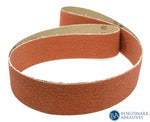
A handheld belt sander features a continuous abrasive loop (the belt) stretched between two rotating drums. The rear drum is powered by a high-speed motor that drives the belt to sand rough surfaces quickly. The base is equipped with a sanding pad that supports the belt and holds it flat against the surface.
Stationary belt sanders (like benchtop models) use this exact mechanism but are mounted for fixed, high-volume work. Standard belt width sizes are 3x18, 3x21, and 4x24 inches. The motor's high power rating allows the machine to drive coarse abrasives through tough materials. Proper grip ergonomics are crucial, as maintaining control over a handheld unit requires firm handling.
Best Uses for a Belt Sander
The aggressive nature of the belt sander dictates its primary uses:
- Heavy stock removal on thick or uneven lumber.
- Leveling hardwood floors or large, rough decks.
- Fast paint stripping on large, flat surfaces.
- Initial surface prep on large pieces of furniture before moving to the gentler orbital sander.
- Shaping and straightening edges or ends of lumber is often performed with a stationary belt sander.
Related Article: When to Use a Belt Sander or Orbital Sander
Limitations and Common Belt Sander Mistakes
The belt sander’s strength is also its weakness. The sheer force makes it prone to common mistakes:
- Gouging edges or creating uneven surfaces if you hesitate or apply uneven pressure.
- Tracking issues can arise if the belt isn't properly aligned, leading to uneven sanding.
- Applying too much pressure leads to over-aggressive sanding, causing deep marks.
- To avoid visible sanding marks and hand fatigue, let the weight of the machine do the work, and move the sander consistently along the grain.
How an Orbital (and Random Orbital) Sander Works
Where the belt sander is about power, the orbital sander is about finessing the surface to an incredibly smooth finish.
Standard Orbital vs Random Orbital
There are two primary types of orbital sanders:
Standard Orbital Sander
This is a square pad sander that moves in small, uniform circles (or orbits). While good for light touch-ups and finish sanding, it can leave behind tell-tale swirl patterns if not used carefully or if the abrasive is old.
Random Orbital Sander
This is the modern go-to finishing sander for professionals. The pad simultaneously spins and oscillates in an elliptical pattern, creating a random orbit that prevents abrasive particles from following the same path twice. This dual motion ensures that no single abrasive grain follows the same path twice, effectively eliminating the risk of noticeable swirl patterns. The random orbit sander is faster than the standard orbital for a larger area and produces a much finer, smoother surface.
Best Uses for Orbital Sanders
The controlled, gentler motion makes the orbital sander perfect for finishing work:
- Refinishing delicate furniture, detailed cabinetry, and tabletops.
- Sanding surfaces between coats of stain, varnish, or paint.
- Scuffing a paint layer lightly without cutting through to the substrate.
- Achieving a uniform, smooth finish without the risk of gouging.
Limitations
The orbital sander is not a demolition tool. Its main limitations include:
- Slower stock removal: It is inefficient for very large or rough surfaces or for removing thick finishes.
- The risk of swirl marks still exists if the sanding disc is clogged, the wrong grit is used for the previous step, or you use poor technique (like tilting the machine).
- It is not ideal for the extreme heavy stock removal required for rough-sawn lumber.
Belt Sander vs Orbital Sander for Common Projects
Understanding the application is the key to knowing when to use a belt sander or an orbital sander.
1. Removing Paint from Wood or Metal
The best sander for paint removal depends on the finish thickness. For stripping thick or peeling paint, the belt sander is fast and efficient, especially on large, flat surfaces. However, if you are working with thin paint layers or detailed areas that need feathering, the orbital sander is safer and reduces the risk of cutting too deep into the substrate.
2. Deck Sanding and Exterior Paint Prep
Deck sanding is a massive job requiring work on a large surface area. Start with the belt sander for the initial heavy stock removal and to smooth out warped or weathered wood. Then, switch to the random orbital sander with a medium to fine grit for the final smoothing. This multi-step process, which utilizes cloth-backed abrasives for durability, ensures both speed and a refined finish.
3. Furniture and Cabinet Refinishing
For delicate surfaces like furniture and cabinetry, the orbital sander is the preferred choice. Sanding tasks here require a light touch to preserve the wood grain. Avoid aggressive grit belts that can quickly gouge the surface.
4. Auto Body and Panel Work
For smoothing body filler, primer, or paint on auto panels, the orbit sander is the standard tool. Belt sanders are only used for very specific, heavy applications like removing weld or thick rust from a flat panel where maximum heavy stock removal is necessary.
5. Metal Surface Prep Before Grinding or Coating
On a work area involving metal, the belt sander is great for cleaning up heavy weld spatter or roughing up thick edges. The orbital sander, however, is the go-to for final smoothing, blending, and feathering edges before applying a protective coating or paint.
Related Article: How to Strip Paint Off Wood
Choosing the Right Abrasives for Each Sander
Choosing the correct abrasive product is just as important as choosing the sander itself.
- Belt sanders require sanding belts, which typically use durable cloth-backed abrasives to withstand the extreme heat and tension of the machine. The proper grit selection is crucial here; always start with a coarse grit and follow a grit guide to move systematically to finer grits.
- Random orbital sanders typically use round, hook-and-loop discs, while standard orbital sanders (finishing sanders) usually use square sanding sheets that are clamped in place.
Following a proper grit progression for both types of abrasive products is key to achieving the best results and avoiding visible sanding marks.
Safety and Technique Tips for Both Sanders
No matter which sanding tool you choose, safety must come first in your Home Improvement or professional work area.
Always wear proper safety equipment: eye protection, hearing protection, and a dust mask or respiratory protection. Both power tools create significant dust, so connecting them to a dust extractor or dust collection system is vital for your health and visibility.
Proper Technique:
- Belt Sander: Always start the sander slightly off the workpiece and lower it gently. Move with the grain of the wood and keep the sander moving constantly to avoid dips or gouges.
- Orbital Sander: Never turn the sander on while it is touching the surface. Place the pad flat on the surface before turning it on, and turn it off before lifting it. Maintain steady pressure and move slowly to allow the abrasive to do its work and prevent swirl patterns.
Remember to secure your workpiece with clamps and keep your surface area free of debris. Be extra cautious when sanding in tight spaces.
FAQs
Q: What is the difference between an orbital and a belt sander?
A: The main difference lies in their function: the belt sander is for aggressive material removal, while the random orbital sander is for light material removal and fine finishing work.
Q: Is a belt sander good for removing paint?
A: Yes, a belt sander is excellent for removing thick layers of paint from flat surfaces, but be careful not to gouge the material underneath.
Q: When to use a belt sander or an orbital sander?
A: Use a belt sander when you need to level, reshape, or perform heavy stock removal; use an orbital sander for intermediate smoothing, final sanding surfaces, and detailed sanding tasks.
Q: Can you use an orbital sander on hardwood floors?
A: For large areas, it would take too long. A large drum sander or belt sander is necessary for the main task, and an orbital sander can be used for final blending near walls and in corners.
Q: How do I avoid swirl marks?
A: Use a random orbital sander (not a standard orbital), ensure your sanding disc is clean, and follow the proper grit progression by sanding with each grit until the marks from the previous, coarser grit are gone.
Q: Which sander is best for furniture refinishing?
A: The random orbital sander is the best sander for furniture refinishing as it provides a smooth, uniform surface without the risk of creating permanent, visible marks.
Make the Right Choice Between Power and Finesse
The choice between a belt sander and an orbital sander doesn't have to be complicated. By understanding the capabilities and limitations of each machine, power versus precision, you can confidently select the best sander for the job. Remember, the belt sander is for aggressive cutting, and the orbital sander is for achieving the ultimate smooth finish. Ensuring you have the correct abrasive products for both tools is the key to efficiency and quality.
To stock up on high-quality sanding discs and durable grit belts for all your sanding tasks, explore the extensive range of abrasive products offered by Benchmark Abrasives. We have the right tool and the right abrasive for your next project
Join Our Newsletter
Sign up to get the latest on sales, new releases and more …Join Our Newsletter
Sign up to get the latest on sales, new releases and more …Shop Categories
Recent Articles
- Resin Fiber Discs vs Flap Discs: When Should You Use Each?
- Best Abrasives for Rust Removal on Steel
- Cut-Off Wheels vs Band Saws: Which is Better for Metal Cutting
- How to Optimize RPM Abrasive Disc Performance & Lifespan
- Surface Conditioning Discs: A Fabricator's Guide
- Best Flap Disc for Stainless Steel: Complete Fabricator’s Guide
- Ceramic vs Zirconia Flap Discs: Which Performs Better for Metal Fabrication
- How to Choose the Right Grit for Metal Sanding Projects
- Tools Collection for Fabrication and Abrasive Workflows
- How to Choose the Right Diamond Blade
Featured Products
-
 746 Reviews
4-1/2" x 7/8" T29 Zirconia High Density Flap Disc - 10 pack
$25.19
-
 738 Reviews
4-1/2" x .040 x 7/8" T1 Premium Thin Cut-off Wheel - 25 pack
$20.88
-
 220 Reviews
4-1/2" x 7/8" T27 Zirconia High Density Flap Disc - 10 pack
$25.19
-
 380 Reviews
6" x .045 x 7/8" T1 Premium Thin Cut-Off Wheel - 25 pack
$27.29
-
 55 Reviews
Nonwoven 6" x 9" Scuff, Clean & Finish Hand Pads
$0.83
-
 123 Reviews
4-1/2" x 1/4" x 7/8" T27 Depressed Center Grinding Wheel - 25 pack
$28.34


Blog Categories
- Abrasives
- Sanding
- Grinding Deburring Finishing
- Safety and Cleanliness
- Metal Working
- Selecting Tools And Equipment
- Wood Working
- Art And Design
- Diy Projects
- Industry 4.0
- Buffing
- Cutting Tools
- Carbide Burrs
- PPE
- Wire Brushes
- Bonded Abrasives
- TIG Electrodes
- Wire Wheels
- Bits
- Diamond Blades
- Power Brushes
- Product Reviews
- Grinding
- Finishing
- Industrial Cleaners