















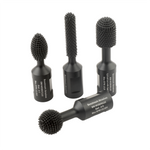












Carbide Burrs for Stainless, Aluminum, and Mild Steel

Selecting the right carbide burrs for stainless, aluminum, and mild steel is one of those skills that separates a professional fabricator from a hobbyist. If you have ever had a burr skip across a workpiece, dig in too deep, or instantly clog with molten metal, you know that these are not "one size fits all" cutting tools.
In the world of metalworking, carbide burrs are the heavy lifters of detail work. They enable precision material removal in areas inaccessible to a grinding wheel. However, because stainless steel, aluminum, and mild steel all have different thermal properties and hardness levels, they require very different strategies.
This guide covers everything you need to know about various shapes, cuts, and cutting speeds, ensuring you have the right tools for every specific task.
What Makes Tungsten Carbide Burrs Different?
When you’re shopping for carbide burrs, you’ll likely see two main options: HSS burrs (High-speed steel) and tungsten carbide burr options. While HSS is cheaper, it doesn’t stand a chance against the wear and tear of modern fabrication.
A solid carbide burr setup is made from a mix of tungsten and carbon. It is significantly harder than steel, meaning it can maintain a sharp cutting edge at much higher temperatures. This hardness provides optimal performance when working on tough materials like stainless steel.
Unlike grinding wheels, which wear down and deform, a quality carbide burr maintains its geometry over its service life, providing a consistent cut throughout its tool life.
Common Tools That Use Carbide Burrs
The most common home for these tools is the die grinder. Whether you call them die grinder bits or rotary files, they are designed to rotate at high speeds, allowing the carbide teeth to do the job.
- Rotary Tool: Smaller carbide burrs with 1/8" shanks are common in precision tools like Dremels for light detail work.
- Die Grinder: The industry standard for 1/4" shanks, providing the torque needed for heavy material removal.
- Angle Grinder: While less common, some specialized adapters allow for burr use, though the lower RPM of an angle grinder isn't always ideal.
- Milling Machine / CNC Machines: Carbide burrs are commonly used in automated machining processes to deburr complex parts.
It’s important to remember that these are not drill bits. While a drill bit is designed to cut a hole straight into a material, a rotary burr is designed to cut laterally using the sides of the head, moving laterally across the workpiece.
Choosing the Right Carbide Burr Shape
Access is everything in fabrication. Because you might be cleaning up a pipe interior one minute and blending a flat weld the next, manufacturers offer different shapes to suit specific applications.
Popular Carbide Burr Shapes and Their Uses
- Cylindrical Carbide Burr: The go-to for flat surfaces and contouring. The "End Cut" version allows you to cut into a flat-bottomed hole or corner.
- Ball Nose: Perfect for contour finishing and concave cuts. It allows for a rounded interior radius.
- Flame Shape: Ideal for teardrop-shaped contours and reaching into rounded-edge slots.
- Cone Shape: Used for edge work, deburring, and reaching into tight radii or "V" grooves.
Radius End Carbide Burrs for Control and Finish
A radius-end carbide burr (or ball nose cylinder) is often preferred over a flat-end cylinder because it significantly reduces chatter. Chatter happens when the sharp corner of a burr catches the material and bounces. By having a radius end, the tool transitions more smoothly, resulting in a smooth finish on hard metals like stainless steel.
Carbide Burr Cuts: Single, Double, and Specialty
The "cut" refers to the pattern of the teeth ground into the carbide, and it's the most important factor in cutting efficiency. Understanding single cut vs double cut carbide burrs can help you choose the right tool.
A Single-cut Burr
These have a single spiral flute. They are designed for heavy material removal and create long chips. While aggressive, they can be harder to control and are more prone to "climbing" or skipping across the metal.
A Double-cut Burr
Double-cut carbide burrs have a second set of teeth cut in the opposite direction. This creates a cross-cut pattern that breaks the metal into smaller chips. This results in:
- Better operator control.
- Smooth surface finish.
- Faster cutting on harder materials such as carbon steel.
Steel Cut Carbide Burrs vs Aluminum Cut Carbide Burrs
This is where many beginners get stuck.
- Steel Cut: These are typically double-cut burrs with densely packed teeth. They are designed for ferrous metals and hard materials like stainless steel and cast iron.
- Aluminum Cut: These are wide-spaced single-cut carbide burrs. Because aluminum is "sticky" and soft, it tends to melt into the teeth of a fine-cut burr. Aluminum Cut (or aluminum carbide burrs) have deep flutes to allow for rapid chip evacuation in non-ferrous metals.
Related Article: Types of Carbide Burrs
Preventing Chip Loading and Built-Up Edge
Chip loading occurs when the metal you are cutting gets stuck in the teeth of the burr. This effectively turns your sharp cutting tool into a smooth, spinning piece of metal that generates friction but doesn't cut.
To prevent this:
- Use the Right Cut: Never use a double-cut burr on soft aluminum.
- Lubrication: Use a specialized lubricant like beeswax or cutting oil. Dipping the burr in beeswax creates a coating that prevents the "sticky" long chips of aluminum or soft mild steel from adhering to the carbide.
- Heat Management: If the metal starts to glow, you are moving too slowly or applying too much pressure. This heat is what causes chip loading.
Related Article: How to Choose Carbide Burr For Metal
RPM Basics: Matching Speed to Material
Running a carbide burr at the wrong speed is the fastest way to ruin your tool life. To achieve a clean cut, carbide tools typically require higher operating speeds.
Safety Warning: Never exceed the manufacturer’s maximum RPM limit. A carbide burr spinning at 30,000 RPM that fails can become a dangerous projectile. Always wear safety goggles and a face shield.
Recommended RPM Ranges by Material
- Stainless Steel: Requires lower speeds compared to other metals (approx. 10,000–15,000 RPM for a 1/2" burr). Stainless steel work-hardens; if you spin too fast and don't cut, the surface becomes impenetrable.
- Aluminum: Prefers higher speeds (approx. 20,000+ RPM). The high speed helps "flick" the chips out of the flutes before they stick.
- Mild Steel / Carbon Steel: A middle-ground approach yields the best results (approx. 15,000–20,000 RPM).
Burr Size, Shank Sizes, and Reach Considerations
- Burr Size: A larger head removes more material but requires more torque. Match the head size to the area you need to clear.
- Shank Sizes: 1/4" is the standard for industrial die grinders, while 1/8" is used for light-duty rotary tool work.
- Long Reach: If you are working on cylinder head porting or deep-pipe interiors, a long-reach burr with an extended steel shank is required. Be careful with these; the longer the shank, the more prone it is to vibration and bending under excessive pressure.
Material-Specific Best Practices
| Material | Recommended Cut | Key Tip |
| Stainless Steel | Double Cut | Keep the tool moving to prevent heat buildup and work-hardening. |
| Aluminum | Aluminum Cut (NF) | Use beeswax to prevent loading; use high RPM. |
| Mild Steel | Double Cut | Use moderate pressure for a balance of speed and smooth finish. |
| Cast Iron | Double Cut | Very abrasive; use a high-quality tungsten carbide burr for longevity. |
Matching the specific needs of different materials is the only way to achieve the desired results without damaging your tools.
Common Applications Across Industries
Carbide burrs are found in almost every manufacturing process:
- Toolmaking: Creating molds and dies requires a range of shapes for precision.
- Automotive: Cylinder head porting is a classic use for long-reach burrs to improve airflow.
- Fabrication: Deburring metalworking parts after they come off a plasma table or saw.
- Foundries: Removing "flash" or excess material from cast iron parts.
Carbide Burr Sets vs Individual Burrs
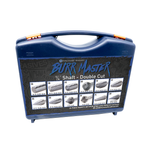
For a professional shop, a carbide burr set is usually the smartest investment. A set typically includes the most common shapes—cylindrical, ball, and tree—allowing you to tackle almost any specific task that comes through the door.
When buying, ensure you choose quality carbide burrs from a reputable supplier like Benchmark Abrasives. Cheap carbide burrs often have poorly centered shanks, causing "wobble" that ruins the finish and wears out your die grinder's bearings.
How to Get the Best Performance and Tool Life
- Don't Force It: Let the carbide's cutting performance do the work. If you apply too much pressure, you will break the teeth.
- Keep It Moving: Moving the burr in a consistent pattern prevents it from digging "troughs" in the metal.
- Avoid Excess Materials: Don't use a burr for bulk removal that a grinding wheel or saw could do faster. Save the burr for the precision work.
- Buy Good Quality: Good quality carbide is an investment. It stays sharper longer and provides a cleaner cut, saving you money on replacements over time.
Dial In the Right Burr for Cleaner Cuts and Longer Tool Life
Mastering carbide burrs for stainless, aluminum, and mild steel comes down to three things: selecting the right shape for the geometry, the right cut for the material, and the right RPM for the tool. By using tungsten carbide burr products correctly, you reduce rework, protect your Power Tools, and achieve a professional finish every time.
Are you prepared to enhance your toolkit? Explore the full carbide burr set collection at Benchmark Abrasives. Whether you need Aluminum cut carbide burrs for non-ferrous work or heavy-duty double cut carbide burrs for stainless steel, we have the professional-grade solutions you need. Browse our collection today.
Join Our Newsletter
Sign up to get the latest on sales, new releases and more …Join Our Newsletter
Sign up to get the latest on sales, new releases and more …Shop Categories
Recent Articles
- Resin Fiber Discs vs Flap Discs: When Should You Use Each?
- Best Abrasives for Rust Removal on Steel
- Cut-Off Wheels vs Band Saws: Which is Better for Metal Cutting
- How to Optimize RPM Abrasive Disc Performance & Lifespan
- Surface Conditioning Discs: A Fabricator's Guide
- Best Flap Disc for Stainless Steel: Complete Fabricator’s Guide
- Ceramic vs Zirconia Flap Discs: Which Performs Better for Metal Fabrication
- How to Choose the Right Grit for Metal Sanding Projects
- Tools Collection for Fabrication and Abrasive Workflows
- How to Choose the Right Diamond Blade
Featured Products
-
 746 Reviews
4-1/2" x 7/8" T29 Zirconia High Density Flap Disc - 10 pack
$25.19
-
 738 Reviews
4-1/2" x .040" x 7/8" t1 premium thin cut-off wheel - 25 pack
$20.88
-
 220 Reviews
4-1/2" x 7/8" T27 Zirconia High Density Flap Disc - 10 pack
$25.19
-
 380 Reviews
6" x .045 x 7/8" T1 Premium Thin Cut-Off Wheel - 25 pack
$27.29
-
 55 Reviews
Nonwoven 6" X 9" Scuff, Clean & Finish Hand Pads
$0.83
-
 123 Reviews
4-1/2" x 1/4" x 7/8" T27 Depressed Center Grinding Wheel - 25 pack
$28.34


Blog Categories
- Abrasives
- Sanding
- Grinding Deburring Finishing
- Safety and Cleanliness
- Metal Working
- Selecting Tools And Equipment
- Wood Working
- Art And Design
- Diy Projects
- Industry 4.0
- Buffing
- Cutting Tools
- Carbide Burrs
- PPE
- Wire Brushes
- Bonded Abrasives
- TIG Electrodes
- Wire Wheels
- Bits
- Diamond Blades
- Power Brushes
- Product Reviews
- Grinding
- Finishing
- Industrial Cleaners