



























Difference Between Flap Disc and Grinding Discs

In metalworking, choosing the right abrasive tool is often more critical than choosing the power tools themselves. If you’ve ever reached for a metal grinder disc to tackle a tough weld or prep a metal surface for paint, you know that the difference between the abrasive on the tool and the needs of the specific task can be huge.
This guide clarifies the debate between flap discs and grinding wheels. These abrasive product categories are often mistaken for being interchangeable, but they are built for entirely different goals. Choosing the wrong one affects everything: your cut rate, the risk of gouging, your finish quality, the amount of heat generation, and ultimately, your operator fatigue.
The primary decision point is simple: if you need maximum stock removal, choose one; if you need blending and surface finishing, choose the other. Recognizing this difference is crucial for achieving the perfect results in any metalworking project.
Construction Differences: How Each Disc is Built (and Why It Matters)
The main distinction between flap discs and grinding discs is in their basic construction. This physical difference determines their function, safety profile, and suitability for high-speed use on your workpiece.
Grinding Wheel
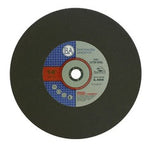
A grinding wheel or grinding disc is a bonded abrasive-based tool consisting of a rigid matrix of abrasive grains (such as aluminum oxide) held together by a resin or fiberglass binder. The wheel has a thick, solid profile (typically 1/4 inch or more) that provides excellent rigidity.
This rigidity allows the grinding wheel to be applied to the workpiece with extremely high pressure. It excels at heavy grinding, beveling edges, and removing a lot of material very fast. When a professional needs to cut massive weld seams, shape thick cast iron, or quickly sharpen tough mower blades, steel grinding discs are the best option. Its substantial contact area and thickness enable deep, consistent cuts for material removal in metals such as stainless steel and carbon steel.
Flap Disc
A flap disc is a layered abrasive. It consists of numerous individual sheets of abrasive flaps arranged radially around a central hub, which are permanently attached to a rigid backing plate.
As the flaps wear away, new rubbing material is exposed layer by layer. This continuous self-sharpening action and the segmented contact area are why the flap disc offers a smoother cut, a more consistent finish, and produces less noise. Because the contact pressure is distributed across multiple flaps rather than a single solid face, there is less gouging and less heat concentrated in a single area, making it a better choice for detailed blending and finishing on the workpiece. The inherent flexibility makes it a favorite among knife makers for contouring and blending.
Related Article: Grinding Wheel Types & Difference Specifications
Flap Disc vs Grinding Disc: Performance Differences That Affect Your Results
The practical differences in construction lead to distinct performance profiles. Choosing correctly means optimizing time and achieving the required finish without unnecessary rework.
Stock Removal Speed (Choose: Grinding Wheel)
When removing raw, aggressive material, the grinding wheel is the best option. It is designed for maximum stock removal and is necessary for aggressive grinding, severe edge beveling, and bulk weld grinding. The solid, rigid structure of the grinding discs allows the operator to lean into the tool with high pressure.
This ability to remove a large amount of material quickly makes grinding wheels the best option for removing heavy metals in fabrication and for machining thick steel parts. The grinder disc is explicitly built for this different purpose: speed over finish.
Blending and Smoothing (Choose: Flap Disc)
Flap discs are the best option for projects that require a smooth and even finish. The overlapping abrasive flaps excel at weld blending, rust removal, and contour work. On curved edges or tubing, the flap disc conforms better than a rigid wheel, resulting in a much more uniform finish. For tasks that require removing the harsh scratch pattern left by a grinding wheel, or for achieving a smoother blend without switching to entirely different tools like a flap wheel, flap discs are the clear winner. This is a key part of best practices in blending.
Heat Generation and Operator Control
Heat generation is a major concern when working on metal surfaces, as it can lead to warping or ugly heat marks (blueing/discoloration).
The concentrated, high-friction contact area of grinding wheels causes rapid heat generation. Conversely, flap discs dissipate heat more effectively. The segmented design and the cooling effect of air flowing between the abrasive flaps significantly reduce localized heat buildup. This also translates directly to smoother tool control. Flap discs tend to engage the workpiece more gently, causing less kickback and leading to less operator fatigue. For specific tasks on thin flat surfaces, this difference is crucial.
Longevity and Wear Patterns
Longevity is often underestimated between these two abrasive tools.
Grinding wheels maintain a consistent profile and cutting aggression until they wear down to the hub. They offer excellent material removal, but must be replaced when they become too small or wear unevenly from the outer edge inward.
Flap discs offer a substantially longer lifespan in terms of material usage. They wear down gradually, exposing new layers of abrasive material. This ensures the disc maintains its aggression and smooth finish over the long term. Therefore, a flap disc is often the more economical right abrasive tool in the long run, provided it’s not subjected to heavy stock removal that the grinding wheel should handle.
Comparison Chart: What to Choose?
Understanding the difference between a flap disc and a grinding disc is simplified by mapping their use to common applications.
| Task | Goal | Recommended Tool | Why to choose |
| Heavy Weld Removal | Maximum material removal | Grinding Wheel | Rigid structure allows maximum high pressure and speed. |
| Rust Removal/Cleaning | Surface Prep, no gouging | Flap Disc | Segmented flaps clean without digging in, achieving a better surface. |
| Weld Blending | Smooth transition | Flap Disc | Creates a uniform finish with less heat generation. |
| Edge Beveling | Precise angle on thick metal | Grinding Wheel | The thickness and rigidity are ideal for controlled angle cuts. |
| Detail Finishing | Final smooth surface | Flap Disc | Grit numbers up to 120 are common for a smooth finish. |
| Thick Stock Removal | Rapid removal of excess metal | Grinding Wheel | Built for raw cutting ability and heavy force. |
| Stainless Steel Blending | Consistent finish, less heat | Flap Disc | Low heat and continuous fresh abrasive prevent contamination. |
| Mower Blades | Shaping and sharpening | Grinding Wheel | Requires the force and durability to hold up to tough steel. |
Choosing the best tool depends on whether the task requires volume removal (grinding disc vs. flap disc for speed) or finish quality (flap disc vs. grinding disc for blend).
Grit, Grain, and Material Type: Choosing the Right Disc for Your Workpiece
Selecting the appropriate abrasive grain size and type is critical, regardless of disc type.
The abrasive material in both grinding wheels and flap discs determines compatibility and longevity on different metal surfaces.
- Aluminum Oxide: The most common and economical. It is effective for cast iron, carbon steel, and general use.
- Zirconia: More durable than Aluminum Oxide. It is self-sharpening and suitable for tough metals.
- Ceramic: The most aggressive and longest-lasting. It is the preferred choice for stainless steel and difficult alloys, especially for material removal in heavy fabrication.
- Silicon Carbide: Very hard and sharp, used for non-ferrous metals (like aluminum) and finer finishes.
Grit Numbers and Finish Quality
Grit numbers follow the same logic for both disc types: lower numbers mean coarse grits and faster cutting, higher numbers mean fine grits and better finish quality.
- Coarse (36–40 grit): Necessary for heavy stock removal and aggressive initial shaping.
- Medium (60–80 grit): Excellent for general blending and cleanup.
- Fine (120 grit and up): Used primarily by flap discs to achieve a smooth finish before painting or coating.
As with sanding belts, proper grit progression is essential: never skip too many grit levels in a single step.
Which Tools Each Disc Works Best With
Compatibility is crucial for safety and performance.
Angle Grinder Compatibility
Flap discs and grinding wheels are both primarily intended for use with angle grinders. They fit standard arbor sizes (5/8"-11 or 7/8") and come in common diameters (4.5 inches, 5 inches, 7 inches).
- Grinding wheels are rigid and mount directly to the spindle, requiring a proper flange and locknut.
- Flap discs mount similarly but sometimes come with a built-in hub. They do not require the specific stiff backing pad that fibre discs (or fiber discs) do, as the backing plate is integrated. Always check the Power tool's RPM rating against the disc’s maximum RPM before use.
Alternative Abrasive Options
Sometimes, neither a flap disc nor a grinding wheel is the best option.
- Sanding discs and fibre discs are better for detailed finishing work on thinner material, often requiring a rubber backing pad, and are used in conjunction with Hook and Loop systems.
- A flap wheel is excellent for reaching inside cylinders or tubing where a flat disc cannot reach.
- Sanding belts (wide belts) are used for flat, high-volume finishing in a controlled environment.
Lifespan, Safety, and Maintenance Tips
Understanding tool wear and proper use is the core of best practices in metalworking.
To achieve maximum efficiency, it is crucial to recognize when the flap disc has become worn out. A flap disc is generally worn out when the abrasive flaps are ground down so far that the abrasive material is no longer projecting effectively. This typically occurs when the abrasive wears down close to the edge of the rigid backing plate. If you see severe fraying, torn abrasive flaps, or increased vibration, replace the disc. Replacing discs promptly guarantees optimal results and prolongs tool life.
Safety Tips and Best Practices
Always adhere to safety guidelines:
- PPE: Wear a full face shield, gloves, and proper respiratory protection.
- RPM: Never exceed the maximum RPM rating marked on the grinding wheels or flap discs.
- Pressure: Apply even, appropriate pressure. Avoid pressing too hard with grinding wheels to prevent overheating and premature wear.
- Flap Disc Angle: Use a lower angle (5–15 degrees) with flap discs to maximize the contact area and prolong life.
- Flat Surfaces: Ensure the workpiece is secure before starting any surface preparation.
Choosing the Right Abrasive for the Job
Choosing the right abrasive tool doesn't have to be difficult.
- Define the Goal: Is it volume material removal (grinding wheel) or finish quality (flap disc)?
- Analyze the Material: For tough alloys and stainless steel, choose Ceramic grain. For mild steel, Aluminum Oxide is the best option.
- Choose Grit Progression: For a smooth result, never skip grits. Start with 36/40 (if necessary) and finish with 80 or 120 grit.
- Consider Longevity: For heavy shop use, invest in Ceramic flap discs for a longer lifespan.
The best results come from using the best tool for the specific task at hand, allowing you to maximize speed without sacrificing quality in your metalworking projects. For professional-grade tool selection and performance on every job, trust quality abrasive disc products.
Choose Wisely
The primary difference between the flap disc and grinding wheel lies in their geometry: one is built for rigid force, the other for flexible refinement. By using grinding discs for maximum material removal and flap discs for superior finish quality, you master the essential tool selection required for all your metalworking projects.
To ensure you are using the highest quality fibre discs, flap discs, and grinding wheels for your specific task, explore the extensive range of abrasive products available from Benchmark Abrasives.
FAQs
Is a flap disc better than a grinding wheel?
Neither is inherently "better"; they have a different purpose. Flap discs are the best choice for blending, finishing, and rust removal, while grinding wheels are better for rapid, heavy stock removal and beveling.
Can I use a flap disc for heavy weld removal?
You can, but it will be slow. The grinding discs should be used first for bulk material removal, and the flap disc should be used afterward to blend the surface to a smooth finish.
What grit flap disc should I use for stainless steel?
Start with 60 or 80 grit to refine the weld, then finish with 120 grit for a professional finish quality. Choose Ceramic abrasive grains for the best results.
Can grinding wheels be used on aluminum?
Yes, but they tend to clog quickly, causing excessive heat generation on the workpiece. Specialized aluminum grinding discs or waxes are required to prevent smearing.
Do flap discs create fewer heat marks?
Yes. Because the abrasive flaps segment the contact area, they dissipate heat more effectively, resulting in fewer heat marks (blueing) on metal surfaces.
Join Our Newsletter
Sign up to get the latest on sales, new releases and more …Join Our Newsletter
Sign up to get the latest on sales, new releases and more …Shop Categories
Recent Articles
- Resin Fiber Discs vs Flap Discs: When Should You Use Each?
- Best Abrasives for Rust Removal on Steel
- Cut-Off Wheels vs Band Saws: Which is Better for Metal Cutting
- How to Optimize RPM Abrasive Disc Performance & Lifespan
- Surface Conditioning Discs: A Fabricator's Guide
- Best Flap Disc for Stainless Steel: Complete Fabricator’s Guide
- Ceramic vs Zirconia Flap Discs: Which Performs Better for Metal Fabrication
- How to Choose the Right Grit for Metal Sanding Projects
- Tools Collection for Fabrication and Abrasive Workflows
- How to Choose the Right Diamond Blade
Featured Products
-
 746 Reviews
4-1/2" x 7/8" T29 Zirconia High Density Flap Disc - 10 pack
$25.19
-
 738 Reviews
4-1/2" x .040" x 7/8" t1 premium thin cut-off wheel - 25 pack
$20.88
-
 220 Reviews
4-1/2" x 7/8" T27 Zirconia High Density Flap Disc - 10 pack
$25.19
-
 380 Reviews
6" x .045 x 7/8" T1 Premium Thin Cut-Off Wheel - 25 pack
$27.29
-
 55 Reviews
Nonwoven 6" X 9" Scuff, Clean & Finish Hand Pads
$0.83
-
 123 Reviews
4-1/2" x 1/4" x 7/8" T27 Depressed Center Grinding Wheel - 25 pack
$28.34


Blog Categories
- Abrasives
- Sanding
- Grinding Deburring Finishing
- Safety and Cleanliness
- Metal Working
- Selecting Tools And Equipment
- Wood Working
- Art And Design
- Diy Projects
- Industry 4.0
- Buffing
- Cutting Tools
- Carbide Burrs
- PPE
- Wire Brushes
- Bonded Abrasives
- TIG Electrodes
- Wire Wheels
- Bits
- Diamond Blades
- Power Brushes
- Product Reviews
- Grinding
- Finishing
- Industrial Cleaners