









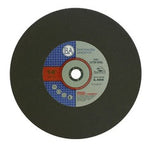


















Grinding Wheels for Metal and Stainless Steel

Heavy weld removal, aggressive stock removal, and precise edge beveling all demand the right bonded abrasive for the job. With over 25 years in the abrasives industry, we supply industrial-grade grinding wheels directly to fabricators, eliminating distributor markups and reducing operating costs.
This collection focuses on 4" to 9" Type 27 depressed center wheels built for high-RPM angle grinders. Use the catalog filters to dial in your required wheel diameter, arbor size, and abrasive grain, then explore the full lineup below.
Matching Wheel Profile to Your Working Angle and Tool Clearance
Working angle determines wheel profile before you select abrasive grain or diameter. A Type 27 grinding wheel features a recessed hub that sinks the mounting flange below the abrasive face. This depressed center grinding wheel design provides the clearance needed for heavy stock removal and weld cleaning at standard 15 to 30 degree angles without catching the lock nut or dragging the safety guard.
Type 1 straight wheels feature a completely flat profile engineered for 90-degree edge contact, making them standard for straight-face passes and cut-off tasks rather than side-load grinding. Type 28 saucer wheels flare outward to support shallow grinding angles between 0 and 15 degrees, providing wider surface contact on flat sheet metal where clearance is limited.
Select your wheel profile based on joint access and tool working angle rather than brand preference. Use the catalog filters to sort by diameter, arbor size, and INOX stainless steel rating to lock in the exact wheel for your job.
Selecting Abrasive Grains and Wheel Chemistry by Material
Selecting the right abrasive begins with matching grain chemistry to the workpiece before choosing grit size. Aluminum oxide suits carbon steel and general metal fabrication for economical stock removal. Zirconia alumina and ceramic grains fracture under pressure to expose sharp edges, providing faster cut rates and longer life on tough alloys. Non-ferrous metals like aluminum require dedicated non-loading formulations to prevent soft material from clogging and smearing the wheel.
When choosing a grinding wheel for stainless steel, verify that the disc carries an INOX rating. Standard ferrous wheels embed iron particles into stainless surfaces, compromising corrosion resistance and causing rust. Choose a wheel explicitly marked by its manufacturer for stainless or INOX use, and follow its material-compatibility instructions. Keep these discs dedicated solely to stainless work to prevent cross-contamination.
Select grit size based on your specific fabrication step:
-
Coarse (24 to 36 grit): Fast stock removal, beveling, and heavy weld grinding.
-
Medium (46 to 60 grit): General deburring and edge cleanup.
-
Fine (80 to 120 grit): Surface blending and pre-polish finishing.
For a full breakdown of grain sizes and material pairings, review our grinding wheel grit chart. Once you confirm your abrasive chemistry and grit, choose your wheel dimensions from the catalog above.
Matching Grinder Size, Arbor Specs, and Operating Speeds
Safe operation begins by matching wheel dimensions directly to your grinder rating and guard size. A 4 1/2 grinding wheel serves as the standard choice for small angle grinders, while 5", 7", and 9" wheels fit larger high-torque equipment. Verify that your grinder spindle matches the wheel arbor connection, which typically uses a 7/8" bore, a 5/8" center hole, or an integrated 5/8"-11 threaded hub for quick spin-on installation.
Maximum operating speed varies by wheel brand, bond formulation, and diameter. Never exceed the lower of the wheel’s rated maximum RPM (printed on the label) and your grinder manufacturer’s specified limit.
For complete guidance on equipment speeds, read our article on understanding RPM ratings on abrasive tools.
Wheel thickness serves as your primary operation selector. Heavy stock removal, weld grinding, and edge beveling require standard 1/4" thick wheels for structural rigidity. Thinner combination styles support light grinding and joint notching within rated limits, but standard slicing wheels must never be side-loaded under lateral pressure. For dedicated parting operations, view our complete line of cut-off wheels.
Use the product grid filters to sort by diameter, arbor type, and speed rating to find the exact wheel for your machine.
Transitioning from Grinding Wheels to Flap Discs and Surface Conditioning
Bonded abrasives excel at rapid stock removal, heavy beveling, and knocking down tall weld beads. Once the bulk material is removed, switching to coated or non-woven tools gives you greater control over scratch patterns and surface uniformity.
Switch from a rigid wheel to a flexible abrasive during these specific stages:
-
Flush Weld Blending: The weld is ground near-flush and requires a smooth blend into the surrounding metal without gouging.
-
Contour and Edge Control: Curved profiles and radii require a conformable backing that prevents accidental flat spots.
-
Heat Management: Thin sheet metal and stainless steel require cooler cutting action to minimize warping and discoloration.
Moving to industrial flap discs handles this intermediate step, refining coarse grind marks across carbon and stainless steel.
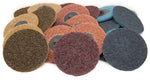
When work shifts from metal removal to surface prep, switch to surface conditioning products. Non-woven discs clean oxidation, blend scratch lines, and produce uniform finishes for paint or powder coating without removing base material.
Safe Operating Practices, Wheel Inspection, and Material Handling
Safe grinding starts with proper setup discipline. Always wear a face shield over safety glasses, keep the wheel guard installed, and verify the grinder speed never exceeds the wheel's maximum RPM. Inspect every abrasive for chips, hairline cracks, or impact damage before mounting. Secure the wheel with clean, correct mounting flanges, and stand clear and run the grinder at operating speed in a protected area before bringing the wheel to the workpiece, following the wheel manufacturer’s pre-use instructions.
Never apply side loads to thin slicing discs. For slotting and sectioning jobs, switch to dedicated cut-off wheels built for radial cutting. When finishing stainless steel, use dedicated INOX wheels and brushes kept separate from carbon steel tools. Cross-using abrasives transfers free iron into stainless surfaces, causing contamination and rapid corrosion.
Matching wheel specifications to your material and grinder prevents premature failures, saves changeout time, and maintains shop safety.
Call 877-841-1837 for Expert Help
Frequently Asked Questions About Grinding Wheels
What grinding wheel should I use for stainless steel?
Always choose a wheel explicitly marked by its manufacturer for stainless or INOX use, and follow its material-compatibility instructions. Standard carbon steel wheels deposit free iron into the workpiece, which causes rust and pitting on stainless surfaces. Maintain dedicated stainless wheels and never switch them back and forth between ferrous and non-ferrous metals.
What is the difference between Type 27 and Type 1 grinding wheels?
Type 27 wheels feature a depressed center hub that recesses the lock nut below the abrasive face, allowing safe grinding at standard 15 to 30 degree angles without catching the spindle on your workpiece. Type 1 wheels are flat discs designed strictly for 90-degree edge contact and radial parting rather than lateral stock removal.
What grit grinding wheel do I need?
Use coarse 24 to 36 grit for heavy weld leveling and edge beveling, medium 46 to 60 grit for basic deburring and cleanups, and fine 80 to 120 grit for light blending. For a full breakdown of grain sizes and material pairings, consult our grit selection guide.
Should I buy a grinding wheel or a flap disc?
Choose a rigid grinding wheel when you need aggressive metal removal, severe edge beveling, or rapid weld leveling on thick stock. Switch to flap discs when feathering welds flush to eliminate gouging, and finish with non-woven surface conditioning products to prep metal for paint or powder coating.
How long does a grinding wheel last?
Wheel lifespan depends on applied pressure, base material hardness, grinder operating speed, and wheel bond hardness. Replace your wheel once the diameter wears down near the mounting flange, if the cut rate slows significantly due to face glazing, or immediately if you spot chips, cracks, or edge damage.
Stock your shop in bulk to earn Super Points on consumable orders and avoid project delays.
Join Our Newsletter
Sign up to get the latest on sales, new releases and more …Join Our Newsletter
Sign up to get the latest on sales, new releases and more …Shop Categories
Recent Articles
- Grinding Wheels for Metal and Stainless Steel
- How Do I Eliminate Chatter Marks Appearing On The Surface After Grinding
- What Precautions Should Be Taken When Grinding Materials With High Ductility
- How Often Should Grinding Machines Be Inspected For Safety Compliance
- What Are The Common Causes Of Grinding Wheel Accidents, and How Can They Be Prevented?
- What Are Common Pitfalls To Avoid When Starting With Tool Grinding
- Is Climb Grinding Advisable For a Better Surface Finish?
- What's The Recommended Approach For Cylindrical Grinding To Maintain Concentricity
Featured Products
-
 746 Reviews
4-1/2" x 7/8" T29 Zirconia High Density Flap Disc - 10 pack
$25.19
-
 738 Reviews
4-1/2" x .040 x 7/8" T1 Premium Thin Cut-off Wheel - 25 pack
$20.88
-
 220 Reviews
4-1/2" x 7/8" T27 Zirconia High Density Flap Disc - 10 pack
$25.19
-
 380 Reviews
6" x .045 x 7/8" T1 Premium Thin Cut-Off Wheel - 25 pack
$27.29
-
 55 Reviews
Nonwoven 6" x 9" Scuff, Clean & Finish Hand Pads
$0.83
-
 123 Reviews
4-1/2" x 1/4" x 7/8" T27 Depressed Center Grinding Wheel - 25 pack
$28.34


Blog Categories
- Abrasives
- Sanding
- Grinding Deburring Finishing
- Safety and Cleanliness
- Metal Working
- Selecting Tools And Equipment
- Wood Working
- Art And Design
- Diy Projects
- Industry 4.0
- Buffing
- Cutting Tools
- Carbide Burrs
- PPE
- Wire Brushes
- Bonded Abrasives
- TIG Electrodes
- Wire Wheels
- Bits
- Diamond Blades
- Power Brushes
- Product Reviews
- Grinding
- Finishing
- Industrial Cleaners