



























Wood Drill Bits vs Metal Drill Bits

Drill bits can often look similar, especially when they have similar shapes and colors, which can usually lead to confusion when working on projects involving both wood and metal. Using the correct drill bit – whether for wood or metal – is essential for efficiency, safety, and achieving clean, precise results in any project.
This guide will explain the fundamental differences between wood drill bits and metal drill bits and help you identify the most appropriate type for each application. Understanding their unique designs and optimal uses will ensure that your power drill projects are successful, whether you're working with softwood, hardwood, or various metals.
Wood Vs Metal Drill Bits: What are the main Differences?
You actually won't find a big difference when you first look at most of the drill bits for wood and metal. They look equal in shape and size, and also have the same colors. Each type of drill bit has significant differences designed to cut specific materials.
The most common drill bit for both materials is the twist drill bit, which, with slight variations, can effectively drill wood and metal. However, two main differences set them apart: their color/coating and, most importantly, their tip design.
Color/Coating
Metal drill bits are often coated with materials such as titanium, black oxide, or cobalt. These bits typically range in color from black to dark gray, and some appear a distinctive golden color when coated with titanium. These coatings increase durability, reduce friction, and improve heat resistance, which is extremely important for drilling harder metals.
In contrast, wood drill bits are usually silver in color, reflecting their primary composition of high-carbon steel. Although some may have a polished finish, they typically do not have as strong a coating as metal bits because drilling wood generates less heat and wear.
Tip Design
Metal drill bits are designed with an angular, chisel-like tip that is optimized for cutting and shearing metal. This design allows them to create fine slivers of metal as they work. The sharp edges of the tip effectively cut hard surfaces, ensuring efficient cutting.
Unlike other bits, wood drill bits feature a central brad point or pilot tip. This pointed tip acts as a guide, keeping the bit from slipping or "walking" and ensuring you start a hole exactly where you want it. The sharp spurs on either side of the tip then cleanly slice the wood fibers, resulting in a smooth, splinter-free hole.
What Type Of Drill Bits are Best For Wood?
Choosing the most suitable drill bit for wood is essential for any woodworking project. Wood drill bits come in many designs, often sold in drill bit sets, and each one is optimized for a specific task and type of wood. Here are the three most common and essential types:
1. Brad-Point Bits
They are essential for drilling precise and clean holes in wood. Their sharp central point ensures accurate positioning, while the outer spurs create clean holes without tearing the wood fibres. They are ideal for doweling and furniture making.
2. Flat or spade wood bit
This type of bit is identified by its wide, flat, paddle-like head with a sharp point in the centre and two sharp cutting edges. Spade bits are designed to remove material quickly, allowing large holes, typically 6mm to 38mm, to be made quickly. They are particularly effective for rough drilling in softwood, such as when drilling holes for pipes or electrical wiring. However, it is essential to note that these can leave a less polished finish than Brad Point bits.
3. Countersink bit
Although not used exclusively for drilling holes, a countersink bit is essential in woodworking. It creates a conical recess in the surface of the wood so that the screw heads can sit flush with or below the surface. This is important for achieving a professional finish, preventing wood from cracking around fasteners, and ensuring a smooth surface after assembly.
Best Drill Bits For Wood
1. Auger Bits
Auger bits are designed to bore deep, clean holes in wood, especially thick pieces like logs or logs. They feature a unique helical screw point and usually a single or double fluted design that pulls the bit efficiently into the wood and removes chips. These bits are ideal for drilling deep holes in dowels, rebar, or electrical wiring.
2. Forstner Bits
Forstner bits are known for drilling incredibly clean, precise, flat-bottomed holes in wood. Their unique rim design acts as a guide, and their sharp cutting edges make them effective. Unlike other drill bits, Forstner bits are guided by their circumference rather than a central point. This feature makes them ideal for installing hinges, making plug holes, or counterboring.
3. Hole Saws
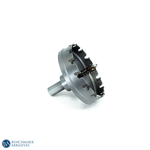
Hole saws are not traditional drill bits; instead, they are essential tools for cutting large diameter holes in wood and plastic. It features a cylindrical saw blade with teeth attached to a mandrel fitted with a pilot bit. This hole saw is perfect for jobs like installing door handles, plumbing pipes, or recessed lighting, and provides clean and wide circular cuts.
What Type Of Drill Bits are Best For Metal?
Metal drill bits do not differ as much as wood drill bits, but for metal designs, there are quite a few specialty bits that you may like. Standard (HSS) high-speed steel bits and premium high-speed steel bits are the most popular metal bits.
1. High-Speed Steel (HSS) Bits
HSS or high-speed steel bits are easy to use for drilling metal, wood, and many other materials. However, they can easily split wood, particularly softwood varieties, because they don't have brads to help direct them.
Most HSS bits are made of carbon steel, which is sufficiently robust to avoid breaking under the strain exerted on them by high-performance power tools to get through the metal.
2. Titanium Or Cobalt-Coated HSS Bits
Standard HSS bits can cut through lightweight metals, such as aluminum. But when it comes to cutting more rugged metals, such as steel or iron, you need something stronger, such as premium HSS bits.
Usually, premium bits are more costly than normal HSS bits, but they can also do harder jobs. They are coated with either cobalt steel, carbide-tipped steel, or titanium, which makes them tougher and heavier than their normal counterparts. These bits can last up to six times longer.
Conclusion
Your wood and metal designs will not look or function the same, and they will not need the same instruments and hardware. Knowing the difference between drill bits is essential so that you do not risk harming your hard work by using a bit that is either too weak or too powerful to handle the job.
When drilling into wood and metal, it is important to choose the right type of drill bit, as each material requires a different type. However, since many drill bits have similar features, it can sometimes be difficult to distinguish between them. We hope this guide has helped you understand your options and choose the right drill bit for your project.
Join Our Newsletter
Sign up to get the latest on sales, new releases and more …Join Our Newsletter
Sign up to get the latest on sales, new releases and more …Shop Categories
Recent Articles
- Felt Polishing Discs, Flap Discs & Flap Wheels
- How to Polish a Weld to a Mirror Finish
- How to Polish Cast Aluminum
- Luke Hummer - Erie County Community College
- Industrial Quick Change Discs for Fast-Lock Grinding and Finishing
- Felt Polishing Wheels, Bobs & Discs: Guide to Detail Work
- Matthew Cartwright
- Jacob Martinez (Foxholes to Fabworks)
- The Gathering
- David Fisher (Fisher Forge)
Featured Products
-
 746 Reviews
4-1/2" x 7/8" T29 Zirconia High Density Flap Disc - 10 pack
$25.19
-
 738 Reviews
4-1/2" x .040" x 7/8" t1 premium thin cut-off wheel - 25 pack
$20.88
-
 220 Reviews
4-1/2" x 7/8" T27 Zirconia High Density Flap Disc - 10 pack
$25.19
-
 380 Reviews
6" x .045 x 7/8" T1 Premium Thin Cut-Off Wheel - 25 pack
$27.29
-
 55 Reviews
Nonwoven 6" X 9" Scuff, Clean & Finish Hand Pads
$0.83
-
 123 Reviews
4-1/2" x 1/4" x 7/8" T27 Depressed Center Grinding Wheel - 25 pack
$28.34


Blog Categories
- Abrasives
- Sanding
- Grinding Deburring Finishing
- Safety and Cleanliness
- Metal Working
- Selecting Tools And Equipment
- Wood Working
- Art And Design
- Diy Projects
- Industry 4.0
- Buffing
- Cutting Tools
- Carbide Burrs
- PPE
- Wire Brushes
- Bonded Abrasives
- TIG Electrodes
- Wire Wheels
- Bits
- Diamond Blades
- Power Brushes
- Product Reviews
- Grinding
- Finishing
- Industrial Cleaners