















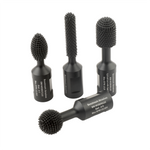


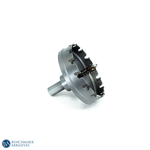


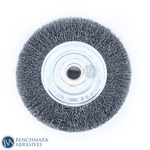








An Introduction To Metal Grinding Tools

Proper grinding tools are essential for smooth, precise, and polished results in metallurgy. The metal grinding tools have a huge and diverse range of tools and techniques for shaping, smoothing, cutting, and finishing metal workpieces. Knowing the different types of grinding tools and their uses is essential in achieving a high-quality finish while ensuring safety, whether you're an expert or a DIY enthusiast.
These tools not only help remove imperfections, rust, and excess material but also prepare surfaces for welding, painting, or further finishing.
This article provides detailed information about the different types of metal grinding tools, their uses, and their selection and care.
Types of Metal Grinding Tools
Metal grinding tools can be classified into two categories:
- Handheld Grinders
- Stationery Grinders
These tools have their benefits and drawbacks. Let's discuss each one by one:
1. Handheld Grinders
Handheld grinders, also known as portable power tools, are made for different metalworking projects, including cutting, grinding, polishing, and sanding. The following is a list of popularly used handheld grinders, each having special qualities for different applications.
A. Angle Grinders
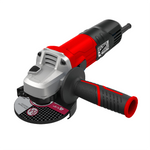
Angle grinders are versatile power tools that can be used for grinding metal, cutting, sanding, and polishing. They work by using various rotating abrasive discs and attachments. Because of their portability and versatility, they can be used for a variety of tasks, such as building, fabrication, and even do-it-yourself projects.
B. Die Grinders
Die grinders are small and high-speed rotary tools that are usually air-powered or electric. They are suitable for precision grinding, deburring, engraving, and polishing in narrow spaces. It takes a range of mounted points, burrs, and tiny grinding bits.
C. Belt Sanders/Grinders (Handheld)
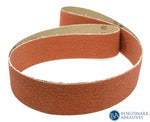
Handheld belt sanders/grinders use continuous abrasive belts powered by motor-driven rollers. These tools are perfect for quick material removal, shaping contours, and getting smooth finishes on metal surfaces. Their linear motion makes them particularly suitable for flattening areas, smoothing welds, deburring edges, and preparing surfaces for painting or other processes. Different belt grits enable different levels of material removal and surface refinement, which makes them adaptable for a wide range of metalworking applications.
D. Linear Grinders
Linear grinders are often referred to as surface conditioning tools. They are particularly suitable for finishing flat metal surfaces, eliminating flaws, and providing a smooth and consistent finish. Linear grinders are mainly used in industries requiring precise aesthetics like stainless steel fabrication and automotive bodywork, providing a smooth, even finish throughout large and flat surfaces.
2. Stationary Grinders
Stationary grinders are power tools created for fixed, workshop-based grinding projects. They can be attached to a workbench or a pedestal, offering stability and power for more challenging projects when compared to handheld grinders. Here is the list of stationary grinders used for different applications:
E. Bench Grinders
Bench grinders are stationary power tools attached to a workbench specifically made for general-purpose grinding projects. These grinders typically have two abrasive wheels of varying grits used for coarse material removal and fine finishing. They are popularly used for several applications, including sharpening tools, shaping metal components, and general-purpose grinding projects.
F. Belt Grinders (Stationary)
Stationary belt grinders are robust, fixed machines made for heavy-duty metal shaping and material removal. They offer stable and accurate grinding for bigger workpieces and intricate curves by using a continuous abrasive belt powered by a sturdy motor. These tools are perfect for projects including weld grinding, stock removal, and surface preparation, which mostly occur in metal fabrication and industrial settings. These grinders are vital for effective and reliable metalworking due to their flexible work rests, belt tracking systems, and accurate control. In addition, their robust design endures demanding applications.
G. Surface Grinders
Surface grinders are high-precision machine tools specifically made for offering extremely flat and smooth surfaces on metal workpieces. These grinders use a rotating abrasive wheel and a moving table that is precisely controlled, which results in achieving tight tolerances and a fine surface finish. These devices are vital for producing components that need precise dimensions and immaculate surfaces in precision manufacturing and tool and die manufacturing. They are perfect for delicate applications due to their precise control system and strong structure, which allow them to reach a level of parallelism and flatness that is hard to achieve with other grinding methods.
H. Cylindrical Grinders
Special tools called cylindrical grinders are used to precision grind both internal and external cylindrical surfaces. These machines get tight tolerances and high surface finishes on workpieces such as shafts, rollers, and bearing races. They offer dimensional accuracy and concentricity by using a rotating grinding wheel along with controlled workpiece rotation and movement.
These grinders are vital for creating parts with accurate specifications and smooth, uniform surfaces, which are necessary in manufacturing businesses that demand accurate cylindrical components.
I. Tool and Cutter Grinders
Tool and cutter grinders are specialized tools made for the accurate sharpening and shaping of cutting tools, including drill bits, milling cutters, and lathe tools. They provide complete control over grinding angles and wheel positioning, guaranteeing excellent cutting performance and increasing tool life. These tools are crucial in tool and die making, machine shops, and manufacturing environments where keeping sharp and precisely shaped cutting tools is essential. Their adaptability makes it possible to create and restore intricate tool geometries, which enhances the effectiveness and caliber of machining processes.
J. Jig Grinders
Jig grinders are high-accuracy machine tools designed for finishing holes and intricate curves in jigs, dies, and fixtures. These grinders have a quick-rotating grinding wheel and exact table movements to attain tight tolerances and exceptional surface finishes. Jig grinders are vital for tool and die making and high-precision manufacturing, which is commonly used for developing and maintaining parts that need a high level of geometric complexity and dimensional accuracy. They are essential for crucial applications where accuracy is crucial because of their capacity to create complex forms and rectify tough materials.
Abrasives and Grinding Wheels
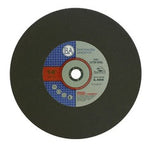
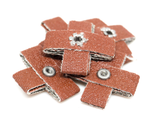
The core of any grinding tool is the abrasive material. Grinding wheels and other abrasive tools are made of hard particles or abrasives connected by a matrix material. Popular abrasive materials are:
- Aluminum Oxide: These are all-purpose abrasives perfectly suitable for grinding ferrous metals, including steel, alloys, and iron.
- Silicon Carbide: These abrasives are harder and sharper when compared to aluminum oxide and are mainly used for grinding non-ferrous metals, including cast iron, ceramics, and some plastics.
- Ceramic Abrasives: These abrasives are excellent at cutting and highly durable, suitable for challenging applications on different metals.
- Cubic Boron Nitride: This is a very hard super abrasive mainly used for grinding hardened steels, tool steels, and superalloys at high speeds.
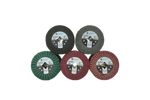
With a wide range of shapes, sizes, and grits, grinding wheels are designed for specific applications and finishes. Selecting the right abrasive and grinding wheel depends on several factors, including the amount of material to be removed, the type of material being cut, and the desired surface finish.
Safety Guidelines While Using Metal Grinding Tools
Metal grinding can be very dangerous if you are not using appropriate safety gear. To prevent severe injuries and accidents, the following safety guidelines should be followed during the metal grinding process.
- Wear appropriate safety gear, including safety glasses or face shields, gloves, appropriate clothing, hearing protection, dust masks or respirators, and steel-toed boots.
- Prior to each use, ensure to check tools and grinding wheels properly to avoid any accidents while using them. Check for any cracks, damage, or wear. Make sure that the grinding wheel is properly attached to the grinder. Additionally, you can also do a ring test on new wheels to see for any cracks.
- Ensure to use the grinder’s wheel guards to protect you from flying debris or fragments in case of wheel breakage.
- Always clamp the workpiece properly using clamps or a vise to prevent imbalance, vibrations, and movements during the cutting process.
- Always keep the grinders in a well-organized and dry area away from the heat or sunlight. This helps in preventing rust or corrosion, which ultimately affects the wheel’s performance.
Conclusion
For metalworking applications, metal grinding tools are great for producing high-quality finishes. Using the right tool for a specific task, along with proper technique and safety practices, can greatly enhance your results and prolong the lifespan of your equipment. With a clear understanding of the different types of grinding tools available, you’ll be better equipped to handle a wide range of projects with confidence and precision.
Join Our Newsletter
Sign up to get the latest on sales, new releases and more …Join Our Newsletter
Sign up to get the latest on sales, new releases and more …Shop Categories
Recent Articles
- Felt Polishing Discs, Flap Discs & Flap Wheels
- How to Polish a Weld to a Mirror Finish
- How to Polish Cast Aluminum
- Luke Hummer - Erie County Community College
- Industrial Quick Change Discs for Fast-Lock Grinding and Finishing
- Felt Polishing Wheels, Bobs & Discs: Guide to Detail Work
- Matthew Cartwright
- Jacob Martinez (Foxholes to Fabworks)
- The Gathering
- David Fisher (Fisher Forge)
Featured Products
-
 746 Reviews
4-1/2" x 7/8" T29 Zirconia High Density Flap Disc - 10 pack
$25.19
-
 738 Reviews
4-1/2" x .040" x 7/8" t1 premium thin cut-off wheel - 25 pack
$20.88
-
 220 Reviews
4-1/2" x 7/8" T27 Zirconia High Density Flap Disc - 10 pack
$25.19
-
 380 Reviews
6" x .045 x 7/8" T1 Premium Thin Cut-Off Wheel - 25 pack
$27.29
-
 55 Reviews
Nonwoven 6" X 9" Scuff, Clean & Finish Hand Pads
$0.83
-
 123 Reviews
4-1/2" x 1/4" x 7/8" T27 Depressed Center Grinding Wheel - 25 pack
$28.34


Blog Categories
- Abrasives
- Sanding
- Grinding Deburring Finishing
- Safety and Cleanliness
- Metal Working
- Selecting Tools And Equipment
- Wood Working
- Art And Design
- Diy Projects
- Industry 4.0
- Buffing
- Cutting Tools
- Carbide Burrs
- PPE
- Wire Brushes
- Bonded Abrasives
- TIG Electrodes
- Wire Wheels
- Bits
- Diamond Blades
- Power Brushes
- Product Reviews
- Grinding
- Finishing
- Industrial Cleaners