


























Countersink vs. Counterbore: What's the Difference and Which One Do You Need

When you need a screw or bolt to sit perfectly flush with a surface, you need to prepare the hole first. Two common methods for this are countersinking and counterboring. While both processes create a recessed hole for a fastener, the key difference lies in the shape of the final hole and the type of fastener they accommodate.
Understanding this difference is crucial for getting a clean, professional finish on your project.
What is a Countersink?
A cone-shaped hole known as a countersink hole enables a fastener, such as a flat-head screw, to sit level with the surface of the material. The tool used to make the hole is also called a countersink bit.
- Hole Shape: Conical shape hole, with an angled bevel at the top.
- Purpose: To make fasteners with angled heads sit flush.
- Fasteners Used: Flat-head screws, rivets, and any fastener with a sloped underside.
- Common Applications: Woodworking, metal fabrication, and PCB manufacturing, where a flush finish is needed for aesthetics or to prevent snagging.
Read More: What are Forstner Drill Bits
What is a Counterbore?
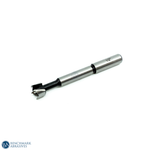
A counterbore is a cylindrical hole cut into a material to accommodate a fastener with a flat head, such as a bolt or a hex-head screw. The head of the fastener can sit in the plane of the surface because the hole is drilled to a certain depth and has a larger diameter than the main hole. The tool used to create this hole is a counterbore bit, or often a Forstner bit.
- Hole Shape: Cylindrical (flat bottom).
- Purpose: To make fasteners with flat heads sit flush.
- Fasteners Used: Hex bolts, socket-head cap screws, or any fastener with a flat-bottomed head.
- Common Applications: Furniture making, machine parts, and any application where you need to conceal a bolt head or provide a flush mounting surface for hardware.
Countersink vs. Counterbore: Side-by-Side Comparison
| Feature | Countersink | Counterbore |
| Hole Shape | Conical (Angled) | Cylindrical (Flat-bottomed) |
| Fastener Head | Angled or sloped | Flat-bottomed |
| Tool Used | Countersink drill bit | Counterbore bit, Forstner bit |
| Key Advantage | Creates a clean, beveled finish that matches the screw head | Provides a secure, level surface for bolts |
Selecting the Proper Process
The choice between countersinking and counterboring comes down to one simple question: What does your fastener look like?
If your screw has a pointed or angled underside on its head, you need to countersink. If your bolt or screw has a completely flat head, you need to counterbore. Using the right process ensures your hardware is secure and that the finished product has a clean, professional appearance.
Join Our Newsletter
Sign up to get the latest on sales, new releases and more …Join Our Newsletter
Sign up to get the latest on sales, new releases and more …Shop Categories
Recent Articles
- Flap Disc vs Fiber Disc: Key Differences & Uses
- Best Surface Conditioning Product for Weld Removal
- Fiber Disc Backing Pads for Angle Grinders: The Ultimate Guide
- 4.5 in Corded Angle Grinder: Complete Buying Guide
- Diamond Blades: Types, Uses, and How to Choose the Right One
- Best Abrasive for Stainless Steel: Avoid Heat Tint and Contamination
- Wire Wheel vs Flap Disc: Best for Rust, Paint, and Welds
- The Best Abrasives for Aluminum: How to Cut, Grind, and Finish without Loading Up
- Drum Sanders and Linear Finishing Tools for Precision Surface Finishing
- How to Pick the Right RPM, Grit, and Pressure for Better Grinding Results
Featured Products
-
 746 Reviews
4-1/2" x 7/8" T29 Zirconia High Density Flap Disc - 10 pack
$25.19
-
 734 Reviews
4-1/2" x .040 x 7/8" T1 Premium Thin Cut-off Wheel - 25 pack
$20.88
-
 220 Reviews
4-1/2" x 7/8" T27 Zirconia High Density Flap Disc - 10 pack
$25.19
-
 380 Reviews
6" x .045 x 7/8" T1 Premium Thin Cut-Off Wheel - 25 pack
$27.29
-
 123 Reviews
4-1/2" x 1/4" x 7/8" T27 Depressed Center Grinding Wheel - 25 pack
$28.34
-
 55 Reviews
Nonwoven 6" x 9" Scuff, Clean & Finish Hand Pads
$0.83


Blog Categories
- Abrasives
- Sanding
- Grinding Deburring Finishing
- Safety and Cleanliness
- Metal Working
- Selecting Tools And Equipment
- Wood Working
- Art And Design
- Diy Projects
- Industry 4.0
- Buffing
- Cutting Tools
- Carbide Burrs
- PPE
- Wire Brushes
- Bonded Abrasives
- TIG Electrodes
- Wire Wheels
- Bits
- Diamond Blades
- Power Brushes
- Product Reviews
- Grinding
- Finishing
- Industrial Cleaners