















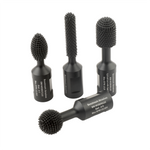













Drum Sanders and Linear Finishing Tools for Precision Surface Finishing

Achieving a professional-grade texture or a perfectly flat surface requires moving beyond standard hand-held equipment and into the realm of purpose-built abrasive tooling. This guide explores the essential role of drum sanders and linear finishing tools in modern fabrication shops to help you master your surface preparation.
Drum Sanders & Linear Finishing Tools for Every Application
In any high-output shop, drum sanders & linear finishing tools serve as the backbone for surface consistency. These power tools are essential for both woodworking and metal finishing, providing a level of precision that smaller orbital sanders simply cannot match. Whether you are dealing with large flat surfaces, leveling sheet metal, or creating a specific aesthetic on architectural components, these machines are built to handle the toughest jobs.
Investing in high-quality finishing equipment allows a shop to scale its production without sacrificing the integrity of the final product. From cleaning up weld beads on tube and pipe to applying a “brushed” look to stainless steel panels, these tools bridge the gap between raw material and a finished piece.
For a broader look at finishing equipment, check out our guide on the 10 best electric sanders and their uses.
What Are Drum Sanders and How Do They Work?
A drum sander, in the context of portable abrasive tooling, is a cylindrical abrasive attachment that mounts to a die grinder, angle grinder, or standard drill via a mandrel. As the tool spins, the abrasive drum makes contact with the workpiece and removes material through friction. This is the same fundamental principle as any other abrasive, applied to surfaces that flat discs cannot reach.
The operator controls the pressure and movement by hand, which makes drum sanders especially effective for curved surfaces, inside diameters, pipe and tube ends, and contoured edges where a rigid flat disc would bridge across the surface rather than following its shape.
The abrasive sleeve or drum wraps around a rubber core. When the mandrel is tightened, the rubber expands and locks the sleeve in place. When the abrasive wears out, you swap the sleeve, the mandrel and rubber core are reusable. This makes drum sanders an efficient and cost-effective solution for repetitive deburring and finishing work.
For a deeper look at when to choose a drum sander versus other abrasive tools, see our guide: Drum Sanders vs. Angle Grinders — When to Choose Linear Finishing Over Discs.
What Are Linear Finishing Tools?
While drum sanders excel at inside surfaces and contours, linear finishing tools (often called burnishers or linear grinders) are handheld units designed to create linear finishes on flat or gently curved exterior surfaces. These tools are most commonly used in metalwork to produce a straight line scratch pattern on stainless steel and other alloys.
If you’ve ever admired the “brushed” look on a professional kitchen appliance or an elevator door, you are looking at a linear finish. These tools allow for:
- Decorative finishes: Creating consistent, aesthetic grain patterns.
- Linear scratch pattern: Aligning all surface scratches in one direction to hide imperfections.
- Industrial line-finishing: Prepping large metal surfaces for coating or final presentation.
Professional-grade models, such as the Walter 30A269 Line-Mate III, offer the torque and speed control necessary to maintain a wide range of linear finishes across various metal densities.
Types of Drum Sanders Available
Choosing the right drum sander comes down to the type of attachment that fits your tool and the shape of the surface you're working on. Unlike stationary floor machines, the drum sander products in this category are portable abrasive drum attachments designed to mount to a die grinder, angle grinder, or drill, giving you precision control over curved surfaces, inside diameters, pipes, and metal edges.
Sleeve-Style Abrasive Drums
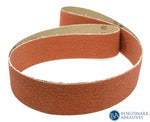
The most common drum sander attachment is the rubber drum mandrel paired with a replaceable abrasive sleeve. The rubber core mounts to your tool's spindle via a mandrel and expands slightly when tightened, locking the sleeve in place. When the sleeve wears out, you simply swap it for a fresh one, no need to replace the entire drum.
Sleeve-style drums are ideal for contour sanding, deburring the inside of curved cuts, smoothing welded tube and pipe ends, and working on any surface where a flat sanding disc would lose contact. They are available in a range of diameters and grits to match both light finishing and aggressive material removal.
Flap Drum Wheels and Spiral Bands
For jobs that demand a more flexible contact surface, flap drum wheels and spiral bands offer distinct advantages. A flap drum wheel uses overlapping strips of abrasive cloth arranged around a cylindrical hub, similar in concept to a flap disc, but shaped for linear contact. The flexibility of each flap allows the drum to conform slightly to irregular surfaces, making it well suited for blending and finishing on curved or contoured metal parts.
Spiral bands (also called cartridge rolls) take a different approach: a strip of abrasive is wound tightly into a cylinder and mounted on a mandrel. Their compact, solid profile allows them to reach into slots, holes, and tight inside radii where a sleeve drum or flap wheel would be too wide. For detail deburring and inside-diameter finishing, spiral bands are often the right call.
Choosing the Right Drum Size and Grit
Drum diameter and length directly affect how much surface area you contact in a single pass and whether the drum will physically fit the space you're working in. Smaller-diameter drums reach into tighter inside curves; larger diameters are faster and more stable on open surfaces.
Grit selection follows the same logic as any other abrasive: start coarser to remove material quickly, then step up to finer grits to refine the surface. Coarse grits (36–80) cut fast and are good for weld cleanup or heavy stock removal. Medium grits (100–150) blend scratches and smooth transitions. Fine grits (180–240) are for the finishing passes before coating or polishing.
Browse Benchmark Abrasives' full range of sanding drums to find the diameter, length, and grit that fits your project and pair them with our abrasive sleeves and spiral bands for a complete drum sanding setup.
Abrasives and Accessories for Drum Sanders
The tool provides the motion, but the abrasive does the work. Choosing the right abrasive for your drum sander is the difference between a smooth finish and a scorched workpiece.
- Sanding Belts & Sandpaper: Available in rolls or pre-cut sleeves to fit your specific drum size.
- Abrasive Drums: Pre-made sleeves that slide over the rubber core. The fastest way to swap grits between passes.
- Aluminum Oxide: The most common grain for surface preparation. Durable, affordable, and effective on most metals and wood.
Safety Warning: Always ensure the tool is powered off and unplugged before changing abrasives. Sleeves must sit fully on the drum. A loose or improperly seated sleeve can flap, tear, or cause damage to the rubber core.
Tools Compatible with Linear Finishing Systems
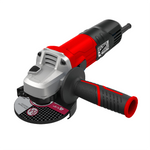
Linear finishing tools are often designed as specialized angle grinder variants. They feature a powerful motor with high torque at lower RPMs to prevent burning the metal.
Key technical features to look for include:
- Spindle lock: For fast changes between abrasive wheels and wire brushes.
- DYNAMAX speed: A feature found in high-end tools that maintains constant speed even under heavy load.
- High efficiency motor: Essential for prolonged industrial line-finishing where heat buildup can degrade tool life.
Key Features to Look for in Drum Sanders & Linear Finishing Tools
Compatibility and Fit
The single most important spec for any drum sander attachment is mandrel size, it must match the collet of your die grinder or the chuck of your drill. Most portable drum sanders use a 1/4” shank mandrel, which fits the majority of die grinders and rotary tools. Confirm the drum diameter and length work for the space you need to reach before ordering.
Abrasive Grain and Grit Range
Look for drums available across a full grit range, from coarse (36–80 grit) for fast stock removal down to fine (180–240 grit) for finishing passes. Aluminum oxide is the workhorse grain for general metal and wood work. Zirconia and ceramic grains last longer and cut harder metals more efficiently, making them the better value for high-volume or production use.
Durability and Sleeve Quality
A quality abrasive sleeve should maintain its cut rate throughout its life rather than dulling quickly in the first few passes. Look for sleeves with a durable cloth or film backing that resists tearing under the flexing and heat generated in contour work. The rubber drum core itself should be firm enough to provide consistent pressure without collapsing under load.
Applications: Where These Tools Excel
These tools are built for the kind of detail finishing work where flat discs fall short.
- Metal Fabrication: Deburring cut edges, cleaning up weld beads on tube and pipe, smoothing inside curves on fabricated brackets and frames.
- Contour and Inside-Diameter Finishing: Reaching into holes, slots, and curved surfaces that a flat sanding disc cannot contact.
- Stainless Steel and Decorative Finishing: Creating a consistent brushed or grained finish on flat and curved metal surfaces for architectural and appliance applications.
- Restoration and Surface Prep: Removing rust, old coatings, and mill scale from curved or irregular surfaces before repainting or re-coating. Much faster than hand-sanding.
Shop Drum Sanders & Linear Finishing Tools Online
Finding the right drum sander or linear finishing tool for your setup is straightforward when you know your tool’s mandrel size and the surface you’re working on. Use the filters in our collection to narrow by diameter, grit, and abrasive type.
At Benchmark Abrasives, we aim to provide the best experience by offering:
- Free shipping on qualified orders.
- Reliable Customer Service and expert advice to help you match the right drum to your application.
- A clear Shipping Policy and cancellation policy (typically within a few business days) to ensure you buy with confidence.
- Convenient features like a Wishlist to track products and a secure payment method portal.
Related Products and Sanding Solutions
Completing a surface finish often takes more than one tool. While drum sanders handle contours and inside work, you may also need:
- Sanding Discs: For flat surfaces and final touch-ups on your random orbital sander.
- Hand Tools: For corners and detail areas where a powered drum cannot reach.
- Abrasive Rolls & Cleaning Sticks: Shop our full collection to keep your belts and drums performing at their best.
Achieve Flawless Finishes with the Right Sanding Tools
Choosing the right drum sanders and linear finishing tools is about more than just picking an attachment; it’s about having the right abrasive geometry for the surface in front of you. Whether you are a professional metalworker graining stainless steel or a fabricator cleaning up tube welds, these tools deliver the precision and consistency that flat discs simply cannot provide on curved and inside surfaces.
Stop settling for abrasives that only work on flat stock. Equip your shop with drum sander attachments and linear finishing tools built for the full range of surfaces you actually work on.
Ready to find the right fit? Shop our full sanding drums collection today and take advantage of free shipping. If you have questions about which drum size or grit works for your application, reach out to our experts for a personalized recommendation.
Join Our Newsletter
Sign up to get the latest on sales, new releases and more …Join Our Newsletter
Sign up to get the latest on sales, new releases and more …Shop Categories
Recent Articles
- Resin Fiber Discs vs Flap Discs: When Should You Use Each?
- Best Abrasives for Rust Removal on Steel
- Cut-Off Wheels vs Band Saws: Which is Better for Metal Cutting
- How to Optimize RPM Abrasive Disc Performance & Lifespan
- Surface Conditioning Discs: A Fabricator's Guide
- Best Flap Disc for Stainless Steel: Complete Fabricator’s Guide
- Ceramic vs Zirconia Flap Discs: Which Performs Better for Metal Fabrication
- How to Choose the Right Grit for Metal Sanding Projects
- Tools Collection for Fabrication and Abrasive Workflows
- How to Choose the Right Diamond Blade
Featured Products
-
 746 Reviews
4-1/2" x 7/8" T29 Zirconia High Density Flap Disc - 10 pack
$25.19
-
 738 Reviews
4-1/2" x .040" x 7/8" t1 premium thin cut-off wheel - 25 pack
$20.88
-
 220 Reviews
4-1/2" x 7/8" T27 Zirconia High Density Flap Disc - 10 pack
$25.19
-
 380 Reviews
6" x .045 x 7/8" T1 Premium Thin Cut-Off Wheel - 25 pack
$27.29
-
 55 Reviews
Nonwoven 6" x 9" Scuff, Clean & Finish Hand Pads
$0.83
-
 123 Reviews
4-1/2" x 1/4" x 7/8" T27 Depressed Center Grinding Wheel - 25 pack
$28.34


Blog Categories
- Abrasives
- Sanding
- Grinding Deburring Finishing
- Safety and Cleanliness
- Metal Working
- Selecting Tools And Equipment
- Wood Working
- Art And Design
- Diy Projects
- Industry 4.0
- Buffing
- Cutting Tools
- Carbide Burrs
- PPE
- Wire Brushes
- Bonded Abrasives
- TIG Electrodes
- Wire Wheels
- Bits
- Diamond Blades
- Power Brushes
- Product Reviews
- Grinding
- Finishing
- Industrial Cleaners