



























Types of Abrasive Drums for Linear Finishing

If you’ve ever admired the perfectly uniform, brushed look on a high-end stainless steel refrigerator or an architectural handrail, you have seen linear finishing in action. Unlike the circular "swirl" patterns left by orbital sanders, linear finishing creates a consistent, straight-line scratch pattern that flows with the shape of the workpiece.
The secret to achieving this professional look lies in the abrasive drums you choose for your linear finishing setup. Whether you are using a stationary machine or a handheld drum sander, the drum is the interface between the tool's power and the delicate surface finishing of the metal.
In this guide, we will break down the various abrasive drum options and how to match them to your compatible tools to obtain the best results.
Non-Woven Abrasive Drums
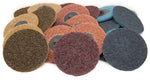
When it comes to creating a satin or matte finish on metal surfaces, non-woven abrasives are the industry standard. These drums are constructed from a 3D web of nylon fibers impregnated with abrasive grains.
Non-woven surface drums are not designed for heavy material removal. Instead, they are used for light blending, minor surface defects, and surface finishing. Due to their open structure, these drums allow air to flow through the abrasive, significantly reducing heat generation. This is crucial when working with thin-gauge stainless steel workpieces, where heat can cause warping or discoloration.
Key Benefits
- Uniform Finish: Unlike hand pads, which rely on uneven manual pressure, the drum provides a perfectly consistent finish across the entire length of the stroke.
- Open Structure: Resists loading (clogging) from soft metals or old coatings.
- Controlled Cut: It is very difficult to accidentally "gouge" the metal with a non-woven drum, making it perfect for final-stage conditioning.
Coated Abrasive Drums
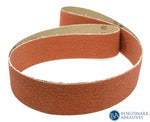
If you need to remove a weld, grind down a burr, or strip away heavy oxidation, a coated abrasive drum is the heavy lifter you need. These are essentially large-scale abrasive drum wheels wrapped in the same type of material you’d find on a high-quality abrasive belt.
Aggressive Material Removal
These drums use grains such as aluminum oxide or ceramic to provide a high cut rate. They are essential for surface finish requirements that require leveling before decorative brushing begins. If you are working on stainless steel, a coated abrasive wheel is often the first step in removing "heat tint" or discoloration caused by welding.
Here’s how to select the right grit:
- Coarse Grits (40-60): Used for bulk material removal and leveling.
- Finer Grits (120-240): Used to refine the scratches from the coarse stage, prepping the metal surfaces for a non-woven satin finish.
Wire Drums and Wire Wheel Brushes
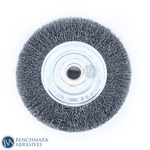
Sometimes, the goal isn’t a smooth finish, but rather aggressive cleaning or texturing. This is where wire drum brushes and wire wheel brushes come into play.
Applications on Steel and Stainless
Unlike coated or non-woven drums, wire drums use individual metal filaments to "pick" at the surface.
- Weld Blending: Great for cleaning up slag or scale from stainless steel welds without altering the part's geometry.
- Removing Oxidation: Highly effective at stripping rust or mill scale from sheet metal.
- Deburring: Perfect for knocking down sharp edges on laser-cut parts.
Safety Warning: Wire drums are prone to "throwing" individual wires as they wear. Always wear a full face shield and heavy-duty apron. Ensure your speed settings are correct; running a wire drum too fast can cause the wires to flare out dangerously. Whether using an angle grinder with an adapter or a specialized handheld drum sander, never exceed the maximum RPM marked on the drum.
Specialty Drums and Hybrid Options
For those who need the best of both worlds, hybrid options like the interleaf flap wheel drum are game-changers. These drums alternate between layers of coated abrasive (sandpaper) and non-woven abrasives.
An interleaf flap wheel drum allows you to remove light scratches while simultaneously applying a satin finish. This "one-step" approach is most suitable for surface finishing on sheet metal and complex decorative projects.
Other specialty options include:
- Surface Conditioning Flap Discs: Used on power tools for smaller detail work.
- Conditioning Discs and Blendex Flaps: Provide ultra-fine texturing for architectural finishes.
- Flap Discs: While traditionally for grinding, specialized flap discs can be used in a pinch for edge-blending before transitioning to the drum.
Choosing the Right Drum for the Task
Mapping your surface finish requirements to the right drum is the most important part of the job.
| Finish Goal | Recommended Drum Type | Material |
| Satin Finish | Non-Woven (Medium/Fine) | Stainless, Aluminum |
| Mirror Finish Prep | Coated Abrasive (Finer Grits) | All Metals |
| Weld Blending | Wire Drum or Interleaf | Carbon Steel, Stainless |
| Heavy Scale Removal | Coated Abrasive (Coarse) | Hot Rolled Steel |
When selecting abrasive drum wheels, consider the abrasive grains. Aluminum oxide is great for general-purpose applications, while ceramic is preferred for its toughness. Also, pay attention to the drum's open structure; a more open drum runs cooler, which is essential for maintaining a uniform finish on large metal surfaces.
Accessories and Tools for Linear Finishing
Achieving the best results on large projects requires more than just the drum; it requires the right compatible tools.
Drum Sander: A benchtop drum sander is ideal for finishing long, flat strips of wood or metal. For a deeper dive into how these differ from larger machines, check out our guide on the difference between a wide belt sander and a drum sander.
Handheld Drum Sander: Also known as a burnishing tool, this is the go-to for sheet metal work that is too large for a stationary machine.
Drum Floor Sander: Used for massive wood surfaces, though the principles of linear finishing remain the same.
Don't forget the sanding drum accessories. Make sure your arbor holes match your tool (many use a 19mm keyed shaft). Using sanding rolls, abrasive pads, and the correct sanding drum adapters will make sure your power tools operate smoothly without vibration.
Maintenance and Best Practices
To get the most tool life out of your abrasive drum wheels, follow these expert tips:
- Direction Matters: Always move the tool in the same direction as the drum's rotation to prevent "hopping" and uneven surface finishing.
- Pressure Control: Let the abrasive grains do the work. Excessive pressure generates heat, which can smear the metal and ruin the uniform finish.
- Clean Your Workpiece: Any grease or oil on the metal surfaces will quickly load your drum, rendering it useless.
- Storage: Store your drums on their sides or on a pegboard. Standing them on the abrasive face can create "flat spots" that cause vibration during use.
Safety Warning: Always disconnect power tools from their power source before changing a sanding drum. A drum that accidentally engages during a change can cause severe injury to your hands.
Master Linear Finishing with the Right Abrasive Drum
Mastering the different types of abrasive drums for linear finishing is the key to elevating your metalwork from "utility" to "art." Whether you are using a non-woven surface drum for a sleek satin finish or a coated abrasive for heavy prep, the right sanding drum makes the work faster, safer, and much more consistent.
At Benchmark Abrasives, we are committed to providing the best results by offering a massive variety of abrasive drum wheels and sanding drum accessories. From the initial weld grind to the final decorative brush on stainless steel, we have the tools you need to succeed.
Ready to perfect your finish? Explore our full collection of abrasive drums, handheld drum sander attachments, and surface conditioning products today. If you're not sure which grit or drum type is right for your specific workpiece, reach out to our team of experts for personalized advice.
Join Our Newsletter
Sign up to get the latest on sales, new releases and more …Join Our Newsletter
Sign up to get the latest on sales, new releases and more …Shop Categories
Recent Articles
- Resin Fiber Discs vs Flap Discs: When Should You Use Each?
- Best Abrasives for Rust Removal on Steel
- Cut-Off Wheels vs Band Saws: Which is Better for Metal Cutting
- How to Optimize RPM Abrasive Disc Performance & Lifespan
- Surface Conditioning Discs: A Fabricator's Guide
- Best Flap Disc for Stainless Steel: Complete Fabricator’s Guide
- Ceramic vs Zirconia Flap Discs: Which Performs Better for Metal Fabrication
- How to Choose the Right Grit for Metal Sanding Projects
- Tools Collection for Fabrication and Abrasive Workflows
- How to Choose the Right Diamond Blade
Featured Products
-
 746 Reviews
4-1/2" x 7/8" T29 Zirconia High Density Flap Disc - 10 pack
$25.19
-
 738 Reviews
4-1/2" x .040" x 7/8" t1 premium thin cut-off wheel - 25 pack
$20.88
-
 220 Reviews
4-1/2" x 7/8" T27 Zirconia High Density Flap Disc - 10 pack
$25.19
-
 380 Reviews
6" x .045 x 7/8" T1 Premium Thin Cut-Off Wheel - 25 pack
$27.29
-
 55 Reviews
Nonwoven 6" X 9" Scuff, Clean & Finish Hand Pads
$0.83
-
 123 Reviews
4-1/2" x 1/4" x 7/8" T27 Depressed Center Grinding Wheel - 25 pack
$28.34


Blog Categories
- Abrasives
- Sanding
- Grinding Deburring Finishing
- Safety and Cleanliness
- Metal Working
- Selecting Tools And Equipment
- Wood Working
- Art And Design
- Diy Projects
- Industry 4.0
- Buffing
- Cutting Tools
- Carbide Burrs
- PPE
- Wire Brushes
- Bonded Abrasives
- TIG Electrodes
- Wire Wheels
- Bits
- Diamond Blades
- Power Brushes
- Product Reviews
- Grinding
- Finishing
- Industrial Cleaners