



























Sanding Discs Buying Guide: Hook & Loop vs PSA Sanding Discs

The effectiveness of your finishing work hinges entirely on the abrasive you attach to your power tool. Whether tackling the delicate refinishing of an antique dresser or the heavy-duty task of stripping rust from a truck frame, the choice of sanding disc attachment system profoundly impacts your speed, accuracy, and overall project cost.
This comprehensive guide serves as a quick-reference tool, helping you navigate the subtle yet critical differences between hook-and-loop and PSA (Pressure Sensitive Adhesive) sanding discs. We’ll look into every relevant detail, from the underlying adhesive technology to the precise grit sequence needed to achieve a flawless, professional wood finish.
How Sanding Disc Attachment Systems Work
At its core, an attachment system has one job: to provide a secure hold between the abrasive discs and the backing pad. If a disc slips at high speed, you risk gouging the material or causing pigtail swirls that only show up after you apply the stain.
The two titans of the industry are hook-and-loop and pressure-sensitive adhesive. While both get the job done, they offer vastly different experiences in terms of vibration, reuse, and leveling.
Hook & Loop Sanding Discs Explained
Hook-and-loop discs are the industry standard for modern random orbit sanders.
The hook-and-loop pad on your sander is covered with tiny plastic hooks. The loop sandpaper has a soft, fuzzy backing that grabs those hooks. This mechanical bond is incredibly strong laterally but allows you to peel the disc off easily for grit changes.
- Reusability: If you are sanding a tabletop and realize you need to switch to a coarser grit, you can remove the loop disc, save it, and put it back on later.
- Fast Swaps: The fastest system for swapping sandpaper grits mid-project.
- Accessibility: Most electric sanders come with a hook-and-loop material pad installed by default.
PSA Sanding Discs Explained
PSA discs (Pressure-Sensitive Adhesive) are the traditional favorites of professional body shops and high-production wood shops.
The Peel and Stick Method
These discs feature a sensitive adhesive on the back. You peel off a protective liner and press the PSA sandpaper directly onto a smooth, vinyl PSA pad.
The Performance Edge:
- Zero Vibration: Because there is no carpet of hooks and loops between the tool and the grit, PSA discs offer a much firmer, more direct transfer of power.
- Leveling: PSA systems are the gold standard for leveling. If you need to ensure a surface is perfectly flat without rounding edges, the stiff bond of a PSA disc is superior.
- Lower Profile: PSA sandpaper sits closer to the backing material, providing better tactile feedback to the user.
Loop vs PSA: Direct Comparison
| Feature | Hook & Loop (H&L) | Pressure Sensitive (PSA) |
| Grit Changes | Instant & Reusable | Fast but Single-Use |
| Leveling Ability | Good | Excellent (Rigid) |
| Heat Resistance | Moderate | High |
| Common Tools | Electric Sanders | Air Sander & Disc Sanders |
| Cost of Abrasives | Slightly Higher | Often Lower |
Disc Types Beyond PSA and Hook & Loop
While PSA and H&L dominate the 5-inch and 6-inch market, other backing types excel in heavy-duty applications:
- Resin Fiber Discs: Built on a vulcanized fiber backing, these are meant for heavy stock removal on metal. They require a specific nut-and-flange setup on an angle grinder.
- Film Backings: Instead of paper, these use a polyester film. Film backings are virtually un-tearable and provide the most consistent scratch pattern.
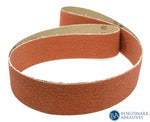
- Sanding Belts: For massive surface areas or thick paint removal, a belt sander is often a better choice than a disc sander.
The Versatile Alternative: Flap Discs
Traditionally a metalworking tool, flap discs are becoming a secret weapon for woodworking tips. They feature overlapping flaps made of abrasive material. On wood, they are incredible for power carving and aggressive shaping, though they require a steady hand to avoid over-sanding.
Grit Selector by Job and Material
Choosing the right sandpaper grits is about following a progression. Never skip more than one grit level (e.g., jumping from 80 to 220), or you will trap deep scratches under the finish.
Grain Types and What They Do
- Aluminum Oxide: The all-rounder. Best results on wood and general metal work.
- Zirconia: Designed for high-pressure, heavy stock removal on hard metals.
- Ceramic: The high-performance king. It stays sharp the longest and runs cooler, making it the best choice for stainless steel.
Understanding Letter Codes
Sanding discs often have letter codes (A–F) on the back. This indicates the weight of the backing material. A-weight is light and flexible for between-coats sanding, while E-weight or F-weight is heavy-duty paper for stripping floors.
Tool Compatibility: What Runs What?
- Random Orbit Sander: Most modern electric sanders are built for H&L.
- Air Sander: Pneumatic tools used in automotive shops often favor PSA because of the high RPMs and the need for a dead flat finish.
- Palm Sanders: Usually uses sheet sander paper, but many now offer H&L conversion sanding pads.
- Bench Grinder: Often uses large PSA discs on a side plate for tool sharpening.
Common Sanding Disc Mistakes (and Fixes)
Here are key mistakes woodworkers often make with sanding discs and how to correct them:
| Mistake | Description | Solution |
| Disc Loading | Sawdust or resin clogs the gaps between the abrasive grit. | Use an abrasive cleaning stick directly on the spinning disc to remove the buildup. |
| Heat Buildup | Excessive force generates friction heat, which can melt the resin holding the grit. | Let the weight of the tool do the work. If you find yourself needing to press down firmly, switch to a coarser grit. |
| Ignoring Testing | Skipping the essential step of verifying the grit sequence before working on the final piece. | Always test your intended grit progression on a piece of scrap wood first. |
Dust Collection and Finishing Quality
Hole patterns aren’t just for show. They allow your shop vac to pull dust away from the surface. Better dust collection leads to cleaner sanding discs, which prevents the dust from acting like a lubricant that slows down your progress.
Safety Warning: Always wear a respirator when using power tools for sanding. Fine dust, especially from pressure-treated lumber or old paint, can cause permanent lung damage. Ensure your dust collection system is running and your shop vac filter is clean.
Make the Right Disc Choice Once and Sand Smarter Every Time
Choosing between Loop and PSA comes down to your workflow. If you value flexibility and frequently switch grits, go with hook and loop. If you demand absolute flatness and work in a high-production environment like a body shop, PSA is your winner.
Regardless of the attachment, the best results come from high-quality grains and proper grit progression.
Join Our Newsletter
Sign up to get the latest on sales, new releases and more …Join Our Newsletter
Sign up to get the latest on sales, new releases and more …Shop Categories
Recent Articles
- Resin Fiber Discs vs Flap Discs: When Should You Use Each?
- Best Abrasives for Rust Removal on Steel
- Cut-Off Wheels vs Band Saws: Which is Better for Metal Cutting
- How to Optimize RPM Abrasive Disc Performance & Lifespan
- Surface Conditioning Discs: A Fabricator's Guide
- Best Flap Disc for Stainless Steel: Complete Fabricator’s Guide
- Ceramic vs Zirconia Flap Discs: Which Performs Better for Metal Fabrication
- How to Choose the Right Grit for Metal Sanding Projects
- Tools Collection for Fabrication and Abrasive Workflows
- How to Choose the Right Diamond Blade
Featured Products
-
 746 Reviews
4-1/2" x 7/8" T29 Zirconia High Density Flap Disc - 10 pack
$25.19
-
 738 Reviews
4-1/2" x .040" x 7/8" t1 premium thin cut-off wheel - 25 pack
$20.88
-
 220 Reviews
4-1/2" x 7/8" T27 Zirconia High Density Flap Disc - 10 pack
$25.19
-
 380 Reviews
6" x .045 x 7/8" T1 Premium Thin Cut-Off Wheel - 25 pack
$27.29
-
 55 Reviews
Nonwoven 6" X 9" Scuff, Clean & Finish Hand Pads
$0.83
-
 123 Reviews
4-1/2" x 1/4" x 7/8" T27 Depressed Center Grinding Wheel - 25 pack
$28.34


Blog Categories
- Abrasives
- Sanding
- Grinding Deburring Finishing
- Safety and Cleanliness
- Metal Working
- Selecting Tools And Equipment
- Wood Working
- Art And Design
- Diy Projects
- Industry 4.0
- Buffing
- Cutting Tools
- Carbide Burrs
- PPE
- Wire Brushes
- Bonded Abrasives
- TIG Electrodes
- Wire Wheels
- Bits
- Diamond Blades
- Power Brushes
- Product Reviews
- Grinding
- Finishing
- Industrial Cleaners