





























Turbo vs Segmented vs Continuous Rim Diamond Blades

When you’re looking at the massive selection of diamond saw blades at Benchmark Abrasives or browsing through any online store, they can all start to look the same—shiny metal discs with some grit on the edge. But choosing the wrong one will result in jagged edges, a ruined workpiece, or a blade that burns out in minutes.
Understanding the details of turbo, segmented, and continuous rim diamond blades is the difference between a professional finish and a costly mistake. Your choice impacts everything: cut quality, speed, and blade life. Whether you are tackling a backyard patio or a high-end bathroom remodel, matching your diamond tools to your specific cutting needs is the first step to success.
Before we dive in, always remember that diamond saw blades operate at incredibly high RPMs. Always wear eye protection, hearing protection, and a respirator to avoid inhaling silica dust, and always make sure your tool is unplugged before changing any blade.
How Diamond Blades Work: The Basics
To understand why different rims exist, you have to understand how a blade actually cuts. Unlike a wood blade with teeth, a diamond blade actually grinds.
- Diamond Particles: The blade edge is embedded with synthetic diamond particles. These do the heavy lifting by scratching away the material.
- Blade Core: This is the high-quality steel center that provides stability.
- Bond: This is the metal glue that holds the diamonds in place.
The relationship between the cutting edge and the material is a game of friction. For harder materials, you actually want a soft bond. Why? Because a soft bond wears away faster, constantly exposing fresh, sharp diamonds. If you use a hard bond on hard stone, the diamonds get dull, the bond doesn't wear down to show new ones, and the blade glazes over, losing its cutting performance.
Choosing the Right Diamond Blade for the Job
There is no one-size-fits-all cutting blade. If you try to cut delicate porcelain with a blade designed for a concrete saw, you’ll shatter the tile. Conversely, using a tile blade on a thick concrete slab will take forever and likely overheat the tool.
Choosing the right diamond blade comes down to balancing two factors: Finish and Speed.
- Segmented: High speed, rougher cut.
- Continuous: Low speed, smooth finish.
- Turbo: The hybrid middle ground.
Turbo Diamond Blades: Balance of Speed and Finish
Turbo diamond blades are the "all-rounders" of the diamond world. They feature a unique serrated rim that looks like a fan or a turbine. This hybrid design is engineered to give you the best of both worlds.
The serrations provide a balance of speed by allowing air to move through the rim, which keeps the blade cooler than a continuous rim, but because the rim is still unbroken, it delivers much cleaner cuts than a segmented blade. In terms of cutting efficiency, the turbo design acts like a vent, pushing dust out of the way so the diamonds can stay in contact with the material.
Best Uses for Turbo Diamond Blades
These are good for stone cutting and natural stone applications such as granite or marble countertops. They handle abrasive materials well and deliver high cutting performance on hard materials, while still providing smooth cuts without the slow pace of a continuous blade.
Segmented Diamond Blades: Fast, Aggressive Cutting
If you have a lot of material to move and you don't care what the edge looks like, you want a Segmented Diamond Blade. These have visible "gullets" (gaps) between the sections of the rim.
These gaps are crucial for airflow and heat dissipation. Because the segments are separated, the blade can handle the intense heat of aggressive cutting without warping. The trade-off? It produces a rougher cut compared to other designs.
Best Uses for Segmented Diamond Blades
You’ll typically see these on a concrete saw or a large circular saw. They are perfect for tough materials like masonry/block, reinforced concrete, and other dense materials. Because they stay cool, they often have a longer service life in heavy-duty construction environments.
Continuous Rim Diamond Blades: Clean, Precise Cuts
Continuous rim blades (often called continuous diamond blades) have a completely smooth, uninterrupted cutting edge. There are no segments and no serrations.
This design is all about minimal chipping. Because there are no "hits" from segments or turbo ridges, the blade grinds the material away slowly and steadily, resulting in precise cuts and a smooth finish.
Best Uses for Continuous Rim Diamond Blades
These are strictly for tile cutting and delicate materials like ceramic tiles, porcelain, or glass. If you want a clean cut that doesn't require a mountain of sanding afterward, this is your blade. Note: These generate a lot of heat, so they are almost always used with water cooling (wet cutting).
Material-Based Blade Selection Guide
To help you choose, use this guide to map the material type to the best blade cuts.
- Ceramic and Porcelain Tile: Use continuous rim blades for a clean cut and smooth finish.
- Granite and Marble: Turbo blades provide the best cutting efficiency for these hard materials.
- Concrete and Brick: Segmented blades handle these tough materials with the necessary speed.
- Abrasive Materials (Asphalt/Green Concrete): Specialized segmented blades with a harder bond ensure a longer service life.
Blade Longevity and Performance Factors
Remember the bond rule: Use a soft bond for hard materials and a hard bond for softer materials. Matching the blade to the material ensures a longer life and prevents you from burning through your investment.
RPM, Tools, and Blade Compatibility
Before you buy, check your Power Tools:
- Arbor Sizes: Ensure the hole in the center of the blade matches your tool (common sizes include 5/8", 7/8", or 1").
- RPM Rating: Never use a blade with a Max RPM lower than your tool’s RPM. A blade spinning too fast for its design can shatter.
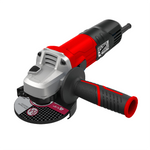
- Tool Type: Small 4.5" blades are usually for angle grinders, while larger blades are meant for circular saws or a right concrete saw.
Wet vs Dry Cutting: Things to Know
Most dry cutting applications use segmented or turbo blades, where airflow is sufficient to cool the metal. However, water cooling is always preferred when possible. It significantly extends blade life, increases cutting efficiency, and suppresses hazardous dust.
Note: Continuous rim blades almost always require wet cutting. Running them dry will cause them to overheat and lose their tension, making them wobble and potentially fail.
Prep and Finishing After Cutting
Even with the best blade, you might have some sharp edges.
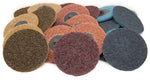
- Surface Cleanup: For stone or tile, using a Grinding Wheel or a specialized polishing pad can take a good cut to a perfect one.
- Versatile Flap Disc: While traditionally used in metalworking (with Aluminum Oxide or Zirconia), flap discs are increasingly useful on wood surfaces and for light cleanup on masonry to achieve a smooth finish on edges.
Choose the Blade That Cuts Smarter, Not Harder
Choosing between segmented, turbo, and continuous rim blades isn't about which blade is better—it's about which one is right for your cutting projects.
- Need speed? Choose segmented blades.
- Need a clean edge on a granite slab? Select turbo blades.
- Need a chip-free porcelain tile? Prefer continuous diamond blades.
By matching your diamond tools to your type of material, you’ll save time, money, and frustration. Ready to get started? Explore the full collection of diamond saw blades at Benchmark Abrasives and choose the right blade for your next task.
Join Our Newsletter
Sign up to get the latest on sales, new releases and more …Join Our Newsletter
Sign up to get the latest on sales, new releases and more …Shop Categories
Recent Articles
- Resin Fiber Discs vs Flap Discs: When Should You Use Each?
- Best Abrasives for Rust Removal on Steel
- Cut-Off Wheels vs Band Saws: Which is Better for Metal Cutting
- How to Optimize RPM Abrasive Disc Performance & Lifespan
- Surface Conditioning Discs: A Fabricator's Guide
- Best Flap Disc for Stainless Steel: Complete Fabricator’s Guide
- Ceramic vs Zirconia Flap Discs: Which Performs Better for Metal Fabrication
- How to Choose the Right Grit for Metal Sanding Projects
- Tools Collection for Fabrication and Abrasive Workflows
- How to Choose the Right Diamond Blade
Featured Products
-
 746 Reviews
4-1/2" x 7/8" T29 Zirconia High Density Flap Disc - 10 pack
$25.19
-
 738 Reviews
4-1/2" x .040" x 7/8" t1 premium thin cut-off wheel - 25 pack
$20.88
-
 220 Reviews
4-1/2" x 7/8" T27 Zirconia High Density Flap Disc - 10 pack
$25.19
-
 380 Reviews
6" x .045 x 7/8" T1 Premium Thin Cut-Off Wheel - 25 pack
$27.29
-
 55 Reviews
Nonwoven 6" X 9" Scuff, Clean & Finish Hand Pads
$0.83
-
 123 Reviews
4-1/2" x 1/4" x 7/8" T27 Depressed Center Grinding Wheel - 25 pack
$28.34


Blog Categories
- Abrasives
- Sanding
- Grinding Deburring Finishing
- Safety and Cleanliness
- Metal Working
- Selecting Tools And Equipment
- Wood Working
- Art And Design
- Diy Projects
- Industry 4.0
- Buffing
- Cutting Tools
- Carbide Burrs
- PPE
- Wire Brushes
- Bonded Abrasives
- TIG Electrodes
- Wire Wheels
- Bits
- Diamond Blades
- Power Brushes
- Product Reviews
- Grinding
- Finishing
- Industrial Cleaners