















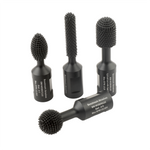


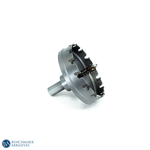


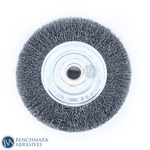








Tools Collection for Fabrication and Abrasive Workflows

Whether you're running a high-output fabrication shop or handling a complex DIY project, the quality of your output is determined by the coordination between your equipment and your consumables. This collection of fabrication tools is designed to serve as a complete abrasive workflow solution, going beyond a simple product catalog to deliver the precision, power, and reliability required for professional metal fabrication.
We understand that the right tool for the job is only half the equation; pairing that angle grinder, die grinder, or polishing tool with the correct abrasive is what truly drives cutting and grinding applications and surface finishing. By focusing on abrasive compatibility and RPM compatibility, you ensure that your power tools perform at their peak, maintaining safety and efficiency across your industrial applications.
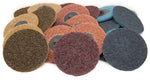
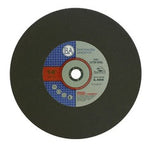
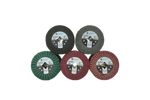
Explore our range of heavy-duty professional-grade tools, including flap discs, surface conditioning products, and grinding and sanding discs, designed to handle the rigors of any fabrication environment.
Professional Fabrication Tools Built for Abrasive Performance
Our high-performance tools are designed to be the backbone of your shop, ensuring that every abrasive product you mount—from grinding wheels and flap discs to fiber discs, polishing pads, and wire wheels—delivers maximum results. In professional fabrication, tool performance is a direct variable in your bottom line.
A high-quality tool provides the consistent torque needed to maintain cutting efficiency and the structural stability to reduce vibration, which significantly improves both finish quality and operator comfort. Whether you are performing heavy surface prep or light refinement, our industrial-grade equipment is designed for longevity and consistent output. By selecting tools specifically designed for fabrication environments, you reduce downtime and ensure that your abrasives perform as effectively as you do.
Angle Grinders: The Core Tool in Most Fabrication Workflows
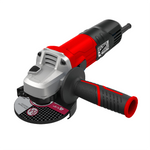
Angle grinders are one of the most widely used tools in the metalworking industry. This versatile tool plays a crucial role in both raw material processing and refined assembly. As a multipurpose grinder, it effectively bridges the gap between the initial stages of fabrication and the final assembly of products.
Common Applications for Angle Grinders
- Weld grinding and leveling beads.
- Surface preparation
- Rust removal on structural steel.
- Cut-off applications using specialized discs.
- Blending and finishing contours.
Abrasives Commonly Used With Angle Grinders
You can maximize the utility of your angle grinder by pairing it with flap discs for blending, grinding discs for stock removal, fiber discs for flat surface work, cut-off wheels for precise sizing, and wire wheels for cleaning.
Key Features Buyers Should Look For
When selecting a heavy-duty angle grinder, prioritize features that enhance user comfort and safety. Variable speed control is essential for managing different materials, while a paddle switch or slide switch configuration depends on your personal preference for control. Look for a tool-free guard for fast adjustments, a robust auxiliary handle for two-handed stability, and a motor powerful enough to handle high-demand metal fabrication while maintaining accurate RPM ratings.
Die Grinders for Precision Grinding, Deburring, and Finishing
When the job calls for finesse rather than brute force, the die grinder is your go-to. Unlike the larger footprint of an angle grinder, these are compact tools perfect for fabrication detail work in tight, restricted spaces.
Best Applications for Die Grinders
- Deburring sharp, freshly cut edges.
- Weld blending in the inside corners.
- Surface conditioning for tight spots.
- Finishing intricate geometries.
- Precision grinding for custom modifications.
Abrasive Pairings
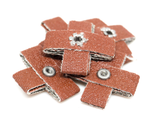
To get the most out of your die grinder, pair it with cartridge rolls, mounted points, quick-change discs, and various surface conditioning products. Because these are high RPM tools, they are perfect for controlled removal on metal surfaces and small-scale finishing work where an angle grinder would be too clumsy to use effectively.
Polishers and Finishing Tools for Surface Perfection
For applications demanding a mirror finish or high-end aesthetics, specialized polishers are required. These finishing tools are designed to work in tandem with buffing pads and polishing compounds to achieve professional results.
Whether you are working on stainless steel finishing, performing paint correction on automotive applications, or general surface finishing, the goal is a smooth finish that is entirely swirl-free. We provide the necessary polishing accessories to ensure your workflow moves seamlessly from aggressive grinding to high-gloss refinement.
RPM Compatibility: Why Matching the Tool and Abrasive Matters
Understanding RPM compatibility is not just about performance—it is a critical component of fabrication safety. Every abrasive is rated for a maximum RPM; exceeding this limit can lead to catastrophic disc failure.
Why RPM Ratings Matter
- Preventing Abrasive Failure: Matching speed to the disc’s rating prevents the abrasive from disintegrating under centrifugal force.
- Improving Safety: Adhering to grinding safety and cutting safety equipment and guidelines protects the operator.
- Extending Abrasive Life: Running an abrasive at its optimal speed prevents "burning" the material and ensures the abrasive grit wears at the intended rate.
Common Compatibility Mistakes
Never assume one size fits all. Always verify your backing pad compatibility, ensure you are using the correct wheel size, and never attempt to "force" an abrasive onto a tool that exceeds its speed rating. Proper tool compatibility is the foundation of a successful shop.
How to Choose the Right Tool for the Job
Selecting the right tool for the job depends on your specific fabrication workflow.
- Choose an angle grinder if you need heavy material removal, cutting metal, surface grinding, or weld blending.
- Choose a die grinder if you are performing precision detail work, deburring, or working in tight, hard-to-reach spaces.
- Choose a polisher if you are focused on final finishing, paint correction, or mirror-polishing stainless steel.
Questions Buyers Should Ask:
-
What material am I working on?
-
What abrasive will I use, and what are its RPM requirements?
-
How aggressive does the application need to be?
-
Do I need high torque or high speed?
FAQs
1. What is the best tool for grinding welds?
An angle grinder paired with high-quality flap discs is the industry standard for weld grinding, offering both material removal and a smooth transition.
2. When should I use a die grinder instead of an angle grinder?
Use a die grinder for precision tasks and areas where an angle grinder is too large to fit or too aggressive to control.
3. Why is RPM compatibility important?
It is essential for abrasive safety; using an abrasive above its rated speed can cause it to shatter, potentially causing severe injury.
4. What abrasives work best with angle grinders?
Angle grinders are highly versatile and work best with flap discs, grinding wheels, fiber discs, and cut-off wheels.
5. Can one tool handle grinding, sanding, and polishing?
While some variable-speed angle grinders can perform all three, dedicated tools often provide better results for professional-grade finishing.
6. How do I choose the right abrasive for my tool?
Consider the material type, the required RPM range, your desired finish, and the aggressiveness of the application.
Build a Better Fabrication Workflow with the Right Tools and Abrasives
Optimizing your shop starts with the right equipment. Choosing the correct fabrication tool improves your overall efficiency and ensures a higher-quality surface finish every time. By strictly adhering to RPM compatibility, you maximize the lifespan of your consumables and ensure the safety of your entire team during fabrication.
Whether you are cutting, grinding, or polishing, matching your abrasive system to the correct tool leads to lower operating costs and better results. Benchmark Abrasives tools are purpose-built to support your professional fabrication workflow from the first cut to the final shine.
Ready to upgrade your shop? Check out our wide range of abrasive tools, perfect for every fabrication job.
Join Our Newsletter
Sign up to get the latest on sales, new releases and more …Join Our Newsletter
Sign up to get the latest on sales, new releases and more …Shop Categories
Recent Articles
- Resin Fiber Discs vs Flap Discs: When Should You Use Each?
- Best Abrasives for Rust Removal on Steel
- Cut-Off Wheels vs Band Saws: Which is Better for Metal Cutting
- How to Optimize RPM Abrasive Disc Performance & Lifespan
- Surface Conditioning Discs: A Fabricator's Guide
- Best Flap Disc for Stainless Steel: Complete Fabricator’s Guide
- Ceramic vs Zirconia Flap Discs: Which Performs Better for Metal Fabrication
- How to Choose the Right Grit for Metal Sanding Projects
- Tools Collection for Fabrication and Abrasive Workflows
- How to Choose the Right Diamond Blade
Featured Products
-
 746 Reviews
4-1/2" x 7/8" T29 Zirconia High Density Flap Disc - 10 pack
$25.19
-
 738 Reviews
4-1/2" x .040" x 7/8" t1 premium thin cut-off wheel - 25 pack
$20.88
-
 220 Reviews
4-1/2" x 7/8" T27 Zirconia High Density Flap Disc - 10 pack
$25.19
-
 380 Reviews
6" x .045 x 7/8" T1 Premium Thin Cut-Off Wheel - 25 pack
$27.29
-
 55 Reviews
Nonwoven 6" X 9" Scuff, Clean & Finish Hand Pads
$0.83
-
 123 Reviews
4-1/2" x 1/4" x 7/8" T27 Depressed Center Grinding Wheel - 25 pack
$28.34


Blog Categories
- Abrasives
- Sanding
- Grinding Deburring Finishing
- Safety and Cleanliness
- Metal Working
- Selecting Tools And Equipment
- Wood Working
- Art And Design
- Diy Projects
- Industry 4.0
- Buffing
- Cutting Tools
- Carbide Burrs
- PPE
- Wire Brushes
- Bonded Abrasives
- TIG Electrodes
- Wire Wheels
- Bits
- Diamond Blades
- Power Brushes
- Product Reviews
- Grinding
- Finishing
- Industrial Cleaners