



























Drum Sanders Vs. Angle Grinders: When to Choose Linear Finishing Over Discs

Angle grinders and portable drum sanders are both common in metalworking shops, but they are built for different finishing goals. Choosing the right one can be the difference between fast material removal and a clean, professional-looking surface.
For this article, drum sander refers to the portable handheld drum sander, also known as a burnishing machine, used in metal fabrication and linear finishing, not a large stationary woodworking sander. The real difference comes down to scratch pattern: angle grinders leave circular marks suited for aggressive removal, while portable drum sanders create the linear grain pattern needed for high-quality finish work.
How Each Tool Actually Works
How a Drum Sander Creates Linear Finishing?
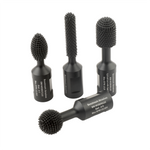
A drum sander operates by spinning a cylindrical sanding drum on an axis parallel to the work surface. Unlike a disc that rotates against the metal, the drum rolls over it. This creates a straight-line grain, or a linear finish, where every scratch is parallel to the next.
This mechanical action is particularly important when working with stainless steel. If you have ever looked at a high-end appliance or an elevator door, you are seeing a linear finish. Most fabricators achieve this by using a sanding drum in handheld burnishing machines, though similar results can be achieved with a drill press and a drum attachment for smaller metal surfaces. The goal here is surface finishing that looks intentional and uniform, providing a fine finish that serves as the final surface prep before shipping a product.
How an Angle Grinder and Disc Sander Remove Material
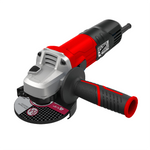
An angle grinder is a high-torque beast. It utilizes a powerful motor to spin abrasive discs, grinding discs, or cut-off wheels at incredibly high speeds—often upwards of 11,000 RPM. Because the disc is spinning in a circle, it creates a circular scratch pattern.
This tool is designed to remove material quickly. Whether you are using a disc sander setup or a standard handheld unit, the goal is usually heavy-duty fabrication. It is the tool you reach for when the weld needs to disappear right now, or when you need to flatten a thick piece of plate. While it is efficient, that circular motion is much harder to hide during the final stages of a project.
Surface Finish Comparison: Linear vs Circular Scratch Patterns
The most visible difference between these tools is the texture they leave behind. On stainless steel, circular swirl marks are usually considered a defect in the finish work. These marks catch the light from every angle, making the surface look messy or "hazy."
A linear, smooth finish, however, directs light in a single direction. By using a drum sander with a finer grit, you can achieve a deep, lustrous finish that resembles brushed nickel or chrome. When you are dealing with architectural metal or visible panels, the finer grit progression on a drum is the only way to achieve that professional look. Surface preparation is not just about making the metal flat; it is about managing how the light interacts with the metal surfaces.
When to Use a Drum Sander?
There are specific scenarios where the sanding drum is the undisputed champion. You should use the drum sander when:
- You need consistent grain direction: If the project requires a brushed look, you need a drum. This is non-negotiable for stainless steel sheet work.
- Working on a large area finishing: If you are conditioning a 4x8-foot panel, an angle grinder will leave "pitting" and uneven dips. A drum sander, especially in larger sanders or sanding machines, allows for long runs where consistency matters across the entire piece.
- Pre-coating surface conditioning: If you are prepping for a clear coat, avoiding swirl marks is critical. The drum provides a uniform surface prep that looks excellent under a finish.
- Finish work on visible parts: For furniture legs, handrails, or decorative trim, the drum offers better control over the final aesthetics.
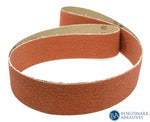
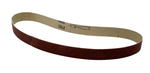
It is worth noting that while some people compare sanding belts to drums, the drum offers a specific type of rigidity that helps maintain flat stock geometry better than a loose belt might. In high-production environments, these are often used in larger sanding machines to ensure every part looks identical.
When to Use an Angle Grinder
The angle grinder is your "demolition" tool. Use an angle grinder when you need to cut or grind metal, masonry, or other tough materials:
Removing mill scale or heavy rust: If you are starting with hot-rolled steel or salvage metal, you need the aggressive removal power of a coarse grit grinding disc. Rust removal is significantly faster with the high speeds of a grinder.
Working in tight spaces: A drum sander is bulky. If you need to get into a corner or a notched joint, the edge of a disc is the only way to reach those sharp edges.
Cutting and heavy shaping: You can’t cut a piece of rebar with a drum. For that, you need Cut-Off Wheels. Similarly, if you are working with cast iron and need to grind down a casting seam, the heavy-duty power of the grinder is crucial.
Fast stock removal: Before you get to the fine finish, you have to get the metal to the right shape. The angle grinder is the best tool to remove material in the early stages of fabrication.
Where Sanding Discs Fit In
Sanding discs bridge the gap between heavy grinding and fine finishing. Depending on the abrasive material—aluminum oxide for general steel or silicon carbide for non-ferrous metals—these discs can do a lot of heavy lifting.
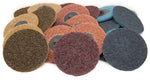
Many pros use quick-change discs for detailed work on smaller pieces. The hook and loop systems or a backing pad allow you to swap grits quickly to blend a weld after the initial grinding is done. While they still create a circular pattern, using surface conditioning abrasive discs can help transition the metal to a state where the drum sander can take over and apply the final linear grain.
How Other Sanders Compare
While drums and grinders are the stars of the show, other types of sanders play supporting roles in the shop.
The random orbital sander is common in woodworking but also used on metal to create a "non-directional" finish. If you are weighing broader finishing options beyond grinders and drums, our guide on belt sander vs. orbital sander breaks down where each tool performs best.
Small palm sanders, detail sanders, and mouse sanders are useful for very small, intricate, detailed work where a larger tool would be unwieldy.
On the industrial side, you might encounter a belt grinder or belt and disc sanders. These often use a continuous loop of sanding belts or abrasive belts. For very large flat stock, wide belt sanders are the industrial cousins of the drum sander, functioning much as a thickness planer does for wood.
If you are comparing a wide belt vs drum sander, the belt machine is usually for higher volume, whereas the drum is for more specialized, handheld finish work. For a deeper look at production sanding setups, you can also explore the difference between wide belt sanders and drum sanders before deciding which setup best fits your workflow
Common Applications in Real Shops
In a typical metal work environment, the process is a relay race. For example, after making bandsaw cuts on a piece of tubing, you would use an angle grinder to deburr the sharp edges and clean the mill scale. If the project is a high-end table, you might then move to a table saw (in a mixed-media shop) to trim wood components, but for the metal frame, you’d switch to the drum sander to apply a beautiful brushed finish.
For DIY projects, removing old paint from a car panel usually starts with a grinder or a DA sander, but finishing a stainless backsplash for a kitchen is a job for the drum. Detail work on uneven surfaces often requires die grinders or a bench grinder, but the final surface finishing on a flat panel will always return to the drum for that linear precision.
Safety Considerations for Both Tools
Safety is the most important part of any shop guide. Both tools use a powerful motor that can cause serious injury if mishandled.
- Eye Protection: This is non-negotiable. Whether it’s sparks from a grinder or fine dust from a sanding drum, safety glasses (and often a face shield) are required.
- Hearing protection: High-speed tools are loud. Long-term usage can lead to permanent hearing loss without proper protection.
- Tool safety: Always ensure your sanding pad or disc is securely attached. For grinders, never use a disc that is rated for a lower RPM than the tool provides. Be especially careful with Cut-Off Wheels; they are prone to kickback if they bind in the cut.
- Managing fatigue: Drum sanders can be heavy and vibrate significantly during long runs. Take breaks to avoid "white finger" or hand-arm vibration syndrome.
Choosing the Right Tool for Your Project
So, how do you decide? Use this framework for your different projects:
- What is the material? Stainless steel usually demands a drum. Cast iron or carbon steel usually starts with a grinder.
- What is the size? For a large area, use a drum for better control and consistency. When working in tight spaces, use a grinder for better access.
- What is the goal? For aggressive stock removal, choose the grinder. For a fine finish or surface prep before a clear coat, choose the drum.
- What are the finish expectations? If swirl marks are acceptable (like on a painted part), the grinder is faster. If you want a "show" finish, you need a drum.
Featured Products and Shop Categories
Ready to upgrade your toolkits? Our store offers a wide variety of tools to help you master your metalwork. Browse our featured products, including high-performance sanding drums, versatile sanding discs, and durable cut-off wheels.
You can explore our full shop categories to find related products like wire wheels for rust removal or specialized abrasives designed for stainless steel. We offer fast shipping across the country, and free shipping is available on qualifying orders. Don’t forget to submit your email address below to receive updates on new arrivals and exclusive technical guides.
Linear Precision or Aggressive Removal? Choose with Confidence
In the end, the drum sanders vs. angle grinders debate isn't about which tool is "better"—it's about which tool is right for the current stage of your project. The angle grinder provides the raw power to remove material and shape the metal, while the sanding drum provides the controlled, consistent linear finish that defines professional work.
Most shops find that they need both to achieve the best results. Evaluate your current setup: Are you struggling with swirl marks on your finished work? It might be time to invest in a sanding drum. Are you spending too much time trying to remove the mill scale with a small sander? An angle grinder will change your life.
Explore our abrasive product collections today and give your projects the professional edge every time.
Join Our Newsletter
Sign up to get the latest on sales, new releases and more …Join Our Newsletter
Sign up to get the latest on sales, new releases and more …Shop Categories
Recent Articles
- Resin Fiber Discs vs Flap Discs: When Should You Use Each?
- Best Abrasives for Rust Removal on Steel
- Cut-Off Wheels vs Band Saws: Which is Better for Metal Cutting
- How to Optimize RPM Abrasive Disc Performance & Lifespan
- Surface Conditioning Discs: A Fabricator's Guide
- Best Flap Disc for Stainless Steel: Complete Fabricator’s Guide
- Ceramic vs Zirconia Flap Discs: Which Performs Better for Metal Fabrication
- How to Choose the Right Grit for Metal Sanding Projects
- Tools Collection for Fabrication and Abrasive Workflows
- How to Choose the Right Diamond Blade
Featured Products
-
 746 Reviews
4-1/2" x 7/8" T29 Zirconia High Density Flap Disc - 10 pack
$25.19
-
 738 Reviews
4-1/2" x .040" x 7/8" t1 premium thin cut-off wheel - 25 pack
$20.88
-
 220 Reviews
4-1/2" x 7/8" T27 Zirconia High Density Flap Disc - 10 pack
$25.19
-
 380 Reviews
6" x .045 x 7/8" T1 Premium Thin Cut-Off Wheel - 25 pack
$27.29
-
 55 Reviews
Nonwoven 6" x 9" Scuff, Clean & Finish Hand Pads
$0.83
-
 123 Reviews
4-1/2" x 1/4" x 7/8" T27 Depressed Center Grinding Wheel - 25 pack
$28.34


Blog Categories
- Abrasives
- Sanding
- Grinding Deburring Finishing
- Safety and Cleanliness
- Metal Working
- Selecting Tools And Equipment
- Wood Working
- Art And Design
- Diy Projects
- Industry 4.0
- Buffing
- Cutting Tools
- Carbide Burrs
- PPE
- Wire Brushes
- Bonded Abrasives
- TIG Electrodes
- Wire Wheels
- Bits
- Diamond Blades
- Power Brushes
- Product Reviews
- Grinding
- Finishing
- Industrial Cleaners