



























Bonded Abrasives Accessories Guide for Grinding Tools

When it comes to the heavy lifting of metal fabrication, automotive repair, or industrial maintenance, the performance of your power tools is only as good as the bonded abrasives accessories you attach to them. Unlike coated abrasives (like sandpaper) or non-woven products designed for refinement, bonded abrasives are structural powerhouses. They are designed to resist the intense friction and heat of cutting applications and aggressive grinding.
Choosing the right wheel isn't just about selecting an item off the shelf; it's about matching the grain, bond, and geometry of the wheel to your specific task.
This guide will help you navigate these essentials to ensure high performance, maximize productivity, and, most importantly, maintain a safe work environment for every new customer and pro fabricator alike.
Understanding How Bonded Abrasives Work
A bonded abrasive consists of abrasive grains held together by a bonding agent (resin, vitrified, or rubber). As you apply the wheel to your workpiece, the bond slowly wears down, continuously exposing fresh abrasive grains. This self-sharpening action is why these wheels are the gold standard for heavy-duty stock removal. The performance depends entirely on the "grade"—a balance of abrasive grit (particle size) and wheel hardness (how easily the bond releases those grains).
Common Abrasive Materials Used in Bonded Products
- Aluminum Oxide: The most versatile, perfect for steel and general-purpose grinding.
- Silicon Carbide: Extremely hard and sharp; ideal for non-ferrous metals like aluminum and masonry.
- Zirconia Alumina: A tough, self-sharpening grain that gives excellent performance in heavy-duty grinding applications and extends wheel life.
Bonded Abrasives vs Other Abrasive Categories
While non-woven abrasives or flap discs are excellent for blending, finishing, and polishing, bonded wheels are specialized for material removal and cutting. You wouldn't use a flap disc to cut a steel bar, just as you wouldn't use a grinding wheel to achieve a mirror-polish finish.
Most Common Bonded Abrasive Accessories and Their Uses
The most common bonded abrasive attachments include:
1. Cutting Wheels
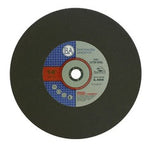
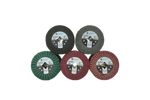
Cutting wheels are engineered for high-speed performance. Whether you are working on pipe fabrication or structural metal, these wheels minimize heat and material loss.
The ultra-thin cut-off wheels are a game-changer. They offer fast cuts with significantly reduced friction, leading to cleaner edges and less operator fatigue. They are perfect for stainless steel and thin sheet metal, where heat management is crucial.
Related Post: Guide to Choosing the Right Cutting Wheel
2. Depressed Center Grinding Wheels
The recessed hub on a depressed center wheel allows you to grind at a flatter angle without the nut restricting the workpiece. These are the workhorses for weld cleanup, edge prep, and aggressive stock removal.
3. Grinding Wheels vs Cut-off Wheels
It is essential to know the difference:
- Grinding Wheels: Thick and reinforced to handle side-loading pressures.
- Center Cut-off Wheels: Thinner, designed specifically for radial cutting. Remember, never use a cut-off wheel for grinding; side pressure can shatter it instantly.
4. Chop Saw Wheels & Combination Wheels
For massive cutting jobs, large-diameter chop saw wheels are essential for stationary machinery. If you are a field technician, combination wheels offer the versatility to cut and grind with a single attachment, reducing tool changes during your shift.
Matching Accessories with the Right Power Tool
Angle Grinder Applications
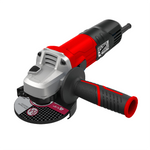
Your angle grinder is the heart of your right-angle grinding setup. Always ensure the wheel size matches the guard diameter. An oversized wheel is a major safety violation.
Die Grinder Applications
For detailed work, a die grinder allows you to use small-diameter bonded points or thin cut-off wheels to reach into tight spaces, deburr edges, and clean up intricate welds.
Understanding Wheel Size and Thickness
- Thinner Wheels: Increase cutting application speed and reduce heat.
- Thicker Wheels: Offer superior durability for aggressive grinding and longer grinding surface life.
Safety Considerations for Bonded Abrasive Accessories
Why RPM Ratings Matter
Every cutting disc has a max RPM rating. If your tool's speed exceeds that of the wheel, the centrifugal force can exceed the bond's strength, leading to catastrophic wheel failure. Always verify the RPM match.
Preventing Wheel Breakage
- Side Loading: Never apply pressure to the side of a cut-off wheel.
- Storage: Keep wheels in a dry, room-temperature environment. Moisture can weaken the bonding agent in organic-bonded wheels, making them brittle.
- Inspection: Before mounting, "ring test" your wheel by gently tapping it. A cracked wheel will produce a dull thud rather than a clear ring.
PPE and Safety Products
Fabricators should never forget to take safety precautions with angle grinders and abrasives, always consider eye protection, hearing protection, and a face shield. Sparks are common during heavy-duty grinding; ensure your work area is clear of flammable materials and that you have proper dust control.
How Accessories Improve Grinding and Cutting Performance
Proper accessory selection doesn't just make the job easier; it makes it cheaper. By selecting the correct abrasive grit, you spend less time reworking parts and more time producing.
- Diamond Cup Wheel: When moving from metal to concrete, use a diamond cup wheel. These are unmatched for surface prep and aggressive grinding on hard, non-metallic surfaces.
- Surface Preparation: Using the right wheel leads to consistent cut precision and higher-quality surface profiles, which are essential for welding and painting.
How to Choose the Right Bonded Abrasives Accessories
Before you select any bonded abrasives accessories, ask yourself:
- Material: What is my grinding goal? Am I grinding stainless, mild steel, or concrete?
- Tool: Is it a high-speed angle grinder or a slow-speed bench grinder?
- Goal: Do I need rapid stock removal or a clean, burr-free cut?
For industrial users, high performance and wheel balance are essential to minimize machine vibration and operator fatigue. For DIY users, budget and versatility (like combination wheels) are often the priority.
FAQs
1. What are bonded abrasives used for?
Cutting, grinding, blending, and cleaning up welds.
2. What is the difference between a grinding wheel and a cut-off wheel?
Thickness and reinforcement. Grinding wheels are for surface work; cut-off wheels are for radial cutting.
3. Can bonded wheels be used on stainless steel?
Yes, but ensure the wheel is marked "Inox" or "Stainless" to avoid iron contamination.
4. How do I know if a wheel is compatible?
Check the RPM rating and wheel size against your tool’s manufacturer specifications.
5. What causes wheels to break?
Overspeeding, improper storage, or using the wrong wheel for the task (like side-loading a thin cut-off wheel).
6. What is the best abrasive material for metal?
Aluminum oxide for general use, Zirconia for heavy-duty, long-life grinding.
7. How often should wheels be replaced?
Whenever they are cracked, worn below the safety mark, or have exceeded their expiration date.
Build Smarter Grinding Systems with the Right Accessories
Success in the shop comes down to the details. Whether you are performing high-precision cuts or aggressive grinding, the right bonded abrasive accessories will improve your speed, precision, and safety. By respecting RPM limits, matching the wheel to your material, and prioritizing proper storage, you turn your shop into a more productive and efficient environment.
Ready to upgrade your grinding job? Explore Benchmark Abrasives’ full selection of bonded abrasive accessories, cutting wheels, and grinding solutions designed for professional fabrication and industrial performance.
Join Our Newsletter
Sign up to get the latest on sales, new releases and more …Join Our Newsletter
Sign up to get the latest on sales, new releases and more …Shop Categories
Recent Articles
- Bonded Abrasives Accessories Guide for Grinding Tools
- The Most Common Angle Grinder Mistakes That Ruin Abrasives
- When to Replace a Diamond Blade | Warning Signs Guide
- Ceramic vs Zirconia vs Aluminum Oxide Grinding
- Carbide Burrs: The Complete Guide to Types, Uses, and Selection
- General Purpose Diamond Blades
- Buffing Wheel Guide: How to Polish, Finish, and Perfect Any Surface
- Hole Saws: Complete Guide to Types, Uses, and Choosing the Right Kit
- Introduction to Drum Sanders and Linear Finishing for Metalworkers
- How to Polish Aluminum to a Mirror Finish
Featured Products
-
 746 Reviews
4-1/2" x 7/8" T29 Zirconia High Density Flap Disc - 10 pack
$25.19
-
 738 Reviews
4-1/2" x .040 x 7/8" T1 Premium Thin Cut-off Wheel - 25 pack
$20.88
-
 220 Reviews
4-1/2" x 7/8" T27 Zirconia High Density Flap Disc - 10 pack
$25.19
-
 380 Reviews
6" x .045 x 7/8" T1 Premium Thin Cut-Off Wheel - 25 pack
$27.29
-
 55 Reviews
Nonwoven 6" x 9" Scuff, Clean & Finish Hand Pads
$0.83
-
 123 Reviews
4-1/2" x 1/4" x 7/8" T27 Depressed Center Grinding Wheel - 25 pack
$28.34


Blog Categories
- Abrasives
- Sanding
- Grinding Deburring Finishing
- Safety and Cleanliness
- Metal Working
- Selecting Tools And Equipment
- Wood Working
- Art And Design
- Diy Projects
- Industry 4.0
- Buffing
- Cutting Tools
- Carbide Burrs
- PPE
- Wire Brushes
- Bonded Abrasives
- TIG Electrodes
- Wire Wheels
- Bits
- Diamond Blades
- Power Brushes
- Product Reviews
- Grinding
- Finishing
- Industrial Cleaners