



























Ceramic vs Zirconia vs Aluminum Oxide Grinding

In the world of metal fabrication, the difference between a project that is profitable and one that bleeds time often comes down to a few microns of engineered mineral. Choosing the right abrasive grain is not just a technicality; it is a fundamental decision that dictates your material removal rates, your tool lifespan, and the consistency of your final finish.
Whether you are a professional welder prepping a massive structural beam or a DIY enthusiast restoring a classic car, understanding the ceramic vs zirconia vs aluminum oxide grinding debate is essential.
While all three grains are designed to remove material, they behave differently under heat and pressure. Using the wrong abrasive can lead to "glazing," where the grain dulls and generates heat rather than cutting, potentially ruining expensive workpieces.
This guide will break down the chemistry and performance of these three grains to help you choose the best abrasive products for your specific metalworking applications.
Types of Abrasive Grains: Ceramic vs Zirconia vs Aluminum
To choose the right tool, you first need to understand what is happening at the microscopic level. Abrasives are generally categorized into natural abrasives (like garnet or emery) and synthetic abrasives (like the three we are discussing today). In industrial metal fabrication, synthetic abrasives are the standard because they offer a more uniform grain size and predictable performance.
The "cutting action" of an abrasive is determined by its grain structure. Some grains are "friable," meaning they break apart easily to reveal new, sharp edges. Others are "tough," meaning they resist fracturing and stay intact longer. The way a grain fractures under pressure, whether it dulls into a rounded nub or shatters into a jagged new point, is what separates a budget-friendly option from a high-performance leader.
Aluminum Oxide
Aluminium oxide is the most widely used abrasive in the world, and for good reason. It is the "all-rounder" of the abrasive family, offering excellent versatility at a very accessible price point. Formed by refining bauxite in an electric arc furnace, aluminum oxide grains are tough and blocky.
Key Benefits
-
Affordability: It is the most cost-effective option for general-purpose work.
-
Versatility: It performs reliably on a wide range of materials, including mild steel, carbon steel, and even woodworking projects.
-
Finish Quality: Because it wears down more predictably, it is often a good choice for final blending and finishing.
When Aluminum Oxide is the Best Option
If you are performing light-to-medium-duty work where speed isn't your primary concern, aluminum oxide is usually the best option. It is perfect for cleaning up metal surfaces, removing light rust, or prepping a surface for paint. However, on very hard metals like stainless steel, it may dull too quickly to be efficient.
Zirconia Alumina
Zirconia alumina (often referred to as zirconium oxide or zirconium dioxide) represents a significant step up in performance. This grain is a blend of aluminum oxide and zirconium, resulting in a much tougher abrasive.
The standout feature of zirconia grains is their self-sharpening property. As you apply high pressure, the grain fractures in a way that creates new sharp edges rather than simply dulling. This makes it a "workhorse" for heavy-duty material removal.
Where Zirconia Excels
-
Ferrous Metals: It is designed specifically for ferrous metals and structural steel.
-
Mill Scale Removal: If you are dealing with heavy mild steel mill scale, zirconia has the bite needed to get through the crust.
-
High Pressure: It requires a certain amount of force to trigger the self-sharpening action, making it ideal for use with high-powered grinders.
Popular Zirconia Products
Zirconia is most commonly found in zirconia sanding belt formats for bench grinders and zirconia flap disc options for handheld angle grinders.
Ceramic Abrasives
Ceramic abrasives are the pinnacle of modern grain technology. Unlike the other two, ceramic abrasive grains are designed through a chemical process called "sol-gel." This allows for a micro-crystalline structure that is incredibly uniform.
The "secret sauce" of ceramic grains is micro-fracturing. Instead of the whole grain shattering or dulling, tiny pieces of the grain break off at the microscopic level, constantly providing the fastest cut rate throughout the entire life of the disc or belt.
Where Ceramic Abrasives Shine
-
Hard Alloys: Essential for stainless steel, titanium alloys, and nickel alloys.
-
Aerospace Industry: Widely used in aerospace applications where precision and heat management are critical.
-
Fastest Cut Rate: Because it stays sharp, it removes material much faster than zirconia or aluminum oxide.
Why Ceramic Delivers the Fastest Cut Rate
Ceramic is naturally "cooler cutting." Because it doesn't dull easily, it generates less friction, which is essential for high-temperature conditions where you want to avoid discoloring the metal (heat tint).
Safety Warning: High-performance ceramic abrasives can remove material much faster than you expect. Always maintain a firm, two-handed grip on your tool and ensure your workpiece is securely clamped to prevent kickback.
Ceramic vs Zirconia vs Aluminum Oxide: Side-by-Side
Comparison
| Feature | Aluminum Oxide | Zirconia Alumina | Ceramic Abrasive |
| Best Choice For | General purpose / DIY | Heavy grinding / Steel | High performance / Stainless |
| Durability | Moderate | High (Self-sharpening) | Extreme (Micro-fracturing) |
| Cut Rate | Standard | Fast | Fastest |
| Initial Cost | Low | Medium | High |
| Overall Value | Good for light work | Best for high-volume steel | Best for tough alloys |
| Tool Life | Shortest | Long-lasting | Longest life |
Choosing the Right Abrasive for Your Application
To get the most out of your budget and your time, you need to match the grain to the task.
-
Heavy Stock Removal: If you need to grind down a massive weld or shape a thick piece of steel, ceramic is the top choice, with zirconia as a strong, more budget-friendly second.
-
Surface Preparation: Zirconia and aluminum oxide are both excellent choices for removing scratches or preparing surfaces for a finish.
-
Precision Finishing: When you need a smooth, consistent finish on softer metals, a fine-grit aluminum oxide is often the better choice.
-
Heat-Sensitive Metals: For stainless steel or titanium, always choose ceramic. Its ability to cut cleanly at lower temperatures prevents warping and "bluing" of the metal.
Matching Abrasives to Tools and Products
The grain is the "engine," but the product format is the "vehicle."
Grinding Wheels and Discs
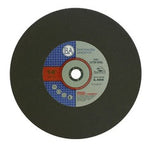
For rigid grinding wheels, aluminum oxide is common for bench work, while ceramic grinding discs are preferred for heavy industrial floor grinding.
Flap Wheels and Flap Discs
Flap wheels and discs are where the differences become most apparent. A zirconia flap disc is the standard for general steel fabrication, while a ceramic flap disc is the go-to for stainless steel.
Sanding Belts and Sheets
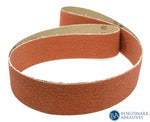
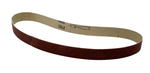
For long-distance grinding, ceramic sanding belts (or ceramic belts) provide the best ROI because they require fewer belt changes. Zirconia belts remain popular for structural steel shops. For manual hand sanding, standard sanding sheets with aluminum oxide are usually sufficient.
Material-Specific Recommendations
-
Stainless Steel: Best to use here is ceramic. It manages the corrosion resistance properties of the metal by keeping the heat low.
-
Mild Steel: Zirconia is more suitable in terms of price and performance.
-
Cast Iron: Zirconia or ceramic cut-off wheels are needed to handle the abrasive nature of cast iron and aluminum castings.
-
Non-Ferrous Metals: Aluminum and copper can "load" (clog) a disc. Use aluminum oxide with an anti-loading coating or specialized ceramic grains.
Common Mistakes When Choosing Abrasives
-
Under-Pressuring Ceramic: Ceramic needs pressure to micro-fracture. If you "feather" it, the grain will glaze over and stop cutting.
-
Over-Pressuring Aluminum Oxide: This just leads to the grains stripping off the backing (shedding) or burning the workpiece.
-
Ignoring Grit Size: Even the right abrasive grain won't help if the grit size is too fine for the amount of metal you need to remove.
-
Aluminum Oxide on Stainless: You will spend more money on the dozens of cheap discs you go through than you would have on one high-quality ceramic disc.
FAQs
1. What is the difference between ceramic and zirconia abrasives?
Ceramic micro-fractures at a smaller scale, making it sharper and cooler-cutting, whereas Zirconia requires more pressure to self-sharpen and is better suited for carbon steels.
2. Which abrasive is best for stainless steel?
Ceramic is the best option for stainless steel because it prevents heat buildup and maintains a sharp edge on hard surfaces.
3. Is aluminum oxide good for metal grinding?
Yes, for general-purpose mild steel and non-ferrous metals, it is an excellent choice and very affordable.
4. When should I use zirconia instead of ceramic?
Use zirconia when working with structural steel or when budget is a factor, as it provides a higher material removal rate than aluminum oxide but is cheaper than ceramic.
5. Which abrasive lasts the longest?
Ceramic abrasives have the longest life due to their micro-crystalline structure that constantly reveals new cutting edges.
Choose Smarter, Grind Better: Find Your Perfect Abrasive
The grinding process doesn't have to be a chore. By moving beyond "standard" abrasives and matching your grain to your material, you can work faster and produce a higher-quality finish.
-
Ceramic: The fastest cut and longest life. Best for high-performance metals and stainless.
-
Zirconia: The durable workhorse. Ideal for heavy grinding on structural steel.
-
Aluminum Oxide: The cost-effective standard. Great for general-purpose use and woodworking.
At Benchmark Abrasives, we specialize in providing the right abrasive grain for every task. Whether you need high-performance ceramic sanding belts or reliable zirconia flap discs, choosing the right tool is necessary for a perfect finish.
Explore our full range of abrasive products and shop categories to find the perfect match for your next project. If you're still unsure which grain is right for you, check out our abrasive grit guide for sanding discs and metalworkers. You can also reach out to our team for expert guidance.
Join Our Newsletter
Sign up to get the latest on sales, new releases and more …Join Our Newsletter
Sign up to get the latest on sales, new releases and more …Shop Categories
Recent Articles
- Bonded Abrasives Accessories Guide for Grinding Tools
- The Most Common Angle Grinder Mistakes That Ruin Abrasives
- When to Replace a Diamond Blade | Warning Signs Guide
- Ceramic vs Zirconia vs Aluminum Oxide Grinding
- Carbide Burrs: The Complete Guide to Types, Uses, and Selection
- General Purpose Diamond Blades
- Buffing Wheel Guide: How to Polish, Finish, and Perfect Any Surface
- Hole Saws: Complete Guide to Types, Uses, and Choosing the Right Kit
- Introduction to Drum Sanders and Linear Finishing for Metalworkers
- How to Polish Aluminum to a Mirror Finish
Featured Products
-
 746 Reviews
4-1/2" x 7/8" T29 Zirconia High Density Flap Disc - 10 pack
$25.19
-
 738 Reviews
4-1/2" x .040" x 7/8" t1 premium thin cut-off wheel - 25 pack
$20.88
-
 220 Reviews
4-1/2" x 7/8" T27 Zirconia High Density Flap Disc - 10 pack
$25.19
-
 380 Reviews
6" x .045 x 7/8" T1 Premium Thin Cut-Off Wheel - 25 pack
$27.29
-
 55 Reviews
Nonwoven 6" X 9" Scuff, Clean & Finish Hand Pads
$0.83
-
 123 Reviews
4-1/2" x 1/4" x 7/8" T27 Depressed Center Grinding Wheel - 25 pack
$28.34


Blog Categories
- Abrasives
- Sanding
- Grinding Deburring Finishing
- Safety and Cleanliness
- Metal Working
- Selecting Tools And Equipment
- Wood Working
- Art And Design
- Diy Projects
- Industry 4.0
- Buffing
- Cutting Tools
- Carbide Burrs
- PPE
- Wire Brushes
- Bonded Abrasives
- TIG Electrodes
- Wire Wheels
- Bits
- Diamond Blades
- Power Brushes
- Product Reviews
- Grinding
- Finishing
- Industrial Cleaners