
























How To Drill Through Metal | Drilling Tips And Tricks

Drilling through steel or thick aluminum can seem intimidating, but with the right bit selection, speed, and technique, it’s a standard DIY task. This guide, written by experienced machinists, deconstructs the process from centering your mark to achieving those perfect, long, continuous shavings that signal success.
You can drill metal securely for any job with a standard hand drill and a bit of perseverance.
The 7 Steps to Drilling Metal Successfully
The drilling process is broken down into simple, repeatable steps:
- Locate Your Center: Mark the exact spot for the hole.
- Drill the Pilot Hole: Use a smaller bit to guide the main bit.
- Choose the Right Bit: Match the High-Speed Steel (HSS) or Cobalt bit to the metal type.
- Secure the Workpiece: Clamp the metal down firmly for safety.
- Use Cutting Fluid: Keep the bit cool and flush away chips.
- Find the Sweet Spot: Dial in the correct slow speed and high pressure.
- Manage the Breakthrough: Finish the cut safely and cleanly.
1. Getting Started (Finding Your Center)
Before you begin drilling, you must locate your center and create an indentation for the drill bit to follow. This keeps the hole exactly where you want it.
Using a Punch
- Center Punch: The most common tool. Set the point where you want the hole to begin, then strike the end with a ball-peen hammer to create a depression.
- Prick Punch: Similar to a center punch, but has a sharper tip for more precise placement. Only use it on soft metals like aluminum and mild steel to avoid damaging the tip.
- Automatic Center Punch: Woodworkers prefer these spring-loaded tools. To use them, align the point and press the handle down—an automated mechanism initiates the punch. They work very well with aluminum alloys.
Crucial Safety Warning: Avoid using a claw hammer. Never strike a hardened tool (like a center punch) with another hardened tool (like a ball-peen hammer), as this can cause dangerous chipping and serious eye damage. Always wear safety glasses.
2. Pilot Hole Drilling Into Metal
After selecting a bit starting location, drill a pilot hole. A pilot hole is a tiny initial hole made with a smaller bit that is then followed by your main drill bit.
Pilot holes remove some of the material, making it simpler for the more significant bits to bore straight through. For holes 3/8-inch and wider with a hand drill, drilling a pilot hole is essential. However, for holes less than 1/2-inch diameter on a stable drill press, you can often skip the pilot hole.
3. How To Drill Through Various Types of Metal
While a professional machinist works with exacting tolerances and specific alloys, the average DIYer can consider three broad categories:
- Aluminum/Alloys: Soft and easy to drill.
- Steel (Mild, Carbon): Standard steel; generally requires good technique and HSS bits.
- Stainless Steel: Very hard, prone to work-hardening, and requires slow speed, high pressure, and Cobalt bits.
If you encounter metals like titanium or armor plating, special procedures are needed. Google is your friend.
4. The Right Bit Decisions Set Metallurgical Drilling Techniques
Drill bits are the key to a successful cut. Matching the bit material and geometry to the metal is essential for both performance and bit longevity.
A. High-Speed Steel (HSS) Twist Bits
HSS bits are more affordable and offer great value. They operate flawlessly everywhere except for hard metals like stainless steel.
- Coatings: We suggest titanium-coated drill bits for the highest value in mild steels, or black oxide for a more affordable option. These coatings help the parts function better and last longer. The drawback is that you cannot preserve the coating when sharpening the bit once it dulls.
- Tip Angles: HSS twist bits typically have 118- or 135-degree angles. The 135-degree split-tip is increasingly common as it starts easier and wears better.
B. Cobalt Drill Bits
Cobalt drill bits are twisted bits made with five to eight percent cobalt added to the steel alloy, making them significantly more heat-resistant. They maintain their sharpness for longer and are the correct choice for drilling into rigid metals, such as stainless steel.
Cobalt is a structural component rather than a coating, meaning that, unlike titanium-coated bits, you can sharpen them and preserve their high-performance characteristics. Maintaining the original 135-degree split-tip geometry is crucial for their self-centering function and superior cutting action.
C. Deming Bits and Silver
For drilling holes up to 1/2 inch thick, standard bits work fine. For greater depth and width, the key is using Silver and Deming drill bits.
These sets come in larger sizes (1/2 inch to 1.5 inches) but feature a standard, smaller 1/2-inch shank to fit into a common drill chuck. For safety, use the larger sizes only with a drill press and with the workpiece firmly fastened down.
D. Step Bits
A step bit, which resembles a small metal Christmas tree, is great for cutting multiple hole sizes in thin metal with a single tool.
To use one, check the scale on the inside of the cutter to determine the number of "steps" needed. Lubricate the bit correctly and stop before the final step if the hole size is crucial. Then, double-check the diameter before drilling too far.
E. Using Hole Saws and Annular Cutters to Drill Holes in Metal
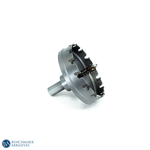
- Hole Saws: For a few large holes in soft metals like aluminum, bi-metal hole saws can be used, but they wear out significantly faster and are noisy.
- Annular Cutters: Similar to milling machines, annular cutters are used on drill presses. They cut the circumference of the hole, leaving a "slug" of metal, and are much faster and smoother than traditional hole saws.
Annular cutters have 3/4-inch shanks, meaning you’ll often need a Morse Taper MT2 adapter for a standard drill press. The lack of power in a tabletop drill press makes it challenging to use these tools for large holes; they are best paired with strong magnetic drill presses.
5. When Drilling, Use Heat and Cutting Fluid
One thing must be done after selecting your drill bit: keep it cold.
Cutting fluid serves two main functions: it cools the bit, and it flushes chips and shavings away. Dripping some on the metal and bit both before and during the drilling process is highly effective. You can apply it easily with a chip brush. (Cast iron is the lone exception; it can be drilled without cutting fluid.)
6. How To Change the Pressure and Speed
The difference between success and failure is entirely in your technique: the speed of your drill bit and the amount of downward force you apply.
Speed (Go Slow)
As a general rule, move slowly. Set the low gear (typically symbolized by 1) on your hand drill or dramatically slow down a drill press.
When in doubt, drill metal at the slowest speed your drill will allow. This will function without damaging the bit, although it may be slower.
Pressure (Push Hard)
The shavings will indicate if you are applying pressure correctly.
- If you notice dust or tiny metal flakes, you are not pressing down firmly enough for the bit to cut effectively; you are merely rubbing the metal.
- When you produce continuous, several-inch shavings, you know you are using the correct pressure. Your shavings should be long and spiraling—a sign of clean, efficient cutting.
7. Breakthrough: The Key to Drilling Through Metal
Drilling a hole in metal is most hazardous when you break through the final layer.
Clamping is Crucial
The single most important safety step is clamping. When the drill breaks through, the bit can grab the workpiece and forcefully spin it, yanking it from your hands.
- Use C-clamps, quick-grip clamps, or a heavy vise to secure the workpiece to the table. This is non-negotiable for safety.
- Place a piece of scrap wood beneath the metal. This prevents the drill bit from blowing out the back of the metal as it finishes the cut and protects your drill press table or workbench.
As you approach the other side, slow down and release the pressure. Hold onto the workpiece (if it is not held down) tightly until the cut is complete.
8. Metallurgical Drilling - Cleanup
Refrain from sweeping your hand across the workpiece to remove metal shavings—tiny, sharp metal fragments will cause itching and skin irritation for a week. Instead, use a chip brush (which got its name this way) to sweep up the metal.
Clean the floor and shoe soles thoroughly after finishing. You don't want to leave metal chips in nearby rooms; they are uncomfortable to step on barefoot and can be difficult to remove from carpet.
CONCLUSION
Drilling through metal is relatively easy once you understand the physics of the cut. Your shave will be at least six inches long if you use a sharp bit, the proper pressure, speed, and cutting fluid. When you reach that point, you know you're doing everything correctly, and drilling holes in metal becomes an enjoyable though a bit dirty task.
Join Our Newsletter
Sign up to get the latest on sales, new releases and more …Join Our Newsletter
Sign up to get the latest on sales, new releases and more …Shop Categories
Recent Articles
- Kahne Loftus (Kahne's Kare Packages)
- Flap Disc vs Grinding Wheel: Which One Cuts It for Your Metalwork?
- Savannah Tucker (GypsyBit Art)
- Guide to Buffing Compounds: Types, Colors, and Uses
- Concrete Grinding Techniques Using an Angle Grinder
- Jenny Jeffus (@spicy_celica_)
- Bob Bryenton (Solar Storm Forge)
- Mike Leonard (Tool'n Knives)
- Jason Davidson (@jaydewelder)
- Tamara Ward - Industrial Arts Institute (Beyond the Bench)
Featured Products
-
 734 Reviews
4-1/2" x .040 x 7/8" T1 Premium Thin Cut-off Wheel - 25 pack
$20.88
-
 746 Reviews
4-1/2" x 7/8" T29 Zirconia High Density Flap Disc - 10 pack
$25.19
-
 220 Reviews
4-1/2" x 7/8" T27 Zirconia High Density Flap Disc - 10 pack
$25.19
-
 380 Reviews
6" x .045 x 7/8" T1 Premium Thin Cut-Off Wheel - 25 pack
$27.29
-
 121 Reviews
4-1/2" x 1/4" x 7/8" T27 Depressed Center Grinding Wheel - 25 pack
$28.34
-
 54 Reviews
Nonwoven 6" x 9" Scuff, Clean & Finish Hand Pads
$0.83


Blog Categories
- Abrasives
- Sanding
- Grinding Deburring Finishing
- Safety and Cleanliness
- Metal Working
- Selecting Tools And Equipment
- Wood Working
- Art And Design
- Diy Projects
- Industry 4.0
- Buffing
- Cutting Tools
- Carbide Burrs
- PPE
- Wire Brushes
- Bonded Abrasives
- TIG Electrodes
- Wire Wheels
- Bits
- Diamond Blades
- Power Brushes
- Product Reviews
- Grinding
- Finishing
- Industrial Cleaners