


























Angle Grinder Discs: 7 Types and Their Applications

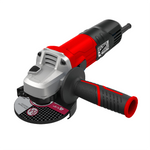
Angle grinders are a must-have for any fabricator's toolbox as they are versatile and one of the most powerful tools to cut metal. Angle grinders include a variety of interchangeable grinding discs that can be used for a variety of tasks. Considering the variety of gradients and sizes (along with techniques), mastering an angle grinder can take quite a bit of practice.
However, it would help if you had a much better understanding of the seven various kinds of angle grinder discs and what they may be used for by the end of this article. Let's get going!
7 Types of Angle Grinder Discs and Their Applications
1. GRINDING WHEEL
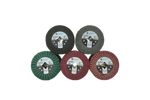
We'll begin by choosing the grinding wheel, which is the first apparent option. These have a disc-like shape and ribbed edge, making discs ideal for quickly grinding rough metal edges. Grinding discs are commonly used to give a new, smooth finish to most manufacturing jobs. New welds can also be polished with a grinding wheel. Exercise caution and wear appropriate PPE when using this angle grinder disc.
-
Your grinding wheel generates a lot of heat, so avoid touching it after usage. A ceramic grinding wheel is an excellent alternative.
2. CUT-OFF WHEEL
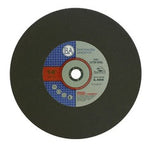
An angle grinder with a cut-off wheel can also be used to cut metal stock. Cut-off wheel discs are perfect for cutting through metal (plate metal, rebar, bolts, etc.) since they often have a tapered edge and a thin profile.
-
Use a thicker cut-off wheel when working with stronger metals, as thinner wheels can be unstable.
3. FLAP DISC
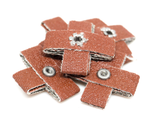
Flap discs are perfectly suitable for use with metal. Hard metals are considered like fine sandpaper. Flap discs are also useful in removing sharp corners and metal burrs, which enhances the efficiency and accuracy.
-
Some modern flap discs can also repair scratches, making them suitable for metal repairs.
4. WIRE WHEEL
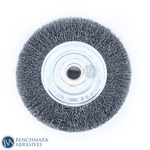
If you are preparing a metal surface, you can use wire wheels to remove paint or rust from metal (as well as other abrasives). The metal wire strands are either straight or intertwined to improve their abrasive qualities. Flying wires are a headache. Therefore, you should always stay away from cheap wire wheels that are likely to break soon.
-
Once more, wire wheels can become very dangerous after extended usage, so always wear personal protective equipment (PPE).
5. DIAMOND DISC
Although they can take many different forms, diamond discs are mostly made for cutting. Diamond discs are incredibly effective at cutting extra-dense metals. Because diamond discs have a layer of abrasive diamond shards, they are ideal for blitzing through a variety of tasks.
-
Diamond discs can be expensive, so they should only be used for critical tasks that require precision and speed.
6. STRIP DISC
A strip disc can also effectively remove paint and corrosion; however, it can also damage the underlying metal if used carelessly. Therefore, it is useful to have a strip disc in your toolbox for more delicate jobs. Strip discs are coated in a poly-fiber material to aid in the removal of paint, epoxy, glue, and other coatings from metal surfaces.
-
The strip disc is positively right for fiberglass or wood as compared to the wire wheel.
7. CERAMIC SANDING DISC
Despite having a longer lifespan than its competitors, ceramic sanding discs are rarely utilized. A ceramic sanding disc can accomplish almost any duty that a flap disc can. Ceramic has the important advantage of not overheating.
-
Some high-end ceramic sanding discs may have longer lifespans and more sanding capacity.
DO YOU NEED AN ANGLE GRINDER?
Yes, they are worthwhile to have. Angle grinders are the most versatile power tools, and they can be used with attachments and replace several other tools in some applications. This will enable you to do the more difficult tasks faster.
Furthermore, angle grinders are fairly easy to use, especially for novices, provided that the right precautions are taken and personal protective equipment is always worn. The ideal fabrication power tool to utilize when planning a project and expecting to work with multiple kinds is an angle grinder. It will help you finish the project quickly.
SAFETY TIPS FOR USING AN ANGLE GRINDER
Here are some safety tips to consider while using an angle grinder:
- Be sure to wear safety gear, including a face shield, glasses, helmet, etc., before using an angle grinder.
- Ensure that your workpiece is properly clamped to avoid movement or imbalance during the process.
- Wear safety gear before using an Angle grinder to avoid severe accidents. Safety gears include a face shield, a mask, eye protection, a body suit, etc.
- Ensure to use the angle grinder at a slow speed for better control, and gradually increase the speed if needed. This also helps prevent kickbacks from the grinder.
- Ensure to apply light pressure during the sanding process. Applying too much pressure can cause damage to the user as well as the material.
- Ensure that your angle grinder disc is not damaged before using it. If your grinder is vibrating excessively, it means it is damaged or not properly balanced; stop using it immediately.
- Be sure to unplug the grinder while changing the disc. This will prevent accidental start-ups and any severe accidents.
CONCLUSION
Again, angle grinders are versatile, multipurpose tools that both skilled fabricators and beginners can use. Before you begin, make sure you are using the correct angle grinder disc. We hope this blog is useful to you. After learning how to operate an angle grinder, you ought to be able to purchase a range of discs to use with it.
Join Our Newsletter
Sign up to get the latest on sales, new releases and more …Join Our Newsletter
Sign up to get the latest on sales, new releases and more …Shop Categories
Recent Articles
Featured Products
-
 746 Reviews
4-1/2" x 7/8" T29 Zirconia High Density Flap Disc - 10 pack
$25.19
-
 738 Reviews
4-1/2" x .040 x 7/8" T1 Premium Thin Cut-off Wheel - 25 pack
$20.88
-
 220 Reviews
4-1/2" x 7/8" T27 Zirconia High Density Flap Disc - 10 pack
$25.19
-
 380 Reviews
6" x .045 x 7/8" T1 Premium Thin Cut-Off Wheel - 25 pack
$27.29
-
 123 Reviews
4-1/2" x 1/4" x 7/8" T27 Depressed Center Grinding Wheel - 25 pack
$28.34
-
 55 Reviews
Nonwoven 6" x 9" Scuff, Clean & Finish Hand Pads
$0.83


Blog Categories
- Abrasives
- Sanding
- Grinding Deburring Finishing
- Safety and Cleanliness
- Metal Working
- Selecting Tools And Equipment
- Wood Working
- Art And Design
- Diy Projects
- Industry 4.0
- Buffing
- Cutting Tools
- Carbide Burrs
- PPE
- Wire Brushes
- Bonded Abrasives
- TIG Electrodes
- Wire Wheels
- Bits
- Diamond Blades
- Power Brushes
- Product Reviews
- Grinding
- Finishing
- Industrial Cleaners