



























Dewalt Angle Grinder Alternatives for Cutting and Grinding

Are you looking for better or more affordable options than DeWalt angle grinders for your projects? DeWalt is one of the top and trusted names among professionals and DIY workers, known for its reliable power tools and durable angle grinders.
However, some users may wish to explore alternatives, either to find a more budget-friendly option or to meet specific needs better suited to their projects.
This guide will help you understand which features to prioritize, such as build quality and power source, for applications of cutting or grinding tasks.
Why Look for DeWalt Angle Grinder Alternatives?
Exploring DeWalt angle grinder alternatives offers significant benefits, especially for those on a budget or with specific needs.
While DeWalt tools are of high quality, their higher price tag can be a barrier. Alternatives like Benchmark Abrasives, Makita, Milwaukee, and Bosch provide brushless cordless models with variable speed control and trigger switches for better control and performance.
Finding the right angle grinder for your project—whether you're cutting through metal, shaping wood pieces, or tackling sheet metal work—can make all the difference in how your project turns out. What's great about these alternative brands is that they often offer the same quality features you'd expect from premium tools, but without the hefty price tag that might make you hesitate to purchase.
You'll really notice the difference when you're working with features like variable speed control, brushless motors that run longer on a single charge, and trigger switches that respond exactly how you want them to. These aren't just fancy add-ons—they actually make your work easier and help you get better results.
And the price matters too. There's no point in overspending on features you don't need, but you also don't want to shortchange yourself with a tool that won't handle your projects.
Key Features to Consider in Any Angle Grinder
Evaluating key features is necessary to select the appropriate angle grinder that fulfills the specific abrasive task and delivers optimal performance.
Disc Size and Wheel Diameter
The size of the discs or wheels your angle grinder can accommodate directly impacts its versatility.
Smaller diameters (4.5-5 inches) are ideal for detailed work and tight spaces, such as finishing or honing.
Larger sizes (7-9 inches) are better suited for heavy-duty tasks, such as cutting concrete or large metal sheets, offering increased cutting capacity and material removal.
Beyond disc size, consider the range of available attachments such as sanding discs, wire wheels, and polishing pads, which can further expand the grinder's capabilities.
Comfort and Ergonomics
The angle grinder should have an ergonomic handle for good grip, especially during extended use. Consider the weight-to-power ratio; lighter models with high power offer better control and reduce user fatigue. Ergonomic handles, anti-vibration features, and balanced weight distribution will ensure easy handling, even in tight spaces or overhead positions.
Power Source
The power source of your angle grinder significantly influences its performance and portability. Corded models provide consistent, unlimited power, making them perfect for extended, heavy-duty jobs in a workshop.
In contrast, cordless models boost mobility, allowing work in remote locations and tight spaces, ideal for home improvement projects or outdoor tasks.
The most suitable power source for your angle grinder depends on your work environment and the requirements of your project.
Safety Requirements
An angle grinder with a secure blade guard and quick-release mechanisms enhances safety during blade changes and operation, reducing injury risks. Look for features such as blade guards that protect from sparks and debris, along with safety switches, whether slide or paddle, that prevent accidental start-up.
Performance and Durability
A high-quality angle grinder gives long-lasting performance. Check for robust construction, quality bearings, and premium motor components. Various reputable models are available with a one-year warranty for long-term use.
A durable grinder can handle long periods of continuous operation without overheating or losing power.
Related Article: What is an Angle Grinder Used For?
Corded vs. Cordless Angle Grinders
Choosing the right type of angle grinder, cordless or corded, influences your work efficiency and safety. Understanding the differences between them helps you choose the best tool for your projects.
Corded Angle Grinder
A corded angle grinder runs on an electrical connection. It provides continuous, high-power performance suitable for demanding tasks like heavy metal cutting, grinding, and surface preparation.
Advantages
- Provides constant power for extended use, with no need for recharging.
- Generally, more powerful than cordless models, suitable for heavy-duty tasks like cutting concrete and metal.
- No worries for battery life, work on long-duration projects easily.
Disadvantages
- The connecting cord limits mobility and range of movement.
- The need for nearby power outlets makes it inconvenient in areas without easy access to electricity.
- Managing cords can pose trip hazards or cause tool damage if snagged or pulled.
Cordless Angle Grinder
A cordless angle grinder uses rechargeable batteries and is easy to carry around. It is ideal for use in remote locations or tasks requiring mobility, such as outdoor jobs or site work without nearby power sources. Modern cordless grinders feature advanced brushless motors for longer battery life.
Advantages
- Offers excellent mobility for working in remote or tight spaces without cords.
- Modern battery technology (especially brushless motors) provides longer runtime and increased efficiency.
- Easy to move and store. Perfect for home improvement and DIY projects.
Disadvantages
- Limited battery life means shorter working sessions, requiring recharging or extra batteries.
- Usually less powerful than corded models. It can’t be used for heavy-duty tasks.
- Higher price due to advanced motor features and batteries.
Corded vs. Cordless Angle Grinder: Quick comparison
| Feature | Corded Angle Grinder | Cordless Angle Grinder |
| Power Source | Direct AC-powered output | Rechargeable battery (battery power) |
| Work Duration | Unlimited, continuous operation | Limited by battery life |
| Mobility | Restricted by cord length | Complete mobility for remote jobs |
| Power & Performance | Generally, more powerful and suited for tough jobs |
Less powerful, suitable for light to medium jobs. |
| Setup & Portability | Less portable, requires setup with extension cords | Highly portable, easy to carry anywhere |
Top Alternatives to DeWalt Angle Grinders
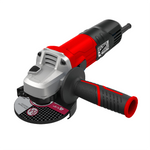
1. Benchmark Abrasives 4.5-inch Corded Angle Grinder
The Benchmark Abrasives 4.5-inch Corded Angle Grinder represents the best alternative to premium brands, offering professional-grade performance at a more accessible price point. With its powerful 7-amp motor delivering 11,000 RPM and user-friendly features like tool-less wheel changes, this grinder handles everything from metal cutting to surface preparation with reliable consistency.
Benchmark Abrasives also offers cordless angle grinder options for those who prioritize mobility and convenience over unlimited runtime. Whether you choose corded or cordless, they provide a practical solution for both professional contractors and DIY enthusiasts looking for quality tools without the premium price tag.
2. Makita Angle Grinder
Makita angle grinders are excellent for tasks like grinding, cutting, and surface preparation, providing a balance of power and comfort. Ideally used by professionals and DIY workers for home projects and light or medium grinding tasks on construction sites. Makita grinders are praised for their durability, lightweight build, and ergonomic design. However, they may lack the raw power needed for the most demanding industrial tasks.
3. Milwaukee Tool Grinders
Milwaukee’s brushless cordless technology models are ideal for professionals demanding the most power and maximum cutting jobs. The angle grinder kit options come with features like longer battery life and higher RPMs. They are suitable for heavy-duty metal cutting, grinding, and surface finishing. They have a higher price tag and the need for compatible batteries.
4. Bosch Grinder Options
Bosch offers excellent slow start and soft start features, which make their grinders easier to control and for longer use. These Bosch grinder models are particularly suitable for extended periods of grinding or polishing, reducing vibrations and operator fatigue. They are favored in industrial and workshop settings where precision, safety, and longer operational cycles are essential.
5. Porter-Cable and Black & Decker
Porter-Cable and Black & Decker offer reliable corded angle grinders as budget-friendly alternatives. These are readily available at Home Depot and local stores, making them accessible for DIY workers and small contractors. While they may lack advanced features, these affordable grinders are sufficient for light to moderate cutting, grinding, and surface finishing.
Specialized Grinders and Alternatives
The small angle grinder (typically 4-5 inches) is perfect for precision work, detailed grinding, and finishing in tight spaces. They are lightweight, easy to use, and good for DIY and home improvement.
While the large angle grinders (7-9 inches) deliver more power and material removal, they are suitable for heavy-duty construction and industrial applications such as cutting concrete or metal sheets.
Die Grinder and Right Angle Die Grinder
Die grinders and right-angle die grinders are compact, high-speed tools perfect for precision jobs in tight spaces. They are ideal for grinding, deburring, or polishing small parts in workshops. They are used with useful grinding discs or wire brushes for hard-to-reach areas. Provides excellent control for detailed finishing work.
Bench Grinder and Other Tools as Alternatives
A bench grinder is an essential tool in the workshop for sharpening blades, grinding discs, and wire brushes. It provides high power and control for long-term use. For larger projects or bulk surface preparation, machines like circular saws, table saws, or chop saws can sometimes serve as alternatives, especially in cutting metal, wood, or masonry materials.
Other Practical Alternatives
In some applications, tools like chainsaws and belt sanders can be used for cutting and grinding of outdoor or rough-cutting jobs. They are not direct substitutes for angle grinders, but these tools offer unique applications for heavy-duty or specialized jobs.
Related Article: A Complete Guide to Angle Grinder Parts & Replacement Parts
Choosing the Best Tool for the Job
Wheel and Blade Selection
For cutting and grinding tasks, selecting the appropriate cutting wheel, cutoff wheel, or cutting blade for your material ensures optimal efficiency. A thin metal wheel provides a clean cut for sheet metal, while a strong cutoff wheel handles tougher surfaces like stone or steel. Always wear safety glasses and a dust mask to protect against debris.
Proper wheel selection maximizes performance and safety. Never use a 5" wheel on a 4-1/2" grinder, as this creates serious safety hazards. A 7.5A motor is suitable for light to medium tasks like cutting, grinding, or polishing sheet metal. Proper wheel selection and power handling guarantee precision and safety in every job.
Analyze the Best Sellers on Online Platforms
Research best-selling models on platforms like Home Depot to gauge reliability and user satisfaction. Look for angle grinder kits—or an angle grinder Holy Trinity pack—that include essentials like grinding wheels and flap discs, and watch for promotional offers or gift card promotions that add extra value to your purchase.
Check the manufacturer's customer service reputation to handle any product issues smoothly. Balance your power source needs—choose cordless for portability or corded for consistent power in demanding tasks. Choose the best tool that combines quality, features, and value to maximize your ROI with a powerful grinder.
Frequently Asked Questions
Q: Should I choose a paddle switch or a slide switch for better control and safety?
Paddle switches offer more immediate control and safety, ideal for quick starts and stops. Slide switches can be left on for continuous use, but require careful handling. Paddle switches provide more immediate control, while slide switches allow for continuous operation.
Q: Which RPM ratings are most important to ensure safe and effective operation?
Always ensure the tool's RPM matches or exceeds the wheel's maximum rating. Running the wheel below its specified RPM can cause it to break or become unsafe, increasing the risk of accidents and injuries.
Choose Your Grinder Wisely
The above tips and DeWalt angle grinder alternatives give DIY workers and professionals more choices to find the best tool for their specific needs. The choice will depend on the abrasive operations requirements. Prioritizing power, size, or features, considering factors like disc size, build quality, and the type of project will help you select an angle grinder that delivers better results. Upgrading your workshop with the right angle grinder ensures the best results on any grinding task.
Join Our Newsletter
Sign up to get the latest on sales, new releases and more …Join Our Newsletter
Sign up to get the latest on sales, new releases and more …Shop Categories
Recent Articles
- Best Quick-Change Disc Machines for Welders & Fabricators
- Best Corded Drum Sanders (Burnishers) for Welders & Metal Fabricators
- Dewalt Angle Grinder Alternatives for Cutting and Grinding
- Best Angle Grinders 2026: Benchmark’s Guide to Corded Angle Grinders
- Best Cut Off Wheel for Steel: Complete 2026 Buying Guide
- Top Handheld High Speed Gas and Electric Powered Cut-Off Saws of 2026
- Starting a Metal Fabricating Shop - What to Buy
- Best 8-Inch Crack Cleaning Machines for Pavement Maintenance in 2026
- Best 3/8″ x 13″ Belt Grinders in 2026: For Metalworkers and Fabricators
- The Ultimate Guide to 2x72 Belt Grinders for Knife Makers and Metal Fabricators (2026)
Featured Products
-
 746 Reviews
4-1/2" x 7/8" T29 Zirconia High Density Flap Disc - 10 pack
$25.19
-
 738 Reviews
4-1/2" x .040 x 7/8" T1 Premium Thin Cut-off Wheel - 25 pack
$20.88
-
 220 Reviews
4-1/2" x 7/8" T27 Zirconia High Density Flap Disc - 10 pack
$25.19
-
 380 Reviews
6" x .045 x 7/8" T1 Premium Thin Cut-Off Wheel - 25 pack
$27.29
-
 55 Reviews
Nonwoven 6" x 9" Scuff, Clean & Finish Hand Pads
$0.83
-
 123 Reviews
4-1/2" x 1/4" x 7/8" T27 Depressed Center Grinding Wheel - 25 pack
$28.34


Blog Categories
- Abrasives
- Sanding
- Grinding Deburring Finishing
- Safety and Cleanliness
- Metal Working
- Selecting Tools And Equipment
- Wood Working
- Art And Design
- Diy Projects
- Industry 4.0
- Buffing
- Cutting Tools
- Carbide Burrs
- PPE
- Wire Brushes
- Bonded Abrasives
- TIG Electrodes
- Wire Wheels
- Bits
- Diamond Blades
- Power Brushes
- Product Reviews
- Grinding
- Finishing
- Industrial Cleaners