





























Emery Cloth vs Sandpaper: Grit, Backing, and When to Use Each

Emery cloth vs sandpaper comes down to backing, abrasive grain, and the job. Emery cloth is the tougher choice for hand-cleaning metal, pipe, shafts, and curved parts, because its cloth backing survives bending and pulling. Sandpaper is the broader family, with more grains, backings, and grit ranges for wood, paint prep, plastic, and fine finishing.
A rusty wrench, a copper pipe joint, and a wood tabletop can all need sanding. The wrong abrasive means clogged grit, torn backing, and extra finishing work. The name on the package does not tell the whole story. Not every product sold as emery cloth contains natural emery, and some products sold as sandpaper use cloth or film instead of paper.
This guide compares how the two are built, explains emery cloth grit labels with a conversion chart, and matches each option to common shop and DIY jobs. We also point to modern alternatives for when traditional emery is not the best fit.
What Emery Cloth and Sandpaper Actually Mean
What is emery cloth?
The label "emery cloth" does not always mean the abrasive grain is emery. Traditionally, emery cloth was a woven cotton or cotton/synthetic backing coated with natural emery, a dark mineral blend of corundum and iron oxides such as magnetite or hematite. People used it to clean, smooth, and prepare metal by hand.
The cloth backing is what most users notice first. It resists tearing better than standard paper and bends without creasing. You can wrap it around a pipe or shaft, pull it across a curved surface, or work it along an irregular metal edge. That flexibility keeps the abrasive in contact where a stiff sheet may fold, skip, or wear unevenly.
Modern labels need a closer look. Many products sold as emery cloth use aluminum oxide, silicon carbide, or another synthetic grain on cloth backing instead of natural emery. They can work very well, but grain type changes cutting action, wear rate, and suitability for different materials. Check the package for the grain, grit, backing, and recommended use rather than assuming "emery" names the mineral.
What is sandpaper?
Sandpaper is the broader product family. It can use paper, cloth, film, or mesh backing, and it can carry garnet, aluminum oxide, silicon carbide, ceramic, or other abrasive grains.
Is emery cloth the same as sandpaper? Not exactly. They overlap, but backing, abrasive grain, and intended use decide how each one performs.
Emery Cloth vs. Sandpaper: Choose by Backing, Grain, and the Job
Cleaning oxidation from a copper pipe elbow and leveling a tabletop both need an abrasive, but they call for different product traits. Choose by the workpiece material, surface shape, amount of material to remove, and finish required, not by the name on the package. This table lays out the differences.
| Product trait |
Emery cloth |
Sandpaper |
| Typical backing | Woven cloth, traditionally cotton or a cotton/synthetic blend | Paper, cloth, film, or mesh |
| Common abrasive grain | Traditional products use natural emery; many modern products sold as emery cloth use aluminum oxide | Aluminum oxide, silicon carbide, zirconia, ceramic, garnet, and other grains |
| Usual grit availability | Often sold in workshop-oriented coarse through medium grits for metal cleanup and smoothing | Available from coarse stock-removal grits through ultra-fine finishing grits |
| Flexibility and tear resistance | Strong and flexible for wrapping around curves, shafts, tubing, and irregular edges | Depends on backing. Paper suits flat work, while cloth-backed sandpaper can also be durable and flexible |
| Best materials and jobs | Metal cleanup, rust removal, pipe, hardware, contours, and edge work | Wood, drywall, paint, plastic, automotive work, and precision finishing |
| Water or oil use | Verify the product bond and backing before wet use | Verify the product bond and backing before wet use; sandpaper is not automatically dry-only |
For a copper pipe, a cloth-backed abrasive bends around the circumference and resists tearing as you work it back and forth. For a flat wood panel, a paper-, film-, or mesh-backed abrasive on a sanding block or orbital sander is easier to keep flat, and it offers more finish-oriented grit choices.
Wood warning: Avoid traditional natural emery on open-grain or tannin-rich woods such as oak and some cedar species. Emery contains iron-bearing minerals, and residue can react with tannins and leave dark discoloration. Choose a woodworking-grade aluminum oxide or garnet abrasive instead.
Cloth backing is a construction advantage for contoured work. It is not proof that a cloth abrasive contains emery or can be used wet. Check the manufacturer's grain, backing, bond, and recommended use before you start.
Approximate Emery Cloth Grit Equivalents: How to Read Old and New Labels
A 600-grit label does not always mean the same grain size. Lower numbers remove material faster, and higher numbers leave a finer scratch pattern. When you ask what grit is emery cloth, first check whether the package uses a traditional emery grade, a CAMI grit, or a FEPA P-grit.
Grit conversion chart
| Traditional emery grade | Approximate CAMI range | Approximate FEPA P-grit range | Typical use |
| #3 | 180 | P180 | General smoothing and light rust removal |
| #2 | 220 | P220 | Metal prep and cleaning |
| #1 | 280 to 320 | P320 to P400 | Fine smoothing before finishing |
| 0 | 360 to 400 | P500 to P600 | Fine metal finishing |
| 00 | 500 to 600 | Confirm with supplier | Very fine smoothing and polish prep |
| 000 | 800 to 1000 | Confirm with supplier | Fine polishing steps |
| 0000 | Ultra-fine | Roughly P1500 to P2500 | Final polishing, depending on supplier |
| Common workshop range | 60 to 80 | P60 to P80 | Rust, scale, burr, and coating removal |
| Common workshop range | 100 to 120 | P100 to P120 | Smoothing and general surface prep |
| Common workshop range | 120 to 180 | P120 to P180 | Typical copper-pipe cleaning and fitting prep |
These are approximate legacy equivalents, not a universal standard. Traditional emery grades were not controlled as consistently as modern abrasive standards. For precision polishing or finish-critical work, use the manufacturer's micron specification or published conversion chart.
CAMI and FEPA are standardized systems, but their printed numbers are not interchangeable at fine grades. Their particle-size ranges and grade limits differ, so P600 is not automatically the same scratch size as CAMI 600.
What grit is fine emery cloth?
For most shop and plumbing work, fine emery cloth runs about 120 to 220 grit. Use it to smooth and clean metal. Grades from 280 up are better for finishing and polish prep. Match the grit to the job, and stay within one manufacturer's system when the final surface finish matters.
Put Emery Cloth to Work on Pipes, Edges, and Rusty Metal
Picture a steel bracket fresh from a cut-off wheel. The cut is done, but the edge is sharp and the face still has scale. A flexible strip of emery cloth gives you controlled hand pressure when a power tool could remove more material than the job needs.
Use emery cloth for these common metalworking tasks:
- Heavy rust, scale, or sharp burrs on steel and cast iron: Start with 60 to 80 grit to remove loose corrosion, mill scale, or a rough cut edge. Follow with 100 to 120 grit when the part needs a more uniform surface. Emery cloth suits small areas and detail work, not heavily rusted panels or large structural parts. Bigger jobs call for a power tool.
- Deburring cut or machined edges: Tear or cut a narrow strip and use short, controlled strokes along the edge. Start around 80 to 120 grit, and move finer only when you want a smoother feel. Keep the abrasive positioned to remove the burr without rounding an edge that must stay crisp.
- Pipes and round shafts: Wrap the cloth around the part and use a back-and-forth shoeshine motion. This keeps contact even around the circumference. Start with 80 to 120 grit for cleanup, then use 150 to 220 grit for smoothing.
- Copper pipe before soldering: Use 120 to 180 grit plumber's cloth or an equivalent abrasive to remove oxidation until bright metal shows. Wipe away abrasive debris before you apply flux.
Technique: Use moderate pressure and consistent strokes. Stop once the surface is clean, bright, or burr-free. More sanding can change dimensions, round edges, and add scratches you do not need.
Wear eye protection and gloves when you handle sharp metal. Check the package before wet or oily work, since a cloth backing does not automatically mean the abrasive is rated for those conditions.
When Sandpaper and Modern Abrasives Beat Emery Cloth
The toughest-looking cloth abrasive is not always the best option for metalwork. Emery cloth works for hand sanding curves, but sandpaper and modern abrasive formats often give a more controlled finish or faster grit changes.
For wood finishing and stain prep, use aluminum oxide or garnet sandpaper instead of emery. A practical progression is 120 grit for leveling, 180 grit for smoothing, and 220 grit before many stains or clear finishes. These abrasives suit wood fibers, while iron-bearing emery can discolor tannin-rich woods.
For paint, plastic, automotive panels, and ultra-fine finishing, choose silicon carbide wet/dry paper or a film-backed abrasive rated for the job. Silicon carbide suits hard coatings and plastics, and film backing helps create a uniform finish. Follow the grit sequence and wet or dry instructions on the package.
For flat, fine polishing, emery paper vs emery cloth is mostly a backing choice. Paper-backed material is easier to keep flat on a sanding block. Cloth-backed material is better for wrapping around a pipe, shaft, or irregular edge.
What to use instead of emery cloth
We do not sell emery cloth, so here is what we suggest for the jobs it usually handles:
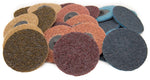
- Rust and oxidation cleanup: Use surface conditioning discs and rolls to clean and blend rust without cutting deep scratches.
- Deburring cut metal: Use hook-and-loop sanding discs for controlled grit changes on a power tool.
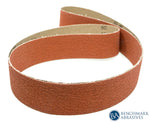
- Belt-tool cleanup and shaping: Choose aluminum oxide sanding belts for faster stock removal on a belt sander.
- Pipes, shafts, and contours: Surface conditioning rolls can flex around round parts, much like a cloth-backed abrasive does.
Choose by material, surface shape, finish target, and tool, not because the package says emery.
How to Choose Between Emery Cloth vs. Sandpaper
Ask these three questions before you open a package or buy more abrasives:
- What material am I working on? For hand-cleaning metal, hardware, pipe, rust, and sharp edges, emery cloth is often a practical choice. For wood, paint, plastic, automotive panels, or finish sanding, choose sandpaper with an abrasive grain and backing suited to the material.
- What shape is the surface? Emery cloth's fabric backing makes it useful for wrapping around shafts, tubing, curves, and irregular edges. On flat surfaces, paper-, film-, or mesh-backed sandpaper used with a block or sander keeps the work even.
- What result do I need? Start coarse for rust, scale, burrs, or old coatings. Step through medium grits for controlled smoothing, then use finer abrasives when the scratch pattern and final appearance matter.
The simple rule for emery cloth vs sandpaper: choose emery cloth for many hand-metal and contour jobs, and choose sandpaper when you need broader grain, backing, and finishing options.
Use the grit chart above as a starting point, not a guarantee. For finish-critical work, check whether the abrasive uses CAMI, FEPA P-grit, or micron sizing before you rely on the grit number alone.
Browse surface conditioning products for rust and pipe cleanup.
Frequently Asked Questions
Is emery cloth the same as sandpaper?
No. Emery cloth traditionally uses an abrasive coating on woven cloth, while sandpaper is a broader category that can use paper, cloth, film, or mesh backing with different grains. Modern cloth-backed abrasives sold as sandpaper can perform much like emery cloth, so check the backing, grain type, and grit instead of relying on the name.
What grit is fine emery cloth?
For ordinary shop, plumbing, and metal-cleaning work, fine emery cloth runs about 120 to 220 grit. Specialty abrasive sheets go much finer, from 280 grit through polishing grades. Older labels such as 0, 00, 000, and 0000 are approximate legacy grades, not standardized measurements, so confirm the manufacturer's grit or micron specification.
What is the difference between emery paper and emery cloth?
The main difference is the backing. Emery paper is easier to hold flat for controlled polishing on flat or delicate surfaces. Emery cloth has a stronger woven backing that withstands repeated bending around pipes, shafts, and curved edges. Paper-backed products usually tolerate wet or oily handling less well unless the package rates them for wet use.
Can I use emery cloth on wood?
Traditional emery cloth is not the best choice for finished or open-grain wood. Natural emery contains iron-bearing minerals that can leave residue and discolor tannin-rich woods, including oak and cedar. Use aluminum oxide or garnet sandpaper for woodworking, starting around 120 grit for leveling and moving to 180 or 220 grit for finish prep.
What grit should I use to clean copper pipe before soldering?
Use a plumber's abrasive cloth or an equivalent abrasive in roughly the 120 to 180 grit range to remove typical oxidation from copper pipe and fittings. The goal is bright, clean metal, not deep sanding marks. Wipe away all abrasive debris, apply flux, and follow the solder, flux, and fitting manufacturer's instructions before you heat the joint.
What should I use in place of emery cloth for rust removal or deburring?
Choose a replacement based on the result you need. Surface conditioning abrasives clean and blend rust without deep scratches. Coated abrasives give more controlled sanding, and belts or discs suit tool-powered material removal. Match the product to the metal, the shape, and the finish you want.
Join Our Newsletter
Sign up to get the latest on sales, new releases and more …Join Our Newsletter
Sign up to get the latest on sales, new releases and more …Shop Categories
Recent Articles
- Emery Cloth vs Sandpaper: Grit, Backing, and When to Use Each
- Resin Fiber Discs: Proper Storage and Handling Techniques
- Sanding Belt Safety Tips: Best Practices for Safe Operation
- 1X30 Sanding Belts for Metalworking & Knife Making
- Why Sanding Belts Stop Cutting Efficiently
- Best Sanding Discs for Automotive Paint Preparation
- How to Change Sandpaper on a Drum Sander
- Sanding Drums for Metal, Finishing, and Deburring
- Sanding Disc Accessories: Backing Pads & Disc Tools
- Random Orbital Sander
Featured Products
-
 746 Reviews
4-1/2" x 7/8" T29 Zirconia High Density Flap Disc - 10 pack
$25.19
-
 738 Reviews
4-1/2" x .040" x 7/8" t1 premium thin cut-off wheel - 25 pack
$20.88
-
 220 Reviews
4-1/2" x 7/8" T27 Zirconia High Density Flap Disc - 10 pack
$25.19
-
 380 Reviews
6" x .045 x 7/8" T1 Premium Thin Cut-Off Wheel - 25 pack
$27.29
-
 55 Reviews
Nonwoven 6" X 9" Scuff, Clean & Finish Hand Pads
$0.83
-
 123 Reviews
4-1/2" x 1/4" x 7/8" T27 Depressed Center Grinding Wheel - 25 pack
$28.34


Blog Categories
- Abrasives
- Sanding
- Grinding Deburring Finishing
- Safety and Cleanliness
- Metal Working
- Selecting Tools And Equipment
- Wood Working
- Art And Design
- Diy Projects
- Industry 4.0
- Buffing
- Cutting Tools
- Carbide Burrs
- PPE
- Wire Brushes
- Bonded Abrasives
- TIG Electrodes
- Wire Wheels
- Bits
- Diamond Blades
- Power Brushes
- Product Reviews
- Grinding
- Finishing
- Industrial Cleaners