
























Disc Sander vs Belt Sander: Pros and Cons

Sanding is an important element of woodworking. Sanding helps restore wood by scraping away unwanted material and smoothing the surface. Sanding wood may be a time-consuming and difficult task for both amateurs and professionals. However, if you want a high-quality finish on your woodworking projects, you'll need to devote more time and effort to appropriate sanding. There are many different types of woodworking tools, including sanding tools. Among them are disc sanders and belt sanders.
The distinctions between disc sanders and belt sanders are discussed in this article. Even though they are both sanding tools, they have differences.
Disc Sander
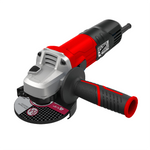
Disc sanders are the traditional way of sanding wood. A Disc Sander is a sander that uses a circular abrasive paper set on a circular plate to shape wood. The disc sander is used for a variety of tasks, including large-scale material removal, shaping around corners, and end-grain polishing.
They're not ideal for big jobs like sanding cabinet doors and panels. So, the disc sander is good for basic woodworking or small projects.
Pros of Disc Sander
The following are the pros of a disc sander:
-
Easy to use: disc sanders are comparatively easy to use because of its round shape of the disc. It helps in achieving more accurate results.
-
Portable: Disc sanders are small and compact. Therefore, it's easier to carry them than belt sanders.
-
Versatility: disc sanders are highly versatile as they are used in a wide range of applications and projects, including shaping curves and contours, fine and smooth finishing, etc.
Cons of Disc Sander
The following are the cons of a disc sander:
-
Not ideal for removing large amounts of material: the disc sanders are not suitable for removing large amounts of material due to their round shape, which makes it hard to work in confined areas.
-
Hard to change sandpaper: when compared to belt sanders, it's harder to change sandpaper in a disc sander
-
Not ideal for flat surfaces: disc sanders are not suitable for sanding flat surfaces due to their round shape. Hence, it will not generate a smooth and even finish.
Belt Sander
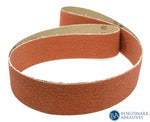
Belt sanders or strip sanders are versatile machines. Trimming to a scribed line (picture), sanding very rough surfaces, levelling surfaces (such as a replacement board on a hardwood floor), and freehand rounding and shaping are all popular applications. They excel in removing wood quickly because they have a lot of power and can handle coarse grits.
This high-powered wood sander rotates using either electric or air power. A circular platter is rotated by this sander, which rounds the center axis. Furthermore, an abrasive disc could be bolted to the platter or adhered to the plate. This abrasive disc-shaped platter may remove any rust, paint, or wood particles from the wood slice.
Pros of the Belt Sander
The following are the pros of the belt sander:
-
Powerful: belt sanders are highly powerful compared to disc sanders, which makes them perfect for rough shaping and leveling.
-
Efficient: belt sanders are highly efficient for sanding large surfaces evenly and quickly due to their long and flat belt.
-
Durable: belt sanders are highly durable as they are capable of handling heavy use.
Cons of the Belt Sander
The following are the cons of the belt sander:
-
Hard to control: belt sanders are difficult to control, mainly for beginners, because of their aggressive and powerful motor and belt.
-
Not suitable for delicate work: belt sanders are aggressive and quickly remove material from the surface, which makes them unsuitable for delicate and intricate projects.
-
Expensive: belt sanders are highly expensive compared to disc sanders.
Difference Between Disc Sander and Belt Sander
| Basis Of Differences | Disc Sander | Belt Sander |
| Usage | Removing debris from wood, removing paint, and sanding wood | Shaping, trimming edges, rounding, and leveling wood |
| Type | A handheld moving sander, which can be used to sand wood. | Stationary, i.e., you have to take wood to the sander |
| Ideal For | Round corners | Flat surfaces |
| Suitable For | Small projects | Big projects |
| Dust Collection System | The disc sander also has a dust collection system | A dust-collecting bag is included with the equipment to collect the dust. |
Overall, deciding between a belt sander and a disc sander is a difficult task. Because their applications are nearly identical. There are some distinctions, but they are not significant.
Join Our Newsletter
Sign up to get the latest on sales, new releases and more …Join Our Newsletter
Sign up to get the latest on sales, new releases and more …Shop Categories
Recent Articles
- Ways to Remove Rust from Metal
- Select the Right Sanding Belt for Your Next Project
- How Humidity Impacts Sanding Belts
- Guide to Industrial Sanding Belts: Applications and Selection Tips
- What is Sandpaper Grit? Your Complete Guide to Understanding Abrasive Particles
- Best Sandpaper for Metal: Guide to Grits, Types and Techniques
- Best Sandpaper for Drywall: Complete Grit Guide for Perfect Finishes
- What Grit Sandpaper to Use for Deck Sanding (Expert Guide 2025)
- How to Sand Concrete: Complete DIY Guide with Expert Tips
- Best Sander for Sheetrock/Drywall: Comprehensive Buying Guide
Featured Products
-
 734 Reviews
4-1/2" x .040 x 7/8" T1 Premium Thin Cut-off Wheel - 25 pack
$20.88
-
 746 Reviews
4-1/2" x 7/8" T29 Zirconia High Density Flap Disc - 10 pack
$25.19
-
 220 Reviews
4-1/2" x 7/8" T27 Zirconia High Density Flap Disc - 10 pack
$25.19
-
 380 Reviews
6" x .045 x 7/8" T1 Premium Thin Cut-Off Wheel - 25 pack
$27.29
-
 121 Reviews
4-1/2" x 1/4" x 7/8" T27 Depressed Center Grinding Wheel - 25 pack
$28.34
-
 54 Reviews
Nonwoven 6" x 9" Scuff, Clean & Finish Hand Pads
$0.83


Blog Categories
- Abrasives
- Sanding
- Grinding Deburring Finishing
- Safety and Cleanliness
- Metal Working
- Selecting Tools And Equipment
- Wood Working
- Art And Design
- Diy Projects
- Industry 4.0
- Buffing
- Cutting Tools
- Carbide Burrs
- PPE
- Wire Brushes
- Bonded Abrasives
- TIG Electrodes
- Wire Wheels
- Bits
- Diamond Blades
- Power Brushes
- Product Reviews
- Grinding
- Finishing
- Industrial Cleaners