



























Quick Change Disc: Types, Uses, and How to Choose the Right One

When you're in the middle of a fabrication job, stopping to change an abrasive disc with a wrench and locknut can completely kill your momentum. This guide explains everything you need to know about quick-change discs, helping you reduce downtime and increase productivity.
Whether you are a professional fabricator or a weekend warrior tackling a custom build, choosing the right setup makes all the difference in your finish. Let's dive into the types, uses, and specifications that will keep your project moving forward smoothly.
What is a Quick Change Disc and How Does It Work
A quick-change disc is basically a small, effective abrasive tool that can be quickly attached and removed. Unlike traditional grinding discs that require flange nuts and spanners, these discs utilize a clever fastening system molded directly into the backing. This allows you to twist the disc on and off in a matter of seconds.
The magic lies in the specialized hub systems, most notably the Roloc TR, Roloc TS, Roloc TSM, and Roloc TP systems. These hubs thread or lock directly into matching holder pads mounted on your Power Tools. This design is perfect for high-speed material removal and precision blending in tight spaces.
You will commonly see these used with a right-angle die grinder or even an electric power drill, making them incredibly versatile. By switching to quick-change surface conditioning and grinding products, you effectively eliminate the wasted labor hours typical of standard wheel changes.
Types of Quick Change Discs
Understanding the different attachment types and abrasive materials is the first step in unlocking the full potential of these abrasive products.
1. Type R and Roloc TR Systems
The Type R or Roloc TR system is the undisputed industry standard for these small discs. It features a plastic threaded male button that screws directly into a female receptor on the backing pad. This attachment type is highly favored because of its secure lock and wide compatibility across almost all major abrasive brands. When looking for holder pads to fit a standard holder die grinder, the Type R disc is usually what you will encounter.
2. Ceramic Quick Change Discs
When you need pure, unadulterated grinding power, ceramic quick-change discs are the gold standard. Utilizing ceramic alumina or ceramic aluminum oxide, these grains are self-sharpening, meaning they fracture under pressure to expose new, sharp cutting edges. This provides a premium quick cut rate, high-quality performance, and a significantly longer service life compared to standard aluminum oxide.
3. Non-Woven and Surface Conditioning Discs
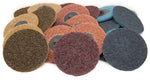
Not every job requires heavy grinding. Non-woven abrasive discs are made from webbed nylon fibers infused with abrasive grains. This non-woven material provides the blending flexibility needed to conform to contoured surfaces without gouging the base metal. Products like the Blend GP disc are fantastic for removing light surface imperfections or creating a coarse surface scratch pattern before paint.
4. General Purpose and Specialty Discs
If you are just getting started, buying a complete set of sanding discs is an excellent move. These sets usually feature a mix of abrasive options, ranging from silicon carbide to zirconia. Depending on the material type and disc type you select, you can easily shift from aggressive deburring to fine cosmetic finishing.
Safety Warning: Never exceed the Max RPM rating printed on the disc or its packaging. Over-speeding a quick-change disc can cause the locking button to fail, sending the disc flying at dangerous speeds.
What are Quick-Change Sanding Discs Used For
These compact tools are the ultimate problem solvers in metal fabrication. Because they typically range from 1 to 3 inches in diameter, quick-change sanding discs excel at accessing tight corners and radiused edges where larger grinders simply cannot fit.
In industrial fabrication and home improvement settings, their primary uses include:
-
Rust Removal: Quickly stripping oxidized layers off steel frames or sheet metal without thinning the base metal excessively.
-
Weld Cleaning: Removing weld splatter and smoothing out the transition between the bead and the workpiece.
-
Deburring: Knocking down the razor-sharp edges left behind by laser cutters or band saws.
-
Material Removal: Slicing through layers of heavy scale on raw metal stock.
They are formulated to work across a vast spectrum of metals. You can use them effectively on standard carbon steel, corrosion-resistant stainless steel, brittle cast iron, and even high-temp nickel alloys.
Materials Used in Quick Change Discs
The abrasive material determines how the disc handles heat and how fast it cuts. Here are the most common grains you will encounter:
-
Aluminum Oxide: The standard for general-purpose grinding on mild steel.
-
Zirconia Alumina (Alumina Zirconia): A tough, durable grain that holds up well under high pressure. Great for stainless steel.
-
Silicon Carbide: Extremely sharp but brittle. It is best used for non-ferrous metals and polishing.
-
Ceramic Alumina: The premium choice for hard metals. It runs cooler and lasts the longest.
Many high-tier discs also feature a specialized grinding aid or top-size coating. This chemical layer melts during the grinding process to lubricate the cut, significantly reducing heat buildup and preventing the disc from loading up with soft metal debris. While a standard resin fiber disc might wear out quickly on stainless, a ceramic disc with a grinding aid will power right through.
Tools Compatible with Quick Change Discs
To use these discs effectively, you need to match them with the correct Power Tools and a proper backing pad.
The absolute best tool for this job is the right-angle die grinder. It provides the high RPMs and the maneuverability needed to guide the small disc effectively. Alternatively, you can use a standard power drill with a specialized sanding disc holder adapter, though you must keep in mind that drills operate at much lower speeds than dedicated grinders.
When setting up your tool, ensure you are using the correct holder die grinder attachment. The holder must match the attachment type of your disc (e.g., a Type R disc requires a Type R pad).
Quick Change Discs vs Other Abrasive Products
How do these small twist-on discs compare to traditional abrasives? Let's take a look:
|
Abrasive Type |
Best Use Case |
Convenience |
Sizes |
|
Tight spaces, rapid grit transitions |
Best |
1" - 3" |
|
|
Heavy blending, large surface areas |
Moderate |
4" - 7" |
|
|
Severe metal removal, beveling heavy plate |
Low |
4" - 9" |
|
|
High-pressure, large-scale weld removal |
Low |
4" - 7" |
|
|
Flat, precision orbital sanding |
Moderate |
5" - 6" |
While a massive grinding disc or flap disc is better for hogging off huge amounts of metal on a flat plate, the quick change system owns the realm of detail work, edge deburring, and tight corner blending.
Key Factors When Choosing a Quick Change Disc
To get the most out of your purchase, consider these four factors before hitting the checkout button:
Material and Application
Always match your disc to your workpiece. For general-purpose work on mild steel, aluminum oxide, or zirconia is perfectly fine. If you are working on stainless steel or hard alloys, spend a bit more on ceramic.
Disc Size and Attachment Type
The 2-inch and 3-inch sizes are the most common. Ensure that your disc's attachment type perfectly matches the backing pad or holder pads currently mounted on your tool.
Speed and Safety Ratings
Check the Max RPM of your tool against the disc rating. A standard 2-inch disc often has a Max RPM rating of around 25,000 to 30,000 RPM. Never exceed this, or you sacrifice both the service life of the disc and your own safety.
Performance and Durability
If you are running a production shop, look for premium quick options with a grinding aid. They cost more upfront but save massive amounts of labor time.
Understanding Product Specifications and Pricing
When buying these products online, understanding the product specification sheet is crucial. Pay close attention to the grit size, the grain material, and the backing thickness.
You will also notice a difference between the listed unit price and the bulk web price. Most professional suppliers offer steep discounts when you buy packs of 25, 50, or 100. Always double-check the stock status on the product detail page to ensure the grit you need is ready to ship immediately.
Shopping for Quick Change Discs Online
Navigating a digital abrasives catalog doesn't have to be overwhelming. Use the sidebar product categories to filter by size and grit. If you already have a preferred brand, use the site search to find it directly.
Most modern sites allow you to build wish lists for easy reordering. When you are ready to complete your purchase, simply enter your shipping details, email address, and credit card. Be sure to review the supplier's shipping policy and return policy before buying. Look for brands that offer hassle-free returns, free shipping on minimum orders, and a toll-free customer service line so you can speak to a human if something goes wrong.
Global Availability and Supply Chain Considerations
The metalworking industry is a global machine. Many of the highest quality abrasive grains are processed in the United States and North America, while specific manufacturing hubs are distributed through South America, the Czech Republic, and New Zealand.
Modern transport information and shifting supply chains mean that lead times can vary. Keeping a healthy safety stock of your most-used grits is highly recommended to avoid workshop work stoppages.
Related Products and Accessories
No shop is complete with just one type of abrasive. When stocking your cart, consider adding these related products:
-
A comprehensive set of sanding discs for project versatility.
-
Heavy-duty grinding disc wheels for your large 4.5-inch angle grinders.
-
An industrial hand cleaner to get the metal dust off your skin after a long day in the shop.
-
Check out the reliable discs shop category to browse bulk flap discs and cut-off wheels.
FAQs
1. What is a quick-change disc used for?
A quick-change disc is primarily used for precision grinding, rust removal, weld cleaning, and deburring in tight spaces.
2. Can I use quick-change discs on a drill?
Yes, you can use them on a power drill if you have the correct adapter mandrel for your holder die grinder backing pad. However, keep in mind that drills spin much slower than die grinders, so your material removal rate will be lower.
3. What is the difference between Roloc TR and TS?
The Roloc TR (Type 3) features a threaded plastic button. The Roloc TS (Type 2) features a metal lock system that requires a half-turn to secure. The Roloc TSM is a metal-to-metal variant designed for severe heavy-duty applications.
4. What materials can quick-change discs work on?
They work exceptionally well on carbon steel, stainless steel, cast iron, and even exotic nickel alloys.
5. How do I choose the right quick-change disc?
Check the product specification listed by the manufacturer and match the grain material type to the metal you are working on.
Why Professionals Choose Benchmark Abrasives for Quick Change Discs
When your livelihood depends on the quality of your finish, you cannot afford to use sub-par abrasives that fly apart after two minutes of use. Professional fabricators turn to Benchmark Abrasives because they provide high-quality, premium, quick-cutting solutions that stand up to industrial abuse.
Conclusion: Keep Your Projects Moving
The twist-on quick-change disc is the ultimate tool for reducing downtime and maximizing precision in your shop. By matching the right abrasive grain to your metal type and the speed ratings of your tools, you can achieve flawless finishes on everything from cast iron to stainless steel.
When it comes time to restock your workbench, trust Benchmark Abrasives. With competitive unit price options, bulk web price discounts, free shipping on qualified orders, and hassle-free returns, upgrading your power tools setup is easier than ever. Explore our store today to find the perfect sanding disc grit for your specific project.
Join Our Newsletter
Sign up to get the latest on sales, new releases and more …Join Our Newsletter
Sign up to get the latest on sales, new releases and more …Shop Categories
Recent Articles
- Resin Fiber Discs vs Flap Discs: When Should You Use Each?
- Best Abrasives for Rust Removal on Steel
- Cut-Off Wheels vs Band Saws: Which is Better for Metal Cutting
- How to Optimize RPM Abrasive Disc Performance & Lifespan
- Surface Conditioning Discs: A Fabricator's Guide
- Best Flap Disc for Stainless Steel: Complete Fabricator’s Guide
- Ceramic vs Zirconia Flap Discs: Which Performs Better for Metal Fabrication
- How to Choose the Right Grit for Metal Sanding Projects
- Tools Collection for Fabrication and Abrasive Workflows
- How to Choose the Right Diamond Blade
Featured Products
-
 746 Reviews
4-1/2" x 7/8" T29 Zirconia High Density Flap Disc - 10 pack
$25.19
-
 738 Reviews
4-1/2" x .040" x 7/8" t1 premium thin cut-off wheel - 25 pack
$20.88
-
 220 Reviews
4-1/2" x 7/8" T27 Zirconia High Density Flap Disc - 10 pack
$25.19
-
 380 Reviews
6" x .045 x 7/8" T1 Premium Thin Cut-Off Wheel - 25 pack
$27.29
-
 55 Reviews
Nonwoven 6" x 9" Scuff, Clean & Finish Hand Pads
$0.83
-
 123 Reviews
4-1/2" x 1/4" x 7/8" T27 Depressed Center Grinding Wheel - 25 pack
$28.34


Blog Categories
- Abrasives
- Sanding
- Grinding Deburring Finishing
- Safety and Cleanliness
- Metal Working
- Selecting Tools And Equipment
- Wood Working
- Art And Design
- Diy Projects
- Industry 4.0
- Buffing
- Cutting Tools
- Carbide Burrs
- PPE
- Wire Brushes
- Bonded Abrasives
- TIG Electrodes
- Wire Wheels
- Bits
- Diamond Blades
- Power Brushes
- Product Reviews
- Grinding
- Finishing
- Industrial Cleaners