



























How to Choose Spiral Bands by Size, Mineral, and Grit

A weld seam inside a small opening can stop a job when a full-size disc cannot fit. Spiral bands reach those spots, but only when the band, the drum, and the tool are matched correctly.
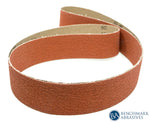
A spiral band sanding sleeve is a cylinder of abrasive that slides over a rubber expanding drum. You run it in a die grinder or a rotary drill. The wrong diameter slips on the drum. The wrong grit or mineral leaves deep scratches, loads up, or cuts too slowly.
Four choices decide how the job goes: band size, the matching drum, abrasive mineral, and grit. Each one affects fit, cut rate, and finish, whether you are fixing a part in the garage or finishing fabricated work. We stock seven sizes with four minerals in every size, plus the matching drums.
One rule comes first. Follow the lowest maximum RPM among the drum, the band, and your tool, never the band alone. Inspect all three before every job.
When a Spiral Band Beats a Sanding Disc
A bigger abrasive is not always faster. On a rounded edge, an inside diameter, or a narrow groove, a full-size disc can cut the areas next to the work. A spiral band puts the abrasive right where the work is.
As the drum turns, the sleeve follows curves and reaches spaces too tight for a flap disc, sanding disc, or wheel. It is a detail tool for controlled sanding, not a replacement for heavy grinding. Use it for jobs like these:
- Deburring: sharp edges, drilled holes, and small burrs on metal parts.
- Blending: weld transitions, casting seams, and parting lines, without flattening nearby contours.
- Curved wood details: grooves, spindle work, and shaped edges.
- Cleaning and refining: inside openings and tight recesses the drum can safely reach.
Some drums are a different tool altogether. The 4-1/2 inch flap wheel drums in our sanding drums collection run in surface finishing machines, not drill chucks. This guide covers the rubber expanding drum and spiral band system.
Why Spiral Bands Leave an Even Finish
The rotating sleeve spreads contact across the cylinder face, instead of dragging over one spot the way hand sanding can. Keep the tool moving with light, even pressure to cut down on chatter and shadow marks on curved work. Holding the band in one place can leave a low spot or heat thin metal.
Spiral Band or Cartridge Roll?
Choose a spiral band when you want an even cylindrical contact area for curves and consistent blending. Choose a cartridge roll when its smaller or tapered shape reaches a corner, slot, or tight transition better. If a part needs shaping or stock removal first, start with carbide burrs, then refine the surface with the right abrasive.
How to Match Spiral Band Size to Your Rubber Expander Drum
How do you know a band will fit your drum and still reach the work? Start with one rule: the band's inside diameter and width must match the rubber expander drum. The band should cover the drum face without hanging over either edge.
Sizes read as diameter by width, so 1/2 x 1/2 inch is a half inch across and a half inch wide. Diameter sets access. A small band enters narrow openings and tighter inside curves. Width sets contact area. A wider band blends more per pass and holds steadier on broad work.
We sell seven sizes, from 1/2 x 1/2 inch up to 2 x 2 inch. Pick the smallest size that reaches the work with enough width for stable control, not the biggest band on the shelf. The table pairs each job with a size, its matching drum, and the tool.
| Job access need | Sensible band profile | Typical use | Matching drum, top speed, and tool |
|---|---|---|---|
| Narrow grooves, small contours, and detail work | Small diameter, such as 1/2 x 1/2 inch or 1/2 x 1 inch | Wood details, light deburring, small parts | Same-size rubber expanding drum rated 20,000 to 30,000 RPM. Die grinder or rotary drill with a 1/4 inch shank |
| General fabrication and rounded edges | Mid-size diameter and width: 3/4 x 3/4, 3/4 x 1, 1 x 1, or 1-1/2 x 1-1/2 inch | Weld blending, casting seams, edge cleanup | Same-size rubber expanding drum rated 15,000 to 24,000 RPM. Die grinder or rotary drill with a 1/4 inch shank |
| Larger inside diameters and broad contours | Larger diameter and wider face: 2 x 2 inch | Broad blending, larger profiles, wider inside curves | Same-size 2 x 2 inch rubber expanding drum rated 6,000 RPM. Die grinder or rotary drill with a 1/4 inch shank |
Drums and bands are sold separately, and a pack holds 10 bands. A drum takes only bands of its exact size, but all four minerals fit it. You can swap minerals on one drum as the job moves from shaping to finishing.
Our rubber expanding drums all have a 1/4 inch shank for compatible die grinders and rotary drills. Check that your collet or chuck holds that shank securely, and keep the tool at or below the drum's rated speed.
Choose Spiral Band Mineral by Material and Job Stage
Our abrasive spiral bands come in four minerals in every size. Grit sets scratch depth, but mineral sets how the band cuts and how long it lasts. No single mineral suits every material or every stage.
| Spiral band mineral | Best-fit materials | Best job stage | Selection guidance |
|---|---|---|---|
| Aluminum oxide | Wood, plastic, and general metalwork | General sanding, deburring, and finish refinement | Economical all-purpose choice for varied shop work. Grits 36 to 400 |
| Zirconia | Steel, stainless steel, and other tough metals | Heavier blending and stock removal | Choose it when the job needs a more aggressive band than aluminum oxide. Grits 36 to 120 |
| Ceramic | Stainless steel, titanium, nickel, and other demanding metals | Heavy stock removal and demanding surface prep | Choose it for the toughest metal removal jobs. Grits 36 to 120 |
| Surface conditioning | Metal surfaces that need cleanup or blending | Cleaning, light deburring, blending, and final conditioning | Choose it when you want an even surface with little stock removal. Coarse, medium, and fine grades |
Match the mineral to the material first. Aluminum oxide is a practical start for mixed shop work. Zirconia and ceramic suit heavier cutting on tougher metals. Surface conditioning suits cleanup and blending, where you want little stock removal.
Mineral also limits your grit choices. Zirconia and ceramic bands come in 36, 60, 80, and 120 grit. Finer grits are aluminum oxide. Surface conditioning bands use coarse, medium, and fine grades instead of grit numbers.
Which Spiral Band Grit Should You Use at Each Stage?
A small steel weld transition may need 60 grit, then 120, then 240, instead of one band forced to do every stage. Start coarse to remove the raised weld. Then go finer to erase the scratch pattern from the step before.
Lower numbers cut faster and leave deeper scratches. Higher numbers remove less and refine the surface. A fine band is the wrong tool for a heavy defect, and coarse scratches can show through paint or a polished finish.
| Grit range | Best use | Offered in |
|---|---|---|
| 36 to 60 grit | Aggressive burr removal, proud weld blending, shaping, and heavier surface defects | Aluminum oxide, zirconia, and ceramic |
| 80 to 120 grit | General cleanup, contour shaping, and smoothing scratches left by coarse work | Aluminum oxide, zirconia, and ceramic |
| 150 to 240 grit | Finish sanding, paint prep refinement, and smoother wood or metal detail work | Aluminum oxide |
| 320 to 400 grit | Fine refinement, polishing prep, and reducing visible scratch lines before the final finish | Aluminum oxide |
Surface conditioning bands are not a grit for grit swap for coated bands. Coarse runs roughly 60 to 80, medium 100 to 150, and fine 320 to 400. Use them for light cleanup and blending when you need less material removal.
For that weld, begin with 60 grit to level the seam without overworking the steel around it. Move to 120 once the profile is right. Add 240 only if paint or the final finish needs a finer scratch pattern. Stop when the surface meets the spec, because extra passes waste bands and can change the shape.
Shop spiral bands by size, mineral, and grit.
How to Mount Spiral Bands and Stop Slipping or Tearing
Spiral bands have no hooks or adhesive. The rubber drum grips the band from the inside, so a poor fit shows up as slipping right away. Run this routine before every job:
- Match the band to the drum. Confirm the same diameter and width, then disconnect power.
- Inspect the drum and the band. Replace anything cracked, torn, or badly worn.
- Seat the band fully on the drum. It must not hang past either edge.
- Check the speed rating, then run the tool briefly away from the work.
Most problems trace back to fit, wear, or technique:
- Band slips or walks: wrong size, a worn drum, oil or dirt on the rubber, or a band that is not fully seated.
- Band tears or the seam fails: too much pressure, heat from dwelling in one spot, a damaged band, speed above the lowest rating, or a grit or mineral that does not suit the job.
- Uneven marks or chatter: poor fit, a worn drum, uneven pressure, or holding the tool still.
Never exceed the lowest maximum RPM among the drum, band, and tool. Wear eye, hearing, respiratory, and hand protection suited to the material and the job.
Spiral Band FAQs
What is a spiral band sander?
A spiral band sander usually means a die grinder or rotary drill fitted with a rubber expanding drum and a spiral band. The band is the replaceable abrasive sleeve, not the tool. The drum holds the sleeve while you sand.
How do I choose a sanding sleeve for a die grinder?
Match the sleeve's inside diameter and width to the drum exactly. Confirm the drum's 1/4 inch shank fits your collet. Then check that the drum's maximum RPM is at least your tool's operating speed. The lowest rating among drum, band, and tool sets the limit.
What spiral band grit should I use first?
Start with the least aggressive grit that removes the defect. Use 36 to 60 for heavy removal, 80 to 120 for shaping, 150 to 240 for finish sanding, and 320 to 400 for fine refinement. Grits above 120 come in aluminum oxide.
Why does my spiral band keep slipping off the rubber expander drum?
Slipping usually points to a size mismatch, a worn drum, oil or dirt on the rubber, or a band that is not fully seated. Clean the drum and seat the band squarely. Replace a cracked or badly worn drum instead of improvising a fix.
Are spiral bands better than cartridge rolls?
Neither is better in every case. Spiral bands give broad, cylindrical contact for contours, bores, and larger inside areas. Cartridge rolls reach tight corners, tapered transitions, and small openings where a full cylinder cannot fit.
Build the Right Spiral Band Setup Before You Sand
Start with the tightest opening or contour you need to reach. Pick the smallest band with enough width for stable control, then match its diameter and width to a rubber expander drum. A correct grit cannot make up for a wrong-size or worn drum.
Choose aluminum oxide for general sanding, zirconia or ceramic for tougher metals, and surface conditioning for cleanup and final blending. Use only the grit the current stage needs, then move finer to remove the last scratch pattern.
Pick your size, mineral, and grit in our spiral bands collection.
Join Our Newsletter
Sign up to get the latest on sales, new releases and more …Join Our Newsletter
Sign up to get the latest on sales, new releases and more …Shop Categories
Recent Articles
- How to Clean Root and Interpass Welds With a Stringer Bead Wheel
- How to Choose Spiral Bands by Size, Mineral, and Grit
- How to Read Unitized Disc Density Codes, 2S to 8A
- How to Choose the Right TCT Blade for Metal, Aluminum, and Wood
- How to Choose the Right Diamond Blade for Grinder
- Wire Wheels and Brushes: How to Choose the Right One
- How to Deburr Metal Safely and Efficiently
- How to Reduce Heat Discoloration When Grinding Stainless Steel
- How to Achieve a Mirror Finish on Stainless Steel
- A Fabricator’s Guide to Surface Prep Before Powder Coating
Featured Products
-
 746 Reviews
4-1/2" x 7/8" T29 Zirconia High Density Flap Disc - 10 pack
$25.19
-
 738 Reviews
4-1/2" x .040" x 7/8" t1 premium thin cut-off wheel - 25 pack
$20.88
-
 220 Reviews
4-1/2" x 7/8" T27 Zirconia High Density Flap Disc - 10 pack
$25.19
-
 380 Reviews
6" x .045 x 7/8" T1 Premium Thin Cut-Off Wheel - 25 pack
$27.29
-
 55 Reviews
Nonwoven 6" X 9" Scuff, Clean & Finish Hand Pads
$0.83
-
 123 Reviews
4-1/2" x 1/4" x 7/8" T27 Depressed Center Grinding Wheel - 25 pack
$28.34


Blog Categories
- Abrasives
- Sanding
- Grinding Deburring Finishing
- Safety and Cleanliness
- Metal Working
- Selecting Tools And Equipment
- Wood Working
- Art And Design
- Diy Projects
- Industry 4.0
- Buffing
- Cutting Tools
- Carbide Burrs
- PPE
- Wire Brushes
- Bonded Abrasives
- TIG Electrodes
- Wire Wheels
- Bits
- Diamond Blades
- Power Brushes
- Product Reviews
- Grinding
- Finishing
- Industrial Cleaners